The Sins of our Forefathers, Part 13. (Podcast)

Where Are We today?/Closing Statements

As we saw in part 12 at the 500th Anniversary of the Reformation in 2017, that 1500+ people had signed an agreement with the Pope, which started back at  the Ecumenical Council in 1962 that the Lutheran Church, for the sake of unity, would now recognize the Pope’s purpose as it was given to the Apostle Peter to keep the Church united. But let us look at other things that have been going on to unite believers under one universal church.

According to Wikipedia, The Document on Human Fraternity for World Peace and Living Together, also known as the Abu Dhabi Declaration or Abu Dhabi agreement, is a joint statement signed by Pope Francis of the Catholic Church and Sheikh Ahmed el-Tayeb, Grand Imam of Al-Azhar, on 4 February 2019 in Abu Dhabi, United Arab Emirates.

According to Vatican News, An Appeal for Peace was signed in Rome by Pope Francis and by leaders of world religions gathered at the International Prayer Meeting for Peace, “No one is saved alone – Peace and Fraternity.”

According to CNA,  in October 2020 Pope Francis was joined by representatives of the world’s major religions in his appeal for peace in the Campidoglio Square, designed by Michelangelo. The Christian, Muslim, Jewish, Sikh, and Buddhist representatives each gave speeches, lit a candle in a candelabrum, and signed a scroll containing an “Appeal for Peace.” Candles were lit in the basilica as the Christians prayed together for peace in Afghanistan, the Democratic Republic of Congo, Iraq, Libya, Nigeria, Central African Republic, Somalia, Syria, Ukraine, Yemen, and the Holy Land. 

On the surface you may say,  “I see nothing wrong with any of this.” But that is what it is supposed to look like, but that is not the goal.

We would like to end this series by saying this. After Yeshua’s victory on the cross, these last 2,000 years, we have seen an attempt by Satan to push forward his agenda, that goes all the way back to the Garden of Eden. Satan’s only goal is to have his own kingdom, and have people bow down to him and call him a god.  The Book of Revelation speaks about two beasts who will come, one will be a world religious system. One will be a global government. As we hope that you have seen from this series that all throughout history the Chrisitan faith has been changed. It no longer is the faith of Yeshua and His disciples. It no longer is the faith of our forefathers. It no longer is the faith of even Martin Luther, and the Reformation, and tomorrow it will not even look like it does today . Today all religions are being brought together under the guise of peace, and everyone, once again has changed their doctrine, no matter if you are Baptist or Lutheran or even Catholic, no matter if you are Hindu or Buddhist, or Morman.  We have seen over the centuries religion and politics mixing as if Yeshua was an activist who got  involved in the Roman government in His day.

No! He went about saving souls, and we should stick to spreading the Gospel also, but as we saw in this series, it wasn’t about the gospel really, but about wealth and power, as we saw with the Crusades and the Papal States, and even in the Book of Revelation.

 In 2022, the One World Religion Headquarters is set to open. It will be called the Abrahamic Family House. It is being built on an island in the city of Abu Dhabi. There will be three buildings, one representing the Mosque, another the Church and the last, the Synagogue, all for the sake of peace and unity. This is what so many of the 21 Ecumenical Councils were all about, to have only one church, with only one doctrine, except their doctrine is  not in line with Yeshua’s or His Apostles. We must come back to the truth of God’s Word. With so many changes throughout time it is almost unrecognizable. But after all these centuries, finally it has been accomplished, almost all religions and denominations, and all political leaders, all stand in line with the Pope, (The Bishop of Rome). This will be the final return of the Holy Roman Empire, with its leader receiving the blessings of the Pope. This may be hard for some to accept, but church history is not hidden, it is there for all to see, and if we take the time to study the Scriptures as a whole, we will see that it all lines up to tell the truth.

For more information on this subject we hope  that you go on to our website and read our two brochures on Mystery Babylon, Social Justice, and listen to our podcast “Clarion Call” on  Fleeing Babylon and  Do we need another Great Awakening?

The Clarion, Dec. 2021

Volume 2, Issue 12 

  December, 2021


Welcome

December is a great month because it is the month of lights. There is Hanukkah and Christmas. Though Hanukkah began in November it will end here in December. What a special time because God is the God of light. Yeshua said that “He was the Light of the world” and so are we. This is  just as important as celebrating that great victory and miracle of Hanukkah. This is especially as important as the birth of Messiah because He is Light. The time of Messiah’s birth is celebrated during the Feast of Booths, the feast day’s theme is “God with Us”. But because this is a time of Light, we celebrate the fact the Messiah is Light.

Genesis 1:1-3 says this, “In the beginning God created the heavens and the earth.  Now the earth was formless and empty, darkness was over the surface of the deep, and the Spirit of God was hovering over the waters.  And God said, “Let there be light,” and there was light.  God saw that the light was good, and he separated the light from the darkness.  God called the light “day,” and the darkness he called “night.” And there was evening, and there was morning—the first day.”

If God didn’t think that Light wasn’t important, He would not have created it first. But He did, because He did not like the darkness and so He separated Himself from the darkness. 1 Thessalonians 5:5 says this, You are all children of the light and children of the day. We do not belong to the night or to the darkness.”

This little light of mine, I’m going to let it shine…Shine on everyone and have a Blessed Season of Light.


For God so Loved Us

I think more often than not we quote John 3:16, “ For God so loved the world, that He gave His only Son, so that everyone who believes in Him will not perish, but have eternal life,” and we do not really think about the true meaning of this verse.

Let’s break this all down and take a closer look at this Scripture.

We know that God is love. 1 John 4:16 tells us that. But that does not tell the whole story.  The story goes back even before Creation.  It was God’s love that caused Him to create. Like any good project, you have to plan and that is just what our Creator did. Even before the foundation of the world God knew you and I. He not only knew us, but He had a plan for each of our lives. And that plan was to send His Son into the world to save us. Yes, God knew that man would fall and that He would need to be saved. Let’s look closer at His plan. Ephesians 1:3-12 says  this, “Blessed be the God and Father of our Lord Messiah Yeshua, who has blessed us with every spiritual blessing in the heavenly places in Messiah just as He chose us in Him before the foundation of the world, that we would be holy and blameless before Him. In love He predestined us to adoption as sons and daughters through Messiah Yeshua to Himself, according to the good pleasure of His will,  to the praise of the glory of His grace, with which He favored us in the Beloved.  In Him we have redemption through His blood, the forgiveness of our wrongdoings, according to the riches of His grace  which He lavished on us. In all wisdom and insight  He made known to us the mystery of His will, according to His good pleasure which He set forth in Him,  regarding His plan of the fullness of the times, to bring all things together in Messiah, things in the heavens and things on the earth. In Him we also have obtained an inheritance, having been predestined according to the purpose of Him who works all things in accordance with the plan of His will,  to the end that we who were the first to hope in the Messiah would be to the praise of His glory.”

Did you see it? He chose us before the foundation of the world. In love He predestined us to be His adopted children. Regarding His plan, in just the right time, will bring all things together in Messiah. We haven’t even reached that point yet, when Messiah will rule over all eternity.  And in accordance to His plan we have obtained an inheritance because of having been predestined. All of this before He even began to create. But there is more. Before God could create He had to pull back part of Himself to have a place for us. In our Bible Study, “In the Beginning,” I compared it to Isaiah 6:1, which speaks of the train of God’s robe filling the Temple. Now imagine the train of His robe that filled the Temple, as God being everywhere, and so He had to pull back on His train to leave some space in the Temple for us. Now Isaiah tells us that God was high and lifted up and His glory filled the Temple, so for God to diminish Himself took an act of love.

This was all before He created. There was  nothing but love on God’s part for us. He did not even withhold Himself for us. Now going forward we see that God sent His only begotten Son. Yeshua is the Word made flesh. Yershua said, “I and the Father are one,” John:10:30. 

Hebrews 1:1-4 tells us, “In the past God spoke to our ancestors through the prophets at many times and in various ways,  but in these last days he has spoken to us by his Son, whom he appointed heir of all things, and through whom also he made the universe.  The Son is the radiance of God’s glory and the exact representation of his being, sustaining all things by his powerful word. After he had provided purification for sins, he sat down at the right hand of the Majesty in heaven.  So he became as much superior to the angels as the name he has inherited is superior to theirs.”

And John 1:1-4 also says, “In the beginning was the Word, and the Word was with God, and the Word was God.  He was with God in the beginning.  Through him all things were made; without him nothing was made that has been made.” 

1 Peter 1: 20 tells us, “ He was foreknown before the foundation of the world but was made manifest in the last times for the sake of you.” 

Well the time came and God sent His Son in the likeness of man to dwell among us as Phillipians 2:5-7 tell us,  “Have this attitude in yourselves which was also in Messiah Yeshua, who, as He already existed in the form of God, did not consider equality with God something to be grasped,  but emptied Himself by taking the form of a bond-servant and being born in the likeness of men.”

Once again we see God in His love for us sending His Son, a part of Himself, emptied and a bond-servant, leaving behind all of His glory that He knew before the foundation of the world. Once again God diminishes Himself for us. Yeshua was tempted as a man, grew tired as a man and felt sorrow and pain like a man. 

For God so loved us that He sent His only begotten Son, so man would not perish.

1 John 3:1a,  “See how great a love the Father has given us, that we would be called children of God; and in fact we are.” 

But that is not all of the story.  Yeshua died so that we can inherit salvation and eternal life, and so that we can be made righteous and be called the children of God. Let’s take a closer look at this.

Isaiah  53:2-11 says this, “He grew up before him like a tender shoot,    and like a root out of dry ground. He had no beauty or majesty to attract us to him, nothing in his appearance that we should desire him. He was despised and rejected by mankind,    a man of suffering, and familiar with pain. Like one from whom people hide their faces he was despised, and we held Him in low esteem. Surely He took up our pain   and bore our suffering, yet we considered Him punished by God,  stricken by Him, and afflicted. But He was pierced for our transgressions,   He was crushed for our iniquities; the punishment that brought us peace was on Him,   and by his 

wounds we are healed. We all, like sheep, have gone astray,   each of us has turned to our own way; and the Lord has laid on him    the iniquity of us all. He was oppressed and afflicted,    yet he did not open his mouth; He was led like a lamb to the slaughter,    and as a sheep before its shearers is silent,  so He did not open his mouth. By oppression and judgment He was taken away.  Yet who of his generation protested? For He was cut off from the land of the living;  for the transgression of My people He was punished. He was assigned a grave with the wicked, and with the rich in His death, though He had done no violence,nor was any deceit in His mouth. Yet it was the Lord’s will to crush Him and cause Him to suffer,  and though the Lord makes His life an offering for sin, He will see his offspring and prolong His days,   and the will of the Lord will prosper in His hand. After He has suffered,    He will see the light of life and be satisfied; by His knowledge My righteous servant will justify many,    and he will bear their iniquities.”

Isaiah 52:13-15 tells us, “See, my servant will act wisely;    He will be raised and lifted up and highly exalted. Just as there were many who were appalled at Him—

   His appearance was so disfigured beyond that of any human being and His form marred beyond human likeness— so He will sprinkle many nations, and kings will shut their mouths because of Him. For what they were not told, they will see,

    and what they have not heard, they will understand.”

Even though Yeshua suffered to the point that you could not recognize Him, the most painful of it all was being totally separated from the Father, something not even the most evil has experienced. The God of glory diminished Himself and emptied Himself and even separated Himself from Himself so that we could be saved. What love! As 1 John 3: 1-3  tells us, “ See what great love the Father has lavished on us, that we should be called children of God! And that is what we are! The reason the world does not know us is that it did not know Him.  Dear friends, now we are children of God, and what we will be has not yet been made known. But we know that when Messiah appears, we shall be like Him, for we shall see Him as he is.  All who have this hope in him purify themselves, just as he is pure.”

Today, I have a question to ask you. If you celebrate Christmas, and you have any kind of Santa Claus in your decorations or celebrations, then I ask, “What did he ever do for you?”

 “We love because He first loved us.”


Recipe Corner:

This festive time of year deserved a festive desert.

We hope you enjoy the one we chose.

Chocolate Peppermint Cheesecake by Delish

INGREDIENTS:

Cooking spray

3 (8-oz.) blocks cream cheese, softened

1 c. granulated sugar

2 large eggs

1/4 c. sour cream

1 1/2 tbsp. all-purpose flour

1 tsp. peppermint extract

1 tsp. pure vanilla extract

1/4 tsp. kosher salt

1/2 c. chopped chocolate, plus more for garnish

1/2 c. chopped white chocolate, plus more for garnish

1/2 c. chopped candy canes, plus more for garnish

FOR THE OREO CRUST

24 Peppermint Oreos

5 tbsp. melted butter

FOR THE CHOCOLATE GANACHE

3/4 c. hot heavy cream

1 1/2 c. semisweet chocolate chips

DIRECTIONS

  • Preheat oven to 350º and spray an 8″ springform pan with cooking spray. Make filling: In a large bowl using a hand mixer (or in a stand mixer using the paddle attachment), beat cream cheese and sugar. Add eggs, one at a time, then sour cream, flour, peppermint extract, vanilla, and salt. Gently fold in chopped chocolates and candy canes and set aside.
  • Make crust: In a food processor or in a large Ziploc bag, crush Oreos into fine crumbs. Stir with melted butter until completely moist.
  • Add crust to prepared pan and pack tightly.
  • Pour over filling and place pan on a rimmed baking sheet. Bake until center is only slightly jiggly, about 1 hour. (If you want to use a water bath to ensure no cracking, wrap springform pan in foil and place springform pan in a deep-sided roasting pan. Pour boiling water into roasting pan until it reaches halfway up the springform pan.)
  • Turn off oven and let cheesecake cool in oven 1 hour (this step is optional but prevents cracking).
  • Refrigerate cheesecake until completely chilled, at least 4 hours but preferably overnight
  • Before serving, make chocolate ganache: Pour hot cream over chocolate chips and let sit, 5 minutes. Stir until all chocolate is melted. (If ganache seems too thin, refrigerate 5 minutes.)
  • Spread ganache over chilled cheesecake and garnish with more chopped chocolate and candy canes.
  • Refrigerate 10 minutes before serving to let ganache harden.
  • ——-We fill festive…How about this from Delish———-

Eggnog Cheesecake Dip

2 cups heavy cream

1 Packet instant vanilla pudding mix

1 ½ cup of eggnog

1tsp. Nutmeg, plus more for garnish

Ginger Snap cookies, for serving

Directions: In a stand mixer, beat heavy cream until peaks form, 1-2 minutes, then set aside.

In a large mixing bowl, pour in pudding mix and eggnog. Whisk and let set, 5 minutes.

Fold pudding into whipped cream mixture, along with nutmeg, then chill if desired.

Sprinkle with nutmeg and serve with ginger snap cookies.


Hebrew Corner:

ק Qof

Qof is pronounced “kuf” and has a sound as in queen.

The letter looks like a “P”.  It is the nineteenth letter of the Hebrew alphabet.

It has a numerical value of 100, which represents death. Kuf represents unholiness. It represents thought, word and deed; unholy thoughts, profane speech, and evil actions.

It’s been called falsehood and impurity.

The word Kuf means monkey. As a monkey mimics, so does Kuf. 

Kuf mimics “Hei”  ה. Hei represents life and kuf represents death.

Kuf also is a great letter for Hanukkah because in a place of falsehood, the act of lighting candles can obliterate the darkness and instead fill the area with light and joy. We transform the negativity of debased thought, speech and action into behavior that will submit to and embrace His law. Thus, on one hand, the kuf represents death and negative thought, speech and action. On the other hand, it invites trans­formation.. We all have the ability to transform the irrational to the superrational, thus directing our thought, our speech, and our action solely toward God and holiness.


Kids Corner:               The Story of  Hanukkah

There was a time many years ago when a people of another country came, who  wanted to take over the land of the Hebrews. They told them that they could no longer worship God. Many people were scared so they did stop worshipping the One True God. But there was a man named Matthew and he and his sons were not going to give in and stop worshipping God whom they loved. So they went to all of their neighbors, who were farmers, but  they had no weapons, yet they rose up and fought for what they believed in, and that was God, the Creator of heaven and earth. So the whole army of this other country came up against a handful of farmers who only had shovels and rakes to fight back. But God saw their faithfulness to Him and He gave them the victory. The people rejoiced in God. The first thing they did was to go to God’s house and they saw what the soldiers did to it, so they cleaned the House of God and rededicated it to Him. This is what the word Haukkah means, Dedication. In other words, they prayed to God and said, God, our Father, we ask that you come and fill Your house once again with Your Presence. Then they saw that there was only one day of oil to fill the lamp, and it would take days before they could make enough oil to keep the lamp burning , so they prayed to God for a miracle, and you know what happened? The oil lasted eight days instead of one and that gave them enough time to make more oil. God was faithful and He answered their prayers. The people were so happy that they celebrated every year by lighting eight candles, one every day for the eight day miracle of light. Draw a lit candle for the eight days of Hanukkah.

The Word Written On Our Hearts

This is a time when people celebrate the Word that was made flesh. So there is no better time than to see what it means to have the Word dwelling with us. We say that we are people of the New Covenant and rightly so. We even call our Scriptures “The New Covenant.”  The New Covenant vs, the Hebrew Scriptures which we call “ The Old Covenant,” which consists of the first five books  called the Torah, or the law, even though most of it is historical, and most of it is all about covenants and then there are the Prophets, and what is called the Writings (Psalms, Proverbs ect.) all of which is called the Tanakh. We are going to take a closer look at the New Covenant in all of God’s Word. Let’s begin with Jeremiah,who first mentions the new covenant in Jeremiah 31:33,

“For this is the covenant that I will make with the house of Israel after those days, declares the Lord: I will put my law within them, and I will write it on their hearts. And I will be their God, and they shall be my people.”

We must note that this New Covenant is with the house of Israel, not the church.

Hebrews 8:10 tells us this,  “For this is the covenant that I will make with the house of Israel after those days, declares the Lord: I will put my law within them, and I will write it on their hearts. And I will be their God, and they shall be my people.”

Yes, it is the same in the New Testament as in the old. There are many Scriptures that tell us that God is going to write His Word on our hearts. First let’s say this, we need to know what it means to have God’s Word written on our hearts. It simply means this, you now live by the Word of God. We see here in Mark 12: 30-31 That Yeshua quotes Deuteronomy 6:4-7, “And you shall love the Lord your God with all your heart, with all your soul, with all your mind, and with all your strength.’ This is the first commandment.  And the second, like it, is this: ‘You shall love your neighbor as yourself.’ There is no other commandment greater than these.”

We are to love God with all of our heart. The only way to do this is to live and keep the Word of God out of a love for God. It’s our great love and devotion to God that makes us live out His every Word. His Word not only becomes our moral compass, but our world view on life. It’s not memorizing  some verses that make us feel good or picking and choosing what we will live by. NO! All of God’s Word must be written on our hearts if we are the people of the New Covenant

 Ezekiel 11:19 tells us this, “ I will give them an undivided heart and put a new spirit in them; I will remove from them their heart of stone and give them a heart of flesh.”

Proverbs has a few words to say so let’s look at Proverbs 3:3, “Let love and faithfulness never leave you; bind them around your neck,  write them on the tablet of your heart.”

And again in 6:20-21, “My son, keep your father’s command

    and do not forsake your mother’s teaching. Bind them always on your heart;    fasten them around your neck.”

And once again in 7:1-3, “My son, keep my words

    and store up my commands within you. Keep my commands and you will live;

    guard my teachings as the apple of your eye. Bind them on your fingers;

    write them on the tablet of your heart.”   

Psalm 119:10-11 also tells us thus, “ I seek you with all my heart;   do not let me stray from your commands. I have hidden your word in my heart  that I might not sin against you.”

 We see that writing God’s Word on our hearts is not a new thing, because as Proverbs 4:23 says, “Above all else, guard your heart,   for everything you do flows from it.”

And Yeshua tells us in Matthew 15:19, “For out of the heart come evil thoughts, murders, acts of adultery, other immoral sexual acts, thefts, false testimonies, and slanderous statements.” 

So you can see why God wants to write His Word on our hearts. Lastly we want to look at 2 Corinthians  3:2-18, “You are our letter, written in our hearts, known and read by all people,  revealing yourselves, that you are a letter of Messiah, delivered by us, written not with ink but with the Spirit of the living God, not on tablets of stone but on tablets of human hearts. Such is the confidence we have toward God through Messiah.  Not that we are adequate in ourselves so as to consider anything as having come from ourselves, but our adequacy is from God, who also made us adequate as servants of a new covenant, not of the letter but of the Spirit; for the letter kills, but the Spirit gives life. But if the ministry of death, engraved in letters on stones, came with glory so that the sons of Israel could not look intently at the face of Moses because of the glory of his face, fading as it was,  how will the ministry of the Spirit fail to be even more with glory?  For if the ministry of condemnation has glory, much more does the ministry of righteousness excel in glory.  For indeed what had glory in this case has no glory, because of the glory that surpasses it.  For if that which fades away was with glory, much more that which remains is in glory. Therefore, having such a hope, we use great boldness in our speech,  and we are not like Moses, who used to put a veil over his face so that the sons of Israel would not stare at the end of what was fading away.  But their minds were hardened; for until this very day at the reading of the old covenant the same veil remains unlifted, because it is removed in Messiah.  But to this day whenever Moses is read, a veil lies over their hearts;  but whenever someone turns to the Lord, the veil is taken away.  Now the Lord is the Spirit, and where the Spirit of the Lord is, there is freedom. But we all, with unveiled faces, looking as in a mirror at the glory of the Lord, are being transformed into the same image from glory to glory, just as from the Lord, the Spirit.”  

There you have it. The New Covenant  is a covenant of the Messiah,  which now we, through the Holy Spirit, can live out God’s Word in our hearts.    This is what the people of old did not have. They did not have salvation through Messiah, nor did they have the Holy Spirit poured out upon them.   Does this mean that we do not need the Old Testament?  No, we absolutely need the Old Testament for it is our foundation on which we are being built into a spiritual house. God is One and so is His Word.   This is the same Word that came down in the flesh to bring us salvation.  He is the same yesterday and today and tomorrow. Today, begin writing God’s Word in your heart by keeping His Word and living His Word  and speaking His Word from, “In the Beginning God created the heavens and the earth” to  “The grace of the Lord Yeshua be with all. Amen”  and everything in between.                                         

Running Toward The Goal

It is important for everyone to have goals. 

Philippians 3:14 tells us this,

“So I run straight toward the goal in order to win the prize, which is God’s call through Messiah Yeshua to the life above.”

When we set goals in our lives then we must do just that, run straight toward the goal to win. But our goal in life should not be to gain wealth or power or prestige. I know that, that is what we are told by the world that we should do in life, but we are not to be part of the world.  In Yeshua’s prayer to the Father He says in John 17:14–16, I have given them Your word; and the world has hated them because they are not of the world, just as I am not of the world.  I am not asking You to take them out of the world, but to keep them away from the evil one. They are not of the world, just as I am not of the world.” 

This was Yeshua’s prayer before His suffering and dying. Now I ask you, “Shouldn’t we fulfil Yeshua’s prayer?”  This was Yeshua’s goal that we would not be part of this world. He died for our sins, not so that we can continue sinning.

Romans 6:1-7 tells us, “What shall we say then? Are we to continue in sin so that grace may increase? Far from it! How shall we who died to sin still live in it?  Or do you not know that all of us who have been baptized into Messiah Yeshua have been baptized into His death?  Therefore we have been buried with Him through baptism into death, so that, just as the Messiah was raised from the dead through the glory of the Father, so we too may walk in newness of life. For if we have become united with Him in the likeness of His death, certainly we shall also be in the likeness of His resurrection,  knowing this, that our old self was crucified with Him, in order that our body of sin might be done away with, so that we would no longer be slaves to sin;  for the one who has died is freed from sin.”

 Phillipians 3:7-11 also says this,

“But whatever things were gain to me, these things I have counted as loss because of Messiah. More than that, I count all things to be loss in view of the surpassing value of knowing Messiah Yeshua, my Lord, for whom I have suffered the loss of all things, and count them mere rubbish, so that I may gain Messiah and may be found in Him, not having a righteousness of my own derived from the Law, but that which is through faith in Messiah , the righteousness which comes from God on the basis of faith,  that I may know Him and the power of His resurrection and the fellowship of His sufferings, being conformed to His death;  if somehow I may attain to the resurrection from the dead.”

So how do we run toward the goal that Messiah has set for us?  

First, we have to let go of the world.  1John 2:15-17 tells us, “Do not love the world nor the things in the world. If anyone loves the world, the love of the Father is not in him.  For all that is in the world, the lust of the flesh and the lust of the eyes and the boastful pride of life, is not from the Father, but is from the world. The world is passing away and also its lusts; but the one who does the will of God continues to live forever.”

If the goal post keeps moving then how can you ever reach it? That is exactly what the world is doing. It is always moving the goal post. You can never win with the world, but God is the same yesterday, today and tomorrow. He never changes, His Word never changes. The road to God is narrow, the world’s road is wide. How wide is wide? You don’t know because the world’s rules keep changing. Today , what we called one thing is no longer called by that name. We now  have gender neutral names. We no longer have an accurate rendering of our history.  We have one thing after another being canceled. We have the meaning of things changing almost every day. We have an uncertain society in which we live where whatever fits the narrative today may not fit it tomorrow. Today you’re in, tomorrow you’re out. But God is not like this. You know where you stand with God because His Commandment have never changed.  There is only one way to God. The world tells us that there are many roads to God, but this is not true. God makes it clear that the only way to the Father is through His Son Yeshua. Thomas was confused, but Yeshua told him this in John 14:-6,

“Thomas said to Him, “Lord, we do not know where You are going; how do we know the way?”  Yeshua said to him, “I am the way, and the truth, and the life; no one comes to the Father except through Me.”

Today, if you are confused, lost, or you want to get on the right road, all you have to do is let go of the world and pick up the Word of God and it will lead you on the path that leads to life.

“Enter through the narrow gate. For wide is the gate and broad is the road that leads to destruction, and many enter through it.  But small is the gate and narrow the road that leads to life, and only a few find it. (Matthew 7:13-14)

This is what God told Joshua when he led the people in Joshua 1:7-8,

“Be strong and very courageous. Be careful to obey all the law my servant Moses gave you; do not turn from it to the right or to the left, that you may be successful wherever you go.  Keep this Book of the Law always on your lips; meditate on it day and night, so that you may be careful to do everything written in it. Then you will be prosperous and successful.”

There it is, the way to run the race and reach the goal. The Book of the Law is simply God’s Word. It’s not going to change. The route won’t change. The rules won’t change. God will not change. You have a straight path to the goal if you follow Yeshua, for He is the way, the truth and the  life, or the way to life is through the truth of Messiah, for He is the Word of God. And if you think you need help. God took care of that as John 1:26-27 tells us,

“I will send you the Helper[from the Father. The Helper is the Spirit of truth[b] who comes from the Father. When he comes, he will tell about me.  And you will tell people about me too, because you have been with me from the beginning.”

And for those who do not deviate, but reach the goal, this is what it says, in

 James 1:12-14, “Blessed is the one who perseveres under trial because,having stood the test, that person will receive the crown of life that the Lord has promised to those who love him.”

And again in 2 Timothy 4:7-8,  “I have fought the good fight, I have finished the course, I have kept the faith;  in the future there is reserved for me the crown of righteousness, which the Lord, the righteous Judge, will award to me on that day; and not only to me, but also to all who have loved His appearing.”

Does everyone have their road map in hand, the Word of God?   Does everyone have their  Helper, their Guide, the Holy Spirit with them? Then let’s run the race set before us as Hebrews 12:1-3 tells us,

“Therefore, since we also have such a great cloud of witnesses surrounding us, let’s rid ourselves of every obstacle and the sin which so easily entangles us, and let’s run with endurance the race that is set before us,  looking only at Yeshua, the originator and perfecter of the faith, who for the joy set before Him endured the cross, despising the shame, and has sat down at the right hand of the throne of God. For consider Him who has endured such hostility by sinners against Himself, so that you will not grow weary and lose heart.”

Yeshua ran the race and He won and now we are to follow Him. Let us pick up our cross and crucify our flesh (to the world) and follow Yeshua. He has given us everything we need unto life as 2 Peter 1-8 tells us.

“To those who have received a faith of the same kind as ours, by the righteousness of our God and Savior, Messiah Yeshua:  Grace and peace be multiplied to you in the knowledge of God and of Yeshua our Lord,  for His divine power has granted to us everything pertaining to life and godliness, through the true knowledge of Him who called us by His own glory and excellence. Through these He has granted to us His precious and magnificent promises, so that by them you may become partakers of the divine nature, having escaped the corruption that is in the world on account of lust.  Now for this very reason also, applying all diligence, in your faith supply moral excellence, and in your moral excellence, knowledge,  and in your knowledge, self-control, and in your self-control, perseverance, and in your perseverance, godliness,  and in your godliness, brotherly kindness, and in your brotherly kindness, love.  For if these qualities are yours and are increasing, they do not make you useless nor unproductive in the true knowledge of our Lord Messiah Yeshua.  For the one who lacks these qualities is blind or short-sighted, having forgotten his purification from his former sins.  Therefore, brothers and sisters, be all the more diligent to make certain about His calling and choice of you; for as long as you practice these things, you will never stumble;  for in this way the entrance into the eternal kingdom of our Lord and Savior Messiah Yeshua will be abundantly supplied to you.”

I think we are seeing clearer and clearer the goal set before us.  Yes, the race has obstacles, but they can be overcome. How?  1 John 5:3-5 says, “In fact, this is love for God: to keep his commands. And his commands are not burdensome,  for everyone born of God overcomes the world. This is the victory that has overcome the world, even our faith.  Who is it that overcomes the world? Only the one who believes that Yeshua is the Son of God.”

Yeshua, the Way to Life, overcame so that we too, can overcome the world.

John 16:33 tells us this of Yeshua, “I have told you these things, so that in me you may have peace. In this world you will have trouble. But take heart! I have overcome the world.”

So we have a great cloud of witnesses to cheer us on as we run the race, to reach the goal, to receive the prize of eternal life and wear the  crown of righteousness.

And this is what the finish line will look like as Revelation 21:9-10 tells us,

“After this I looked, and there before me was a great multitude that no one could count, from every nation, tribe, people and language, standing before the throne and before the Lamb. They were wearing white robes and were holding palm branches in their hands.  And they cried out in a loud voice: “Salvation belongs to our God, who sits on the throne, and to the Lamb.”’

What a race! There is always a thrill to the race, the excitement,  the victory, it is all worth the effort. But this race will have a prize like no other race, for it is an eternal prize, it is for the kingdom of Heaven.

“Everyone who competes in the games exercises self-control in all things. So they do it to obtain a perishable wreath, but we an imperishable.” (1 Corinthians 9:25)

See you at the finish line!

The Good News, Part 1. (Podcast)

We want to take a closer look into the good news and we want to start with the announcement of Yeshua’s (Jesus’s) birth.

And the angel said to them, “Do not be afraid; for behold, I bring you good news of a great joy which shall be for all the people; for today in the city of David there has been born for you a Savior, who is Christ the Lord. And this will be a sign for you; you will find a baby wrapped in clothes,and lying in a manger. And suddenly there appeared with the angel a multitude of the heavenly host praising God saying,”Glory to God in the highest, and on earth peace among men with whom He is pleased. Luke 2:10-14

The birth announcement of Yeshua (Jesus) was quite the fanfare with angels filling the sky singing praises to God. What these lowly shepherds experienced was a little glimpse of the heavenly temple.  So what was this  good news that was to bring joy to these shepherds?  It was the long awaited Savior, the Messiah, whom Israel had been waiting for, this surely was good news for all of Israel.

 Luke tells us what the angel told Mary when he reveals God’s plan to her, in verses 32-33 of chapter 1.  “He will be great, and will be called the Son of the Most High, and the Lord God will give Him the throne of His father David; and He will reign over the house of Jacob forever; and His kingdom will have no end.”  Let’s continue to read about this new King to be.

Isaiah prophesied about this child in chapter 9:1-7;

 “But there will be no more gloom for her who was in anguish; in earlier times He treated the land of Zebulun and the land of Naphtali with contempt, but later on He shall make it glorious, by the way of the sea on the other side of Jordan, Galilee of the Gentiles. The people who walk in darkness will see a great light; those who live in a dark land, the light will shine on them. Thou shall multiply the nation. Thou shalt increase their gladness; they will be glad in Thy presence as with the gladness of harvest, as men rejoice when they divide the spoil. For Thou shalt break the yoke of their burden and the staff on their shoulders, the rod of their oppressor as at the battle of Midian. For every boot of the booted warrior in the battle tumult, and cloak rolled in blood, will be for burning, fuel for the fire. For a child will be born to us, a son will be given to us; and the government will rest upon His shoulders,and His name will be called Wonderful Counselor, Mighty God, Eternal Father, Prince of Peace. There will be no end to the increase of His government or of peace, on the throne of David and over His kingdom,to establish it and to uphold it with justice and righteousness from then on and forever. The zeal of the Lord of hosts will accomplish this.” 

What we have seen from Isaiah and the angel, is that this child that was to come, will be a mighty warrior and  He will defeat  His enemies and He will rule and reign on the throne of David , which is in the city of David, which is  Jerusalem. When we read this we do not see anything about the Messiah dying for our sins and rising again on the third day.  

So can this be the good news?

When we see the words good news, we must understand where we get that translation from. 

It  comes from the old English word godspell which we interpret today as gospel. The gospel message is the good news, and it was this good news or gospel message that the people of Israel were waiting for. You must realize that only the Jewish people were waiting for the Messiah because the Gentiles, other than a few God fearers, were pagans who worshiped other gods. We all know this Scripture of Isaiah 52:7 because we always quote it from Romans 10, when we are talking about the gospel. 

“How lovely on the mountain are the feet of him who brings good news, who announces peace and brings good news of happiness, who announces salvation and says to Zion, ‘Your God reigns!”’ 

And of course we all know this Scripture from Isaiah 61:1-4  because Yeshua quotes it in Luke 4:18-19,21 and  tells His listeners that today this Scripture has been fulfilled by Him. 

“The Spirit of the Lord God is upon Me, because the Lord has anointed Me to bring good news to the afflicted; He has sent Me to bind up the broken hearted, to proclaim liberty to captives, and freedom to prisoners; to proclaim the favorable Year of the Lord, and the day of vengeance of our God; to comfort all who mourn, to grant those who mourn in Zion, giving them a garland instead of ashes, the oil of gladness instead of mourning, the mantle of praise instead of a spirit of fainting. So they will be called oaks of righteousness, the planting of the Lord. Then they will rebuild the ancient ruins, they will raise up the former devastations, and they will repair the ruined cities, the desolations of many generations.”

When John the Baptist sent his disciples to Yeshua to ask Him if He was the expected one to come, Yeshua replies  in Matthew 11:5-6;

”Go and report to John what you hear and see; the blind receive sight and the lame walk, the lepers are cleansed and the deaf hear, and the dead are raised up, and the poor have the

 good news (gospel) preached to them, And blessed is he who keeps from stumbling over Me.”

Again we see that the good news has to do with the restoration and healing of Israel but we also see that it was Yeshua the Messiah, who would bring this all about. So as we celebrate the birth of this “Child” let us remember that we are celebrating the future restoration of Israel, and to the future King who will sit on the throne of David or should I just say, “We are celebrating the coming of the Messianic Age.”

The angel tells Mary at the Annunciation of the birth of Messiah, “And behold, you will conceive in your womb, and bear a son, and you shall call Him Yeshua,(Jesus)” Luke 1:31. Yeshua is the Messiah’s given name. Jesus is a translation from the Greek. Yeshua means Salvation. The angel goes on to say that He will bring salvation to the people and save them from their sins. So we see that the Messiah’s name comes directly from God the Father and the meaning of His name is His calling in life. Let’s take a closer look at  Yeshua’s name and its meaning that was prophesied in the Hebrew Scriptures. In Genesis 49:18, Jacob blesses his sons before he dies. When he is done blessing his son Dan, he ends by saying,”For Thy salvation (Yeshua) I wait, O Lord.” The Psalmist writes in Psalm 14:7, “Oh that the salvation(Yeshua) of Israel would come out of Zion!” Isaiah writes in 49:6, “He says,’it is too small a thing that You should be My servant  to raise up the tribes of Jacob, and restore the preserved ones of Israel; I will also make You a light of the nations so that My salvation(Yeshua) may reach to the end of the earth.’” Again in 

52 :7,10, “ How lovely on the mountains are the feet of him who brings good news (gospel), who announces peace and brings good news(gospel) of happiness, who announces salvation, (Yeshua) and says to Zion,’Your God reigns!’” We see that Yeshua is the salvation that was to come. In Luke 1:68-71 we read, “Blessed be the Lord God of Israel, for He has visited us and accomplished redemption for His people, and has raised up a horn of salvation (Yeshua) for us in the house of David His servant, as He spoke by the mouth of His holy prophets from of old. Salvation (Yeshua) from our enemies, and from the hand of all who hate us.” In more proper English, Yeshua saved us from our enemies and from all who hated us. This is surely good news (gospel). Zechariah writes in 9:9, “Rejoice, greatly, O daughter of Zion! Shout in triumph, O daughter of Jerusalem! Behold, your King is coming to you: He is just and endowed with salvation(Yeshua), Humble, and mounted on a donkey, even on a colt, the foal of a donkey.” This was fulfilled when Yeshua rode into Jerusalem on a donkey right before Passover and His crucifixion. The people knowing this verse began to cut palm branches and waving them as He rode by.

We have seen that Yeshua is the agent of Salvation to Israel, which is the good news or gospel message. Let’s now see how Yeshua went about bringing this good news( gospel) to the people. Let’s start by looking at John the Baptist. Isaiah tells us, “The voice of one crying in the wilderness, make ready the way of the Lord, make His paths straight.” John was the forerunner of Messiah. He was to bear witness of His coming and he was to prepare the way of the Lord. We see in Luke 1:76-77, Zechariah speaking about his son John says, “ And you child, will be called the prophet of the Most High; For you will go on before the Lord to prepare His ways; to give to His people the knowledge of salvation (Yeshua)  by the forgiveness of their sins.” Remember, Yeshua called John the greatest prophet of His day. So how did John do this? We see in 

Matthew 3:2 that he cries out, “Repent for the kingdom of heaven is at hand.”  He tells the people to repent of their sins. To repent means to turn yourself around and go in the opposite direction. Simply, to stop sinning and follow the Word of God. We see that Yeshua (Jesus) when He began to preach, Matthew 4:17,  He cried out, “Repent, for the kingdom of heaven is at hand.” When Yeshua sent out His disciples, He told them in Matthew 10:7, “As you go, preach saying, ‘Repent for the kingdom of God is at hand.” Throughout the book of Acts we see the disciples telling the people to repent, (Acts 2:38, 3:19; 8:22,17:30,26:20). Now if John the Baptist was going to teach the people the way of salvation, we see that the message of salvation, which is the gospel message (or the good news) starts with repentance. Yeshua’s name means Salvation, so we know that He was going to teach the people the way of salvation, and He preached the same message. Yeshua even tells the churches in Revelation to “repent”. So this is not just a Jewish matter, but a Gentile or Christian issue; and that issue is that the way of salvation comes through  repentance, a coming back to the Word of God as a way of living.  We see today that even the Ten Commandments are a thing of the past, let alone the whole counsel of God’s Word. We must remember that Yeshua is the Word made flesh, and if we do not follow God’s Word, how then can we follow Yeshua ,the Messiah?  But repentance is only the first part of the message. The second half is “for the Kingdom of God is at hand.”  So what did John and Yeshua and the Apostles all mean by this phrase, “the Kingdom of God (or sometimes of heaven) is at hand”? The people of Yeshua’s day knew exactly what this phrase meant. 

You see the people had been waiting for their Messiah to come and deliver them. They had been waiting for their King. All of this was promised through the prophets.  So now they hear the words, “it is here”, the kingdom is here, it is at hand.  So now they realized that Yeshua was the fulfilment of all of this. Or did they?

We see the Apostles ask Yeshua , “When will you set up Your kingdom?” John sends his disciples to ask Yeshua, “Are you the One we have been expecting?” Yeshua asks His disciples, “Who do people say that I am?” Yeshua tells the people to believe in Him or at least believe in the works that He did.  You see, if we do not truly believe in Yeshua as the Messiah and as the coming  King who will sit one day on the throne of David, in Jerusalem, we will not believe that His Kingdom is here, right here, next to us. We will not take hold of it and become part of it, right now, today. We will not operate in Kingdom principles,nor will we live in the victory of our King and the work He did on the cross for us. 

The Mysteries of the Kingdom 

Yeshua tells the people several parables regarding the kingdom.  He begins in Matthew 13, telling the story of the sower who sowed his seed, and how some fell beside the road and the birds ate up the seed, and how other seed fell upon the rocky places and the seed sprang up immediately; but because of lack of soil the sun scorched it away. Yet other seed fell among thorns, and the thorns choked out what grew. But other seed fell on good soil and it yielded a crop, some  a hundredfold others only sixty or thirty. He who has ears let them hear. How important it is for the seed to fall on good soil, one who is ready to listen to the truth, one who is ready to take on the yoke of the kingdom. Then He tells another parable about how a man sowed seeds in his field, but when he was sleeping, his enemy came and sowed tares also among the wheat. So when the wheat grew and bore fruit the tares also grew. So the man could only leave them both to grow till harvest, when he would then gather the wheat and burn the tares. How important it is to realize that the enemy of the kingdom has planted his lies among the truth, and both have grown to bear fruit. But one day, God will come and separate those that are truly His from those who are not. Next, Yeshua tells the people that the Kingdom of Heaven is like a mustard seed which a man took and sowed, and how this, the littlest of all seeds, grew larger than all the other plants in the garden; so large that it became a tree and the birds made their nests in its branches. Yeshua compared the kingdom to the growing agent of  leaven, and the hidden treasure that one finds in a field; and he sells all that he has to buy the field. Or the merchant seeking fine pearls, and finds one of great value and he sells everything to buy it. How important it is for us to have faith like a mustard seed and for us to search for that hidden treasure of God’s Word, that pearl of wisdom and cherish it above all, even our own lives. For one day, God will separate the wheat from the tares, the good from the bad, the truth from the lies. So then, why did Yeshua say that the kingdom was now, when He also says that it is still coming?

It’s all in the meaning of the Kingdom of Heaven, or the Kingdom of God, which are both the same thing. For the kingdom is not just a place, but also a time; the Messianic Age. We think of the Kingdom of Heaven to be in heaven, but the Jewish people would use the word heaven as a reference to God instead of invoking His name.  So the Kingdom of God is the coming kingdom that the Jews were waiting for, which is the Kingdom of Messiah. We must understand that the Bible was written by Jewish people to Jewish people, and Yeshua was Jewish along with His disciples, including Paul, who said that he was a Jew, and a Pharisee, at that. So to read and interpret the Bible, we must understand that things we consider to be Christian sayings are actually Jewish sayings. That is why we are considered Judeo-Christians. The kingdom which Yeshua did not establish in His first coming  but will in His second, is the Messianic Kingdom where He will gather the exiles of Israel and defeat their enemies, and He will sit on the throne of King David in the city of David, which is Jerusalem. The Hebrew Scriptures are full of Messianic imagery. Leviticus 26:5, Jeremiah 31:34,33:8, Ezekiel 34:29, Joel 2:24-26, Isaiah 11: 6-10, to mention a few. We even see Yeshua teaching His disciples to pray , “Thy kingdom come, thy will be done, on earth as it is in heaven.” We are to be praying for this coming kingdom; and not only praying, but waiting with a readiness and an alertness to its coming. OK, so the kingdom is the Messianic Age, then why does He say one time “it’s here” and then the next time “it’s coming”?  Luke 17:20-21 says, “ Now having been questioned by the Pharisees as to when the Kingdom of God was coming, He answered then and said, ‘The Kingdom of God is not coming with signs to be observed; nor will they say,’Look, here it is!’ or, ‘There it is!’ For behold the Kingdom of God is in your midst.” 

 In Yeshua’s first coming, He gave us a down payment , a pledge, so that if we take hold of this kingdom and live by its principles, we can operate now in the kingdom. As we have read we must first repent and return to the Word of God, the whole counsel of God,  we can not have two foundations. God’s Word, like God, is one.  

So we must ask ourselves, “If all of this is the gospel message, the good news, then where do we fit in and what was the crucifixion all about?” We want to take a closer look, but first, let’s lay some groundwork. 

To get a complete understanding, we must go back to the beginning with a brief history lesson. We see in Genesis 22 that God  tests Abraham and asks him to offer up his only son, Isaac, on Mt. Moriah. So Abraham and Isaac go on a 3 day journey. As they go,  Isaac asks his father, “Where is the offering?” Abraham says to his son in verse 8, “God will provide for Himself the burnt offering.” When Abraham binds Isaac and puts the knife to him, God calls to him and tells him not to harm the boy, for He now knows that Abraham was truly faithful to Him. God did provide a ram for the offering, and Abraham called the place “The Lord will provide,” or “In the mount of the Lord it will be provided.” Yeshua tells the people, “Your father Abraham rejoiced to see My day, and he saw it and was glad.” God opened Abrahams eyes and allowed him to see that this mount, Mount Moriah, would one day become the temple mount, and God would provide the burnt offering, which was His only Son, who died on the cross to redeem us. But for now, that’s all I’ll say.  God tells Abraham that He was going to give him the land and bless him, and that their covenant would be an everlasting covenant. But He also tells Abraham that his people would be in exile for 430 years, but after that time, He would bring them back to the land. Joseph, one of Jacob’s 12 sons, was sold into slavery by his brothers. Through the course of time, Joseph becomes second in command of Egypt when a severe famine comes on the land. Jacob sends his sons to Egypt to get food, and there they discover their brother Joseph, who has his family move to Egypt. Through the course of time, the Egyptians make slaves of the Jewish people, and so God has to send a deliverer. He raises up Moses, who had been brought up as an Egyptian. God reveals Himself to Moses in a burning bush that was not consumed, and spoke to Moses, telling him that He would be the deliverer of His people, which he was. The plagues come upon Egypt, and finally, Pharaoh lets the people go. They cross the Red Sea, and all of Pharaoh’s army was drowned in the sea. Exactly 430 years later, Israel is redeemed from their enemies. I know that this was a very brief history lesson, and a lot of history is missing in between. But we want to take a closer look at this story to better understand the redemption of Israel, and how it all relates to the crucifixion and the gospel message. I want to jump ahead and take a closer look at how Christians became part of this Jewish message.

The Good News, Part 2. (Podcast)

The Mystery of the Gospel

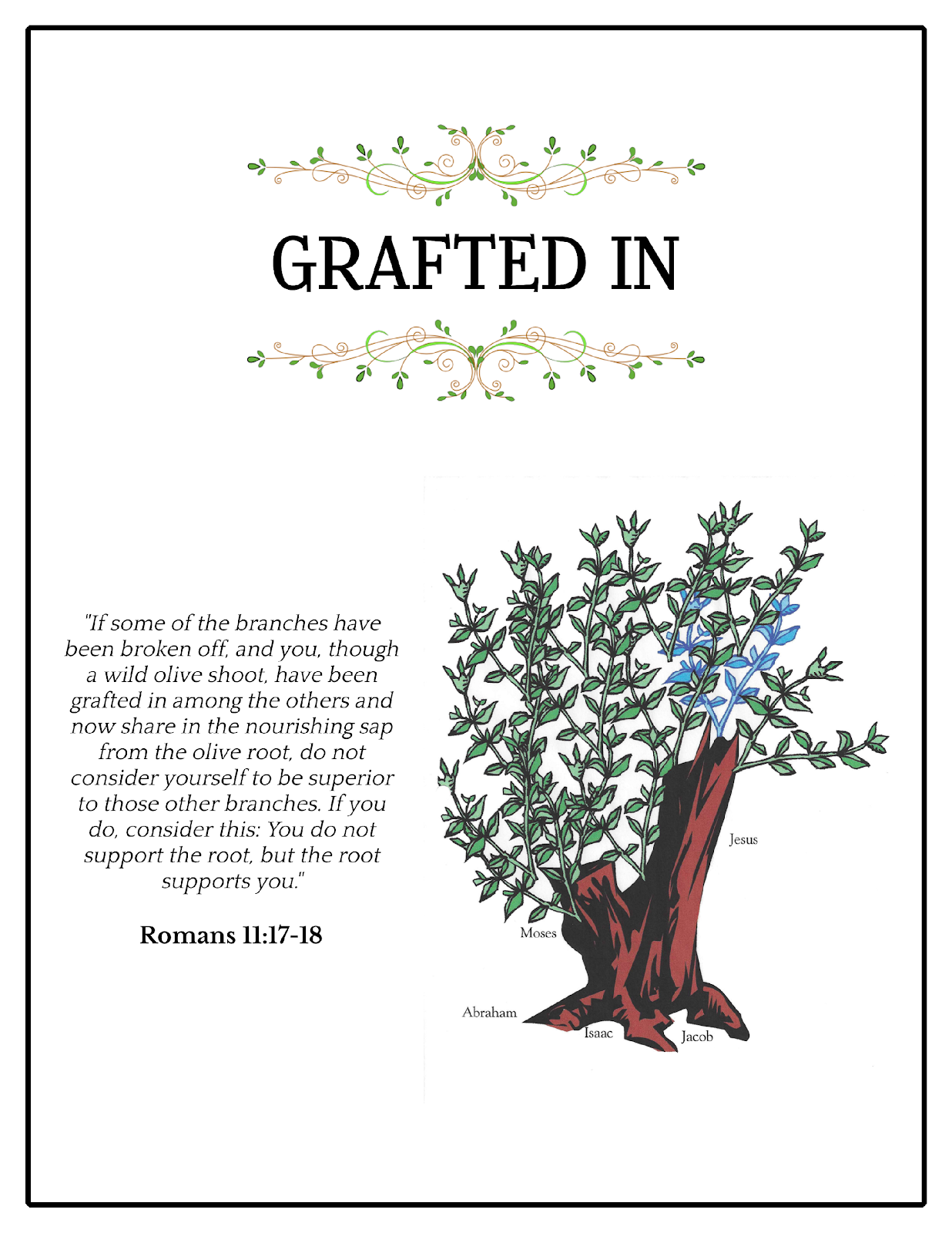
Christians believe that the gospel message is only about Yeshua’s death and resurrection. And it is, but only in part.  We only see through the lenses of Christian theologians, but we must understand that Yeshua was Jewish, and the message is a Jewish message. He was the Jewish Messiah, and He came to His people, the Jewish people. Us Gentiles were far off; in other words, we were pagans. Yes, today we may be believers, but back 2000 years ago, the Jewish people along with a few God-fearers were the only people to believe in the one true living God. He is the covenant-keeping God of Abraham, Isaac, and Jacob, and because of Yeshua’s sacrifice, we who once were far off can now draw near. Paul tells us in Ephesians 6:19, “Pray on my behalf, that utterance may be given to me in the opening of my mouth, to make known with boldness the mystery of the gospel.” What is the mystery of the gospel, or more correctly, “good news,” and why is it a mystery? In Ephesians 3:3-6, Paul writes, “That by revelation there was made known to me the mystery, as I wrote before in brief. And by referring to this, when you read you can understand my insight into the mystery of Messiah, which in other generations was not made known to the sons of men, as it has now been revealed to His holy apostles and prophets in the Spirit; to be specific, the gentiles are fellow heirs and fellow members of the body, and fellow partakers of the promise in Messiah Yeshua through the gospel.” Romans 11: 16-18 tells us, “If the first piece of dough is holy, the lump is also; and if the root is holy, the branches are too. But if some of the branches were broken off, and you being a wild olive branch, were grafted in among them and became partakers with them of the rich root of the olive tree, do not be arrogant toward the branches; but if you are arrogant, remember that it is not you who support the root, but the root supports you.” The Jewish message is now our message, and we will see next how the Exodus from Egypt became our exodus, and the redemption of Israel became our redemption. 

seder_meal.jpg

Christians ask, “Are you saved?” An unbeliever must think, “Saved from what?” 

This is a good question, even for us Christians.  We speak of redemption, but redemption from what?  There is no better place to answer those questions than to look at the Passover Seder. We ask, “Isn’t the Passover just for the Jews?” No! It is for each one of us. We know that God delivered the Jewish people from Egypt with great signs and wonders. God told them to put the blood of an unblemished lamb on the doorpost of their homes and to eat the lamb with their loins girded and their staff in their hand, for it was the Lord’s Passover; and that night, the death angel struck down the firstborn of man and animal. But He passed over the homes where the blood appeared. That night, Pharaoh told the people to leave his land; and with that, they gathered their belongings in the morning and fled the land. They did not even wait for their dough to rise in their kneading bowls. So let’s take a closer look as to why this has to do with each one of us; and at the same time, we will see the gospel message begin to develop. The Jewish people were in exile in the land of Egypt for 430 years. They had been under the yoke of bondage, slaves, and no way to escape from their plight until God sent Moses to deliver them. We too, were in bondage, slaves in Egypt, per se, until Yeshua came and delivered us. Egypt is symbolic of the kingdom of darkness,the world and all that the world stands for,the lust of the eyes, the lust of the flesh and the pride of life. The Seder Meal, or the Passover meal, has come to represent the story of the exodus. The Seder plate is full of symbolism of this redemption; and what is redemption but the purchasing or redeeming of one who is in slavery. Yeshua begins the Passover knowing that He would be the Passover Lamb bringing redemption,  Luke 22:14-16, “And when the hour had come, He reclined, and the twelve apostles with Him. He said to them, ‘I have greatly longed to eat this Passover offering with you before My suffering . For I say to you that I will not eat it any more until it is fulfilled in the kingdom of God.”’ The plate consists of the bitter herbs, maror,(usually horseradish) which reminds us of the bondage,the slavery in Egypt.  Paul tells us in Romans 6:16, “Do you not know that when you present yourselves to someone as slaves for obedience, you are slaves to the one whom you obey, either of sin resulting in death, or of obedience resulting in righteousness.?” 

Parsley, karpas, alludes to the crushing labor, and it is dipped in salt water to remind us of the tears of the Israelites as they cried out to God. In Matthew 26:20, Yeshua says, “I say to you, one of you will betray me.” The disciples began to question, “Is it I?” Yeshua answers them, “The man that dipped his hand in the bowl (salt water) with me is the one who will betray Me.”

 Unleavened bread, matzah, is the bread of affliction. Leaven or yeast represents sin, so unleavened means free from sin. Paul says, “Don’t you know that a little leaven works through the whole dough? Get rid of the old leaven that you may be a new batch without leaven as you really are.” The matzah is a flat, unleavened piece of bread. In the matzah, we see a picture of the Messiah, for the matzah is striped and pierced.  “But He was wounded for our transgressions, He was bruised for our iniquities; the chastisement of our peace was upon Him; and by His stripes we are healed.”  Paul, in Romans 6:6-7, tells us, “Knowing this, that our old self was crucified with Him, that our body of sin might be done away with, that we should no longer be slaves to sin; for he who has died is freed from sin.” The matzah piece that is called the Afikomen is broken in half, and one of the halves is placed in a white napkin and hidden until it is revealed again later in the meal. This represents the death and burial of the Messiah, and later resurrection. Paul tells us in 1 Corinthians 11:24 “And when He had given thanks, He broke it (the Afikomen) and said, “This is My body which is for you; do this in remembrance of Me.” 

The Apple mixture, charoset, represents the mortar used between the bricks. Lettuce, chazeret, reminds us of life and how we can go from joy to sadness when sin enters our lives and enslaves us. James writes, “Draw near to God and He will draw near to you. Cleanse your hands, you sinners; and purify your hearts, you double minded. Be miserable and mourn and weep; let your laughter be turned into mourning , and your joy to gloom. Humble yourselves in the presence of the Lord, and He will exalt you.” Roasted egg, beitzah, is a symbol of mourning that the temple does not stand any longer; but we know that one day, Yeshua will rule and reign in Jerusalem. The shankbone, zeroah,  represents the Passover Lamb. Since the destruction of the temple in 70 CE, no lamb is eaten on Passover because there is no temple to slaughter them. We know that Yeshua was the Lamb, for Paul tells us in 1 Corinthians 5:7-8, “Clean out the old leaven, that you may be a new lump, just as you are in fact unleavened. For Messiah our Passover  also has been sacrificed. Let us therefore celebrate the feast, not with old leaven, nor with the leaven of malice and wickedness, but with the unleavened bread of sincerity and truth.”  Four cups of wine are also drunk at the Seder Meal; each cup represents the four promises of God regarding redemption and salvation.  The first cup is called the Cup of Sanctification: “I will bring you out from under the yoke of the Egyptians.” The second cup is called the Cup of Deliverance: “ I will free you from being slaves.” The third cup is called the Cup of  Redemption or the Cup of Blessing: “I will redeem you with an outstretched arm.” It was here that Paul tells us, “In the same way He took the cup also, after supper, saying, ‘This cup is the new covenant in My blood; do this, as often as you drink it in remembrance of Me,’ for as often as you eat this bread and drink the cup, you proclaim the Lord’s death until He comes.” Paul writes in 1 Corinthians 10:16-17, “Is not the cup of blessing which we bless a sharing in the blood of Messiah?  Is not the bread which we break, a sharing in the body of the Messiah? Since there is one bread, we who are many are one body; for we all partake of the one bread.” The fourth cup is called the Cup of Praise: “ I will take you as My own people and I will be your God.”

We have seen in the story of the Exodus that Egypt = the kingdom of darkness, this world, Pharaoh = Satan, leven =sin, Yeshua = Passover Lamb. 

Because of the blood of the Passover Lamb, the death angel passed over those homes that had the blood on the doorpost. Why blood on the doorpost? Hebrews 9:22 tells us, ”According to the Torah, all things are cleansed with blood; and without the shedding of blood there is no forgiveness.” Paul tells the Colossians, “Because of what He has done; He has taken us out of the power of darkness and created a place for us in the kingdom of His Son that He loves, and in Him we gain freedom (redemption), the forgiveness of our sins,” (JB)

The redemption from Egypt was our redemption also. This is the Salvation message, which is part of the gospel message. Paul tells the Romans, “I am not ashamed of the gospel (good news) of Messiah, for it is the power of God to salvation for everyone who believes, for the Jew first and also the Gentile.”

We have been looking at the Biblical gospel message, also known as the “Good News.”  We have seen that this message was a Jewish message before it became a Christian message. Christians believe that the gospel message is “that you can be saved by the blood of Jesus;” and this is true. But we don’t realize the meaning behind all of this. Saved from what?  Words like salvation and redemption are Jewish terms which then became  Christian terms. We have learned that Yeshua, (Jesus) was Jewish and that He is the Jewish Messiah who was prophesied of by the prophets of old and spoken of by the angel to the shepherds; He was the promised Child, the good news of the one who would come. The angel revealed to Mary that He would sit on the throne of David in Jerusalem and there would be no end to His kingdom. He will be a mighty warrior and defeat His enemies, and He will gather the exiles of Israel and they shall live in peace from all their enemies in the promised land of Israel. None of this sounds like the Christian message as we know it. Yeshua, John the Baptist, and the disciples all preached the good news: “Repent for the kingdom of heaven is at hand.” The first step of the gospel message is just this, Repent for the kingdom is at hand. We learned that the kingdom is the kingdom that the angel spoke of to Mary, that would never come to an end; for Yeshua would sit on the throne of  King David forever. This Kingdom is the Messianic age, which most Christians have heard about. So, what about the Christians? Do they have their own message? Well, yes and no. Yes, because for now, many Jewish people have not come to the knowledge of Yeshua as Messiah. No, because their message is still our message. You see, the Scriptures tell us that we were alienated, hopelessly lost without the One true God (Ephesians:2:12). But God, in His great mercy, made the way for us. You see, Yeshua came as the Jewish Messiah.  He is the King of the Jews; but because of God’s great mercy, we who were afar off have been brought near by the blood of Yeshua (Ephesians 2:13). Now, you must understand that Yeshua never stopped being the Jewish Messiah, nor did the message that was prophesied of Him ever change. The message is still a Jewish message, and Yeshua is still Jewish, and He is still going to rule and reign forever in Jerusalem. But God made the way for the nations who believe in Yeshua and accept His sacrifice of redemption to now become part of Israel.  No, we do not become Jewish, but now we have been grafted into Israel (Romans 11:16-18) and we now can become part of the covenants and draw near to God by the blood of Yeshua. Their message now becomes our message. Their Messiah becomes our Messiah, their worship becomes our worship, and their Scriptures become our Scriptures. That is why we are called Judeo-Christians, a term that has been done away with over the last several decades. We must not get the Salvation message mixed up with the Gospel message, because the salvation message is only a part of the whole message.  We have seen that the first step of this message is to repent. Next, we must accept Yeshua’s work of redemption which He accomplished for us on the cross, which took us from being slaves in the kingdom of darkness to now being children serving God our King in His Kingdom of Light.  So let’s now look at the second step of the gospel message. 

The second step of the gospel message is found in Matthew 6:31-33:  “Do not be anxious then, saying, ‘What shall we eat?’ or ‘What shall we drink?’ or ‘With what shall we clothe ourselves?’ For all these things the Pagans eagerly seek; for your heavenly Father knows that you need all these things. But seek first His Kingdom and His righteousness; and all these things shall be added to you.’’ We see here that the kingdom must become our priority. We are to seek the kingdom first before any other thing. Remember, Yeshua tells the people to repent, for the kingdom was at hand. It was right there for them to grab hold of, if they would just begin to seek it out and live by it’s righteousness. Now, we must understand that the kingdom that is referenced here is the Messianic Age, when Yeshua will set up His kingdom right here on earth in Jerusalem and rule and reign forever. We do not need to go to Jerusalem to seek the kingdom, but we need to begin to live out kingdom principles right here, right now in our own lives.  He tells us how to do this in Matthew 6: 19-21. He tells us, “Do not lay up for yourselves treasures upon earth where moth and rust destroy, and where thieves break in and steal. But lay up for yourselves treasures in heaven ( the Messianic Age) where neither moth nor rust destroys, and where thieves do not break in or steal; for where your treasure is there will your heart be also.”  We are the Bride anxiously awaiting the return of our Bridegroom. We are to prepare ourselves for His coming, longing for the day when He will deliver His people from their enemies and bring us all home to the land of promise, Israel, so we may be where He is forever (1 Thessalonians 4:17).  Let us Repent; let us accept Yeshua’s sacrifice on our behalf, and let us draw near to God our Father with the blood of the Lamb sprinkled on our hearts (Hebrews 10:22). Let us grab hold of the kingdom as we serve our King (John 12:26), longing and waiting for His return (Hebrews 9:25-28) as we live out our deeds of righteousness (Ephesians 2:10). 

Now, this is the Biblical Gospel Message, and it is truly the Good News!

“The Addiction Of Sexting” (Podcast)

This is a

 “Clarion Call”

“Blow the trumpet in Zion;

    sound the alarm on my holy mountain.”(Joel 2:1)

It’s time for all people to awaken from their slumber. 

This is a time to see clearly the signs of the times.

No.16  JudeoChristianClarion.Com  “The Addiction of Sexting”


Why should our children be addicted to participating in pornography?

Pornography is an epidemic not only in this country but in the world.

In 2019, among 12- to 17-year-olds, 14% reported sending nude images, compared with 12% three years earlier; 23% received them, up from 19%. The steady climb may reflect rising smartphone use and changing social norms. What it certainly reflects, says Justin Patchin, of the University of Wisconsin-Eau Claire, is that “the current approach to stop this isn’t working.”

According to Christian Headlines, A doubling in the percentage of children ages 9-12 who shared their own nude pictures online should spark dramatic action by parents and the entertainment industry alike, says the president of a major media watchdog. A new study of 1,002 minors found that 14 percent of those ages 9-12 said they had shared their own nude picture online, compared to 6 percent who answered that way one year earlier. Meanwhile, 21 percent of children ages 9-12 said they believe it’s normal for kids their age to share nude pics online – a significant uptick from the 13 percent who answered that way the previous year. Among minors who have shared nude selfies, 50 percent said they had shared such a photo with someone they had never met in real life. The study, released last month, was conducted by Thorn in partnership with Benenson Strategy Group, comparing data from October-November 2020 to a similar poll from 2019.

 According to a nationally representative survey, 84.4% of 14 to 18-year-old males and 57% of 14 to 18-year-old females have viewed pornography.

47% of families in the United States reported that pornography is a problem in their home. Pornography use increases the marital infidelity rate by more than 300%.

 11 is the average age that a child is first exposed to porn, and 94% of children will see porn by the age of 14.

 56% of American divorces involve one party having an “obsessive interest” in pornographic websites.

With these statistics you can see why our children see nothing wrong with taking nude selfies. Peer pressure has become so great over the years that so many children fall under its pressure and so many children end up feeling so guilty that they commit suicide. Once the door is open it is very hard to shut, because  pornography damages the brain. It brings about depression and anxiety and those images are almost impossible to get out of the brain. The more you see the worse you are and it eventually destroys you. God did not create us to be filling our minds with these images. It is sin and sin always destroys.

We are finding more and more that those who identify themselves as Christians are becoming less and less. Lawlessness and godlessness are becoming increasingly the way of life.

1 in 5 youth pastors and 1 in 7 senior pastors use porn on a regular basis and are currently struggling. That’s more than 50,000 U.S. church leaders.

43% of senior pastors and youth pastors say they have struggled with pornography in the past.

64% of Christian men and 15% of Christian women say they watch porn at least once a month.

Only 7% of pastors report their church has a ministry program for those struggling with porn.

When sin creeps into the church it causes a disruption in the body and it makes the Body of the Messiah sick and weak. This is what we are finding today in the church, more sin and less prayer. Our children are now reaping what we have sown, and our society is also reaping from its sins. The only way back is to repent and call on God to help us before  we are totally destroyed like other nations, and empires that came before us. They all fell, and this is what led to the dark ages, when there were no advancements in society except crime and lust and poverty.  

 Today if you need help run into the arms of a loving God. Turn to a friend you can trust, and confess it all, and if you are that friend that someone turns to for help, then we say this, do not condemn them, but help them to seek help, and always keep praying for them and fighting the Spiritual Battle. If you are a parent you need to have talks with your children, and you need to know what they are doing on the internet and on their phones. Punishing them will not help, only love them and guide them out of their addiction and even their fears.

The Clarion, Jan. 2022

Volume 3, Issue 1  

    January, 2022


Welcome

Happy New Year Everyone! 

We pray that this year will be a year of renewal and revival and restoration.

We pray this for the Body of Messiah. We pray this for you!

2 Corinthians 5:17 says this,Therefore if anyone is in Messiah, he is a new creation. The old things have passed away; behold, all things have become new.” And Psalm 51:10, Create in me a clean heart, O God,    and renew a right spirit within me.” And in Isaiah 40:30-31, “Even youths shall faint and be weary,   and young men shall fall exhausted; but they who wait for the Lord shall renew their strength;    they shall mount up with wings like eagles; they shall run and not be weary;    they shall walk and not faint.”

Psalm 69:30-32, says this about being revived, “I will praise the name of God with a song;    I will magnify him with thanksgiving. This will please the Lord more than an ox   or a bull with horns and hoofs. When the humble see it they will be glad;

    you who seek God, let your hearts revive.”

 And Isaiah 57:15 says this, “The high and lofty one who lives in eternity, the Holy One, says this: “I live in the high and holy place with those whose spirits are contrite and humble. I restore the crushed spirit of the humble and revive the courage of those with repentant hearts.”

Lamentations 5:21-22 says this, “Restore us to You, Lord, so that we may be restored; Renew our days as of old, unless You have utterly rejected us

and are exceedingly angry with us.” 

Psalm 19:7, “The Law of the Lord is perfect, restoring the soul; the testimony of the Lord is sure, making wise the simple.The precepts of the Lord are right, rejoicing the heart; the commandment of the Lord is pure, enlightening the eyes.”

Living by God’s Word will lead to renewal, revival, and restoration.

We hope that this is your prayer also this New Year!


Have We Lost our Way?

As we begin this new year, we will begin with either a new fresh start, or we will find ourselves carrying baggage from the past year into the new year. Life is always a series of events, challenges to overcome, and hurdles to jump  over. We  find ourselves traveling from one day to the next and the days turn to years, and every day is a new day with new experiences, for life is a journey. As believers, the Word of God gives us our direction. It is our road map, our compass in life. But it seems that at times the road signs are not clear. Our vision becomes muddled and we find ourselves lost, going in the wrong direction.

In the book Pilgrim’s Progress, which was written by John Bunyan in 1678, is a classic allegory of the Christian life. The believer in the story is called Christian and the story is about his journey from the time he accepts the Messiah to reaching the celestial shores of heaven. We are all like this Pilgrim in one way or another. Pilgrim encounters all kinds of friends and foes. He has many trials to overcome. He goes from doubt to despair to lies and deceit, from false teachers to false friends. But our Pilgrim makes it through his journey. 

Today people are encountering many things that cause them to question, “Am I on the right road?”  It seems at churches today that pastors are not as committed as years ago, and less and less people are sitting in the pews and those who are, go from one church to another looking to be fed.

We have seen the statistics that the number of Americans who consider themselves members of a church, synagogue or mosque has dropped below 50 percent, from 73 percent a few decades ago.

Another survey shows that only 9% of Christians read their Bibles and at that, only  once a week.

Many believe that Yeshua was nothing other than a great teacher and  52 percent of adults do not believe that He was God, and many, many pastors today fall into these statistics.

We know that in the 1800’s, people like Moody and Seymour and Beecher, and so many others, preached a different message than today. They preached about sin and repentance. They preached about holiness and godliness. They kept no parishioner sitting on the fence. They did not whitewash the salvation message. There was no church friendly compromise.The Word of God was preached in its full intent. 

So where did we go wrong? And can we come back? We must start by being honest with ourselves. God’s Word will lead us back, if we are willing to accept its truths. Yeshua tells us in John 14:6, “I am the way and the truth and the life.”

1 Peter 1:14-16 tells us this, “As obedient children, do not be conformed to the former lusts which were yours in your ignorance,  but like the Holy One who called you, be holy yourselves also in all your behavior;  because it is written: “You shall be holy, for I am holy.”

And  Matthew 13-14 says this, “Enter through the narrow gate; for the gate is wide and the way is broad that leads to destruction, and there are many who enter through it.  For the gate is narrow and the way is constricted that leads to life, and there are few who find it.”

We have forgotten how to be holy. We have wandered off the narrow road that leads to eternal life.  We have become like the world. Yes, we have become so much like the world today. We have fallen so far that we speak, and think, and even at times act like the world.  We watch TV shows and movies and listen to music that does not uplift us, let alone give glory to God.

1 John 2:15 tells us this, “Do not love the world nor the things in the world. If anyone loves the world, the love of the Father is not in him.”

Today people think that they can live life without a moral compass. God loves everyone, but He does hate sin. 

Romans 12:1-2, reminds us of this very important truth. “Therefore I urge you, brothers and sisters, by the mercies of God, to present your bodies as a living and holy sacrifice, acceptable to God, which is your spiritual service of worship.  And do not be conformed to this world, but be transformed by the renewing of your mind, so that you may prove what the will of God is, that which is good and acceptable and perfect.”

Today, do we even consider what God’s will is in our lives, or do we just live our lives the way we wish? God has a plan for each one of our lives, and He has given us talents and abilities and gifts that we must use for the kingdom, yes, for the kingdom, for God gives them to us not for our own lives, but to reach out to others who may need our talents and gifts and abilities. This is the command to love our neighbor as ourselves. (Matthew 22: 37-40)

We have forgotten that we are not to be like the world, for it makes us enemies of God as James 4:4 tells us, “You adulteresses, do you not know that friendship with the world is hostility toward God? Therefore whoever wants to be a friend of the world makes himself an enemy of God.”

When we are not taught and reminded frequently about sin and repentance, then we begin to drift away from holiness and godliness, and the narrow road becomes as wide as a four lane highway.

If it feels right, do it, or you deserve it, or what is right for you may not be right for me, are all lies from the devil.  

Yes, we have lost our way, but what is sad is that we do not even realize it. As we begin this new year let’s spend time in God’s Word and let’s allow the Holy Spirit 

to speak to us. We do not need to try and figure out what the Word is saying to us, for God’s Word is clear, and when it is not, it explains to us the meaning of our questions as we continue in our reading. And God’s Word is one as He is one, so let us study God’s Word from cover to cover, because you can not build without a foundation, and that is where we begin having our problems. Sadly to say that the new translations have twisted the Word of God. It has done away with the blood of Yeshua, and many other concepts of Christianity. This was all done intentionally, so that Chrisitans would live a more repentance free life, but we know that sin separates us from God, and that is exactly the end game. Let’s get back on the straight and narrow road as Proverbs 3:5-6 tells us, “Trust in the Lord with all your heart and do not lean on your own understanding. In all your ways acknowledge Him, and He will make your paths straight.” 

God will lead us and guide us back, but we have to want to come back to holiness and godliness, keeping His Commandments, being set-apart for His glory and that might require discipline to train us, as Hebrews 12:10-13, “For the moment, all discipline seems not to be pleasant, but painful; yet to those who have been trained by it, afterward it yields the peaceful fruit of righteousness.  Therefore, strengthen the hands that are weak and the knees that are feeble,  and make straight paths for your feet, so that the limb which is impaired may not be dislocated, but rather be healed.”

God’s Word will strengthen us, and make our paths straight. This new year, this new beginning, let’s start with returning to Gods’ truth. 


Recipe Corner:

Salted Dark Chocolate Tart by Taste of Home

Ingredients: 

1-1/2 cups Oreo cookie crumbs     1/3 cup butter, melted

CARAMEL:    3/4 cup sugar     3 tablespoons water    1/3 cup heavy whipping cream           Two tablespoons butter, cubed       Dash salt

FILLING:   4 cups dark chocolate chips        1-1/4 cups heavy whipping cream          One teaspoon vanilla extract                            1/2 teaspoon large-crystal sea salt

Directions :   1. In a small bowl, combine cookie crumbs and butter; press onto the bottom and up the sides of a greased 9-in. fluted tart pan with removable bottom. Cover and refrigerate for 30 minutes.  

 2. For caramel, in a small saucepan over medium heat, combine sugar and water. Cook, shaking pan occasionally, until sugar is melted and mixture is almost clear (do not boil).   

3. Increase heat to medium high; bring to a boil, without stirring. Cover and boil for 2 minutes while tightly holding lid of pan down. Uncover; shake pan. Cook 1-2 minutes longer or until mixture is amber, shaking pan several times.  

 4. Remove from the heat; stir in cream (mixture will bubble) until smooth. Stir in butter (mixture will bubble) and salt until blended. Pour into crust; refrigerate for 15 minutes.  

5. Place chocolate in a large bowl. In a small saucepan, bring cream just to a boil. Pour over chocolate; whisk until smooth. Stir in vanilla. Let stand for 20 minutes.      

 6. Pour chocolate mixture over caramel. Sprinkle with sea salt. Refrigerate for at least 3 hours. Remove from the refrigerator about 45 minutes before serving.


Hebrew Corner:  

The letter Resh

      ר

The letter Resh is the twentieth letter in the Hebrew alphabet. It’s numerical value is 200. It represents a person who is bent over, but a person who only gratifies himself. One who only has evil intentions. The prophet Nathan tells David this story after he took Bathsheba from her husband in 2 Samuel 12:1-6,

“A rich man and a poor man lived in the same town. The rich man owned a lot of sheep and cattle, but the poor man had only one little lamb that he had bought and raised. The lamb became a pet for him and his children. He even let it eat from his plate and drink from his cup and sleep on his lap. The lamb was like one of his own children.One day someone came to visit the rich man, but the rich man didn’t want to kill any of his own sheep or cattle and serve it to the visitor. So he stole the poor man’s little lamb and served it instead.David was furious with the rich man and said to Nathan, “I swear by the living Lord that the man who did this deserves to die!  And because he didn’t have any pity on the poor man, he will have to pay four times what the lamb was worth.”  Then Nathan told David: You are that rich man!”

Resh almost sounds like wretch. God wants us to love one another and to do that we must put others first as Philippians 2:3-4 tells us,  “Do nothing from selfishness or empty conceit, but with humility consider one another as more important than yourselves; Let each of you look not only to his own interests, but also to the interests of others.”

God Bless Your New Year as you love one another.

In A Dry Land

Have you ever felt like you are going through a drought in your life, a dry period, where it seems as though life has become so mundane, so routine, so uneventful, like the heavens have closed their ears to your prayers?  It is as if you are in a desert, a parched land, all alone. If you screamed no one would even hear you. You have to ask yourself, “Am I in a dry land because of my situation in the world, or my relationship with God”?  Most likely it is because of your situation with God.  Feeling discontent and even lonely can be because we have stepped away from God’s presence.King David felt this way when he wrote Psalm 42. It starts like this, “As the deer pants for the water brooks, So my soul pants for You, God.

 My soul thirsts for God, for the living God; when shall I come and appear before God? My tears have been my food day and night, while they say to me all day long, ‘Where is your God?”’

Also when he wrote Psalm 63, “God, You are my God; I shall be watching for You;

my soul thirsts for You, my flesh yearns for You, in a dry and exhausted land where there is no water.”

Sin separates us from God, and of course, if we do not spend time with God then once again, we are separated from Him. Maybe we have stopped going to church, or reading our Bible, or even praying.  Then when we go through a crisis in our lives, and we need God we cannot find Him. If you find yourself alone without God Psalm 63:2-5 has some good advice. “So have I seen You in the sanctuary, to see Your power and glory. Because Your favor is better than life, my lips will praise You. So I will bless You as long as I live; I will lift up my hands in Your name. My soul is satisfied as with fat and fatness, and my mouth offers praises with joyful lips.”

 There is nothing better than to begin praising the Lord, lifting up your hands in surrender to Him and bringing the sacrifice of praise, the fruit of our lips.

It will set you free. It will be like a shower of blessings coming down upon you.

Psalm 51:17 says this, “My sacrifice, O God, is a broken spirit; a broken and contrite heart you, God, will not despise.”

Psalm 42:2-8 continues,  I remember these things and pour out my soul within me. For I used to go over with the multitude and walk them to the house of God, with a voice of joy and thanksgiving, a multitude celebrating a festival.  “Why are you in despair, my soul? And why are you restless within me? Wait for God, for I will again praise Him for the help of His presence, my God. My soul is in despair within me; Therefore I remember You from the land of the Jordan And the peaks of Hermon, from Mount Mizar. Deep calls to deep at the sound of Your waterfalls; all Your breakers and Your waves have passed over me. The Lord will send His goodness in the daytime; and His song will be with me in the night, a prayer to the God of my life.”

Remember what you once had with God and return to Him, He will receive you if you sincerely have that heart’s desire. But maybe you never knew God, so you never left God. Then you need to find Him. 

Jeremiah 29:12-13 says this, “Then you will call upon Me and come and pray to Me, and I will listen to you.  And you will seek Me and find Me when you search for Me with all your heart.”

If you want to find God then you must go to the River of Living Water to find refreshing for your soul. 

John 7:38 tells us this, “He who believes in Me, as the Scripture said, ‘From his innermost being will flow rivers of living water.’”

When you have a relationship with God, there is no dry and parched land, only living water deep within you. When we hunger and thirst for the righteousness of God, we find that we become satisfied within ourselves as Matthew 5:6 tells us, 

“Blessed are those who hunger and thirst for righteousness, for they will be satisfied.’

Today if you are in a dry land, if you have found yourself away from the River of Life, if you are alone, then remember as the Psalmist did in Psalm 63:6-8

“When I remember You on my bed, I meditate on You in the night watches, for You have been my help, and in the shadow of Your wings I sing for joy. My soul clings to You; Your right hand takes hold of me.”

God is a forgiving God as Psalm 86:4-5  tells us, “ Make the soul of Your servant joyful, for to You, Lord, I lift up my soul. For You, Lord, are good, and ready to forgive, and abundant in mercy to all who call upon You.”

Isaiah 41:17-18 says this, “The poor and needy are seeking water, but there is none, and their tongues are parched with thirst. I, the Lord, will answer them Myself; as the God of Israel I will not abandon them. I will open rivers on the bare heights, and springs in the midst of the valleys; I will make the wilderness a pool of water, and the dry land fountains of water.”

And one more …Psalm 23, “The Lord is my shepherd, I will not be in need. He lets me lie down in green pastures; He leads me beside quiet waters. He restores my soul; He guides me in the paths of righteousness for the sake of His name. Even though I walk through the valley of the shadow of death, I fear no evil, for You are with me; Your rod and Your staff, they comfort me. You prepare a table before me in the presence of my enemies; You have anointed my head with oil; my cup overflows. Certainly goodness and faithfulness will follow me all the days of my life, and my dwelling will be in the house of the Lord forever.”

The Shepherd will meet you beside those quiet waters and you will not be alone any more.


” The Hidden Crime Of Human Trafficking”(Podcast)

 “Clarion Call”

“Blow the trumpet in Zion;

    sound the alarm on my holy mountain.”(Joel 2:1)

It’s time for all people to awaken from their slumber. 

This is a time to see clearly the signs of the times.

No.17  JudeoChristianClarion.Com  “The Hidden Crime of Human Trafficking”


Human trafficking is nothing less than modern slavery. We have not learned from our past, nor do we want to learn, for deep down man’s sinful nature wants to have power over another. This is why Satan fell, because he too, wanted to have people bow down to him and serve him. The business of human trafficking is a lucrative business making globally profits of roughly $150 billion a year for traffickers, $99 billion of which comes from commercial sexual exploitation. Globally, an estimated 71% of enslaved people are women and girls, while men and boys account for 29%. It is estimated that 20-40 million people are forced into this slave labor. Trafficking involves transporting someone into a situation of exploitation. This can include forced labor, marriage, prostitution, and organ removal. 

24.9 million people are victims of forced labor. (ILO, 2017)

16 million people are trafficked for forced labor in the private economy. (Private economy includes: private individuals, groups, or companies in all sectors except the commercial sex industry). (ILO, 2017)   4.8 million people are trafficked for forced sexual exploitation. (ILO, 2017)   4.1 million people are trafficked for forced labor in state-imposed forced labor.It is estimated that 20.9 million people are trafficked worldwide. (ILO, 2017)                                                 Many of these cases go undetected because of the country they lived in, or because they are undocumented migrants who have come to this country. Estimates suggest that about 50,000 people are trafficked into the US each year, most often from Mexico and the Philippines. Reports indicate that a large number of child sex trafficking survivors in the US were at one time in the foster care system. Advocates report a growing trend of traffickers using online social media platforms to recruit and advertise targets of human trafficking. The average age a teen enters the sex trade in the US is 12 to 14 years old. Many victims are runaway girls who were sexually abused as children. NIJ-supported research reveals that labor and sex trafficking data appearing in the FBI’s national Uniform Crime Reporting (UCR) Program may significantly understate the extent of human trafficking crimes in the United States.                                       So what can we do about this terrible injustice?  One, we can pray, but we can also get involved as a church or a community. We can keep our eyes open, and if we suspect someone may be living in a home not of their own free will then we need to speak up, and contact local authorities. Also if you can be a foster parent, and if you are, and that person is nearing the age of eighteen, make sure that they do not leave your home until they have a proper place to live and work. Let’s help those who may be vulnerable to being trafficked and for sure know who your children are talking to online and what social media and websites they view. Talk with your children and tell them about such things, so that they become aware of what goes on in society. Let’s work to end this terrible hidden crime in this country and in the world.

“The Tragedy Of Abductions” (Podcast)

This is a

 “Clarion Call”

“Blow the trumpet in Zion;

    sound the alarm on my holy mountain.”(Joel 2:1)

It’s time for all people to awaken from their slumber. 

This is a time to see clearly the signs of the times.

No.18  JudeoChristianClarion.Com  “The Tragedy of Abductions”


Did someone you know ever show up late from coming home from school or work or shopping?  It worries you. You can’t figure out why they are late. Maybe they don’t answer their phone. It is a horrible feeling. Every 40 seconds, a child goes missing or is abducted in the United States. More than 840,000 children go missing every year.  12+ years old children are the kidnapping victims in around 80% of all cases that include minors. Girls from 12 to 17 years of age are the most typical victims of abduction. 99% of sex trafficking victims are females. Every year, 600,000 people go missing in the US.

Abduction is an issue that impacts all countries globally, regardless of their level of development. It means seizing a person and keeping them in captivity. Kidnappers tend to target children they’ve met before, and they observe them before making a move. Unfortunately the majority of people abducted usually end up dead.  According to the NamUs missing persons statistics, hundreds of thousands of minors and adults go missing each year. In most cases, the disappearances are not attributed to kidnapping, and a person is found alive and well. However, tens of thousands never come back, and the authorities are often unable to determine what happened. According to the National Institute of Justice, around 1,000 of those bodies remain unidentified after one year. Statistics on kidnapping and missing persons show that there’s a whole host of bodies that remain anonymous for an extended period. 

Many abductions are by acquaintances which makes up 27 percent of all child abductions. Stranger abduction is most likely to involve a firearm when compared to the other types of abduction and is associated with sexual assault in female victims and robbery in male victims. 

Of course you have family abductions and runaways. Many runaways are running from abusive homes, emotional abuse, sexual abuse, by a family member or someone who is staying with the family. Family kidnappings make up half of all reported abductions in the United States. Children under the age of 6 are most frequently targeted for family abductions and these often occur in the midst of bitter divorce or child custody battles between parents.

So why would we kidnap our own children? This only leaves a scar upon them for life. And why do we think that, that live -in boyfriend or girlfriend is a person who would never harm a child? It’s not their child, so why would you think that they would treat your child like they should? We assume too much today, in a world that is not godly, in a world of pornography, in a world of human trafficking, in a world where people equal money!

We see fathers abusing their daughters, or other family members who may offer to watch your children.  Our children should be our special treasure and we should protect them from any possibilities. You may have to leave your children to go to work. If that is the case then leave them where they will not be left alone with someone who may do them harm, or someone you do not know if they would do them harm. If you think that someone is being held by another without their consent, then do all that you can to be sure. Pay attention to Amber Alerts or your local news when they tell of a missing person. And most of all pray for them that they will be found safely!   We are becoming more and more a lawless society, and we know that much of the lawlessness begins with the breakdown of the family. 

If you need to get away from a spouse who may do you or your children harm, then go to a shelter or a family counselor, but do not kidnap your own children and run, especially across state lines. God will help you if you seek Him,  He will make the way where there seems to be no way. But abducting your own children will only give you more problems, and hurt your children for life.

“The Forgotten Illness” (Podcast)

 “Clarion Call”

“Blow the trumpet in Zion;

    sound the alarm on my holy mountain.”(Joel 2:1)

It’s time for all people to awaken from their slumber. 

This is a time to see clearly the signs of the times.

No.19  JudeoChristianClarion.Com  “ The Forgotten Illness”


Over the last several years we have been dealing with a pandemic.

We have seen so many people ill and a great number of people dying. We have had mandates for masks and for shots, and we have even been locked down and isolated, and with great concern we have met this problem head on. People got tested, and people got treated and the government spent billions of dollars.

But for decades we have been dealing with another kind of pandemic, it is called mental illness, and yet we have barely done anything about it. According to National Alliance on Mental Illness:

21% of U.S. adults experienced mental illness in 2020 (52.9 million people). This represents 1 in 5 adults.

5.6% of U.S. adults experienced serious mental illness in 2020 (14.2 million people). This represents 1 in 20 adults.

16.5% of U.S. youth aged 6-17 experienced a mental health disorder in 2016 (7.7 million people) this represents 1 in 6 US. youth.

50% of all lifetime mental illness begins by age 14, and 75% by age 24.

Suicide is the 2nd leading cause of death among people aged 10-34. 

6.7% of U.S. adults experienced a co-occurring substance use disorder and mental illness in 2020 (17 million people). 

 And yet, not the whole population is receiving treatment. 

  • 46.2% of U.S. adults with mental illness received treatment in 2020. 
  • 64.5% of U.S. adults with serious mental illness received treatment in 2020.  
  • 50.6% of U.S. youth aged 6-17 with a mental health disorder received treatment in 2016.   

Millions of people are affected every year by mental illness. Mental illness does not only affect the person who is ill, but it affects all of us.

  • People with depression have a 40% higher risk of developing cardiovascular and metabolic diseases than the general population. People with serious mental illness are nearly twice as likely to develop these conditions.
  • 32.1% of U.S. adults with mental illness also experienced a substance use disorder in 2020 (17 million individuals).
  • The rate of unemployment is higher among U.S. adults who have mental illness (6.4%) compared to those who do not (5.1%).
  • High school students with significant symptoms of depression are more than twice as likely to drop out compared to their peers.
  • Students aged 6-17 with mental, emotional or behavioral concerns are 3x more likely to repeat a grade.
  • At least 8.4 million people in the U.S. provide care to an adult with a mental or emotional health issue.
  • Caregivers of adults with mental or emotional health issues spend an average of 32 hours per week providing unpaid care.
  • Mental illness and substance use disorders are involved in 1 out of every 8 emergency department visits by a U.S. adult (estimated 12 million visits).
  • Mood disorders are the most common cause of hospitalization for all people in the U.S. under age 45 (after excluding hospitalization relating to pregnancy and birth).
  • Across the U.S. economy, serious mental illness causes $193.2 billion in lost earnings each year.
  • 20.8% of people experiencing homelessness in the U.S. have a serious mental health condition.
  • 37% of adults incarcerated in the state and federal prison system have a diagnosed mental illness.
  • 70% of youth in the juvenile justice system have a diagnosable mental health condition.
  • 8.4% of Active Component service members in the U.S. military experienced a mental health or substance use condition in 2019.
  • 15.3% of U.S. Veterans experienced a mental illness in 2019 (31.3 million people). 
  • Depression and anxiety disorders cost the global economy $1 trillion in lost productivity each year. 

Depression is a leading cause of disability worldwide.

Shouldn’t this be considered a global pandemic?  It certainly is a pandemic here in the United States and yet, we do not tackle this problem like we have tackled the Coronavirus. So many of these people go undiagnosed and so many of them go untreated. This is a serious social issue, because it affects people in all walks of life and the untreated and undiagnosed people usually are left to their own self – doctoring and this only leads to other issues, like crime, alcohol, drugs and suicide.  Our prisons are overrun with mental illness and this could have and should have been prevented. Either we need to treat these people while they are in prison, or we need more asylums where they can get treatment. Either way , we need to conquer mental health in a compassionate way. We as a society can do better and we must do better for their sake. Let’s gather our church members, or our non-profits, and especially our congress, and let’s put the same amount of energy and money into helping one of our most vulnerable groups of people, the mentally ill. Let us also work at removing the stigma of mental illness. So many of our children are bullied and laughed at because they have issues that they deal with, maybe with someone at home or themselves who has mental illness. We must make a better effort, an effort that will bring about change, and that may just mean that we need to pray harder for this pandemic called “mental illness.”

“The Sorrow Of Suicide” (Podcast)

 “Clarion Call”

“Blow the trumpet in Zion;

    sound the alarm on my holy mountain.”(Joel 2:1)

It’s time for all people to awaken from their slumber. 

This is a time to see clearly the signs of the times.

No.20   JudeoChristianClarion.Com  “ The Sorrow of  Suicide”


I’m sure that most people know someone who committed suicide, or heard of someone who did.

Suicide is a serious public health problem among all age groups. Among youth, it exacts an enormous toll due to the significant years of potential life lost.

In 2016 suicide was the 10th leading cause of death in America.

The World Health Organization reports that nearly 800,000 people die worldwide each year from suicide, which is about one person every 40 seconds. Globally it is the second leading cause of death for those between the ages of  15-24.

For every suicide there are many more people who attempt suicide. A prior suicide attempt is the single most important risk factor for suicide in the general population. Approximately 575,000 people visited a hospital for injuries due to self-harm. There are approximately 1,149,475 annual attempts in the U.S. (using 25:1 ratio) or one attempt every 27.5 seconds. There is one suicide for every estimated 25 suicide attempts. 1 in 100,000 children ages 10 to 14 die by suicide each year. (NIMH). 7 in 100,000 youth ages 15 to 19 die by suicide each year. (NIMH) There is one suicide for every estimated 4 suicide attempts in the elderly.

While the link between suicide and mental disorders (in particular, depression and alcohol use disorders) is well established in high-income countries, many suicides happen impulsively in moments of crisis with a breakdown in the ability to deal with life stresses, such as financial problems, relationship break-up or chronic pain and illness.

Depression and suicide are linked, with an estimate that up to 60% of people who commit suicide have major depression. But it’s important to note that this figure doesn’t mean most people with depression will attempt suicide. Research suggests that the majority of suicides are related to a psychiatric condition, which includes depression, substance use disorders, and psychosis. Estimates suggest that the suicide risk for mental disorders which includes depression, alcoholism, and schizophrenia is around 5% to 8%.

  • Suicide is the 2nd leading cause of death among people aged 10-34 in the U.S.
  • The overall suicide rate in the U.S. has increased by 35% since 1999
  • 46% of people who die by suicide had a diagnosed mental health condition
  • 90% of people who die by suicide had shown symptoms of a mental health condition, according to interviews with family, friends and medical professionals (also known as psychological autopsy).
  • Lesbian, gay and bisexual youth are 4x more likely to attempt suicide than straight youth.
  • 78% of people who die by suicide are male.
  • Transgender adults are nearly 12x more likely to attempt suicide than the general population.
  • Annual prevalence of serious thoughts of suicide, by U.S. demographic group:
    • 4.9% of all adults 
    • Suicide is the fourth leading cause of death among 15-19 year-olds at 18:8 % 
    • 11.3% of young adults aged 18-25
    • 42% of LGBTQ youth
    • 52% of LGBTQ youth who identify as transgender or nonbinary

There are warning signs you can watch for in those who may be at risk of attempting suicide. Though there is no single type of person who may commit suicide and the symptoms below are not exhaustive, these are the most common signs observed among people who may be contemplating taking their own life. 

A change in personality, especially behaviors in social situations. 

Withdrawal from interaction or communication with others.

 Mood changes that are drastic, such as being in a very low mood one day to being in a very high mood the next. 

Triggers such as life crisis or trauma in a person who is already living with depression. 

Threats of suicide, or expressed negative wishes regarding life, such as wishing they’d “never been born.” 

Giving away cherished belongings to friends and loved ones. 

Deep depression is observed that affects their ability to function socially or in the workplace.

 Aggressive or risky behaviors, such as high-speed driving.

Some things we can do to prevent youth suicides.  Prevention efforts should be aimed at all levels of influence: individual, relationship, community and societal. Suicide rates for at-risk youth can be substantially reduced by:

  • Knowing the signs. Four out of five suicide deaths are preceded by warning signs such as suicidal threats, previous suicide attempts, preoccupation or obsession with death, depression, and final arrangements. 
  • Making it more difficult to die in an act of deliberate self-harm. Interventions include building barriers on bridges, removing guns from homes with at-risk youth, lethal means counseling and reducing medication load available. 
  • Improving access to mental health resources. Examples include medical interventions and support groups, effective clinical care for mental disorders and family and community support. 

If we are a parent or grandparent or around any children, or young adults or any one for that matter, we need to watch for the signs. We need to be aware of people and what they say and what they do, because it all has a purpose, it all matters. We have forgotten to listen to people, and especially their tone, and mannerism which can speak volumes.  We need to become involved in people’s lives, not less, but more. We speak about pandemics, but there are many pandemics, and they all need our attention. There is so much death around us, in movies, and music, and TV shows, and a constant reminder of our current pandemic, the Coronavirus. People need to hear something other than sickness and death. We need to laugh and enjoy one another. Everyone will die one day, but it is important how we live, and make memories, and enjoy each other, this is what matters in death. No one should take their lives, it is God given, and it is for God to take. So let us do all that we can to help one another in our crises for this is God’s will for us that we love one another.

” The Unspoken Word ” (Podcast)

 “Clarion Call”

“Blow the trumpet in Zion;

    sound the alarm on my holy mountain.”(Joel 2:1)

It’s time for all people to awaken from their slumber. 

This is a time to see clearly the signs of the times.

No.21  JudeoChristianClarion.Com  “ The Unspoken Word”


These past years we have had our minds on a world pandemic and of course, this was something to be quite concerned about. But because of all of the attention we gave this pandemic, many things have gone unnoticed. Many people’s lives were affected differently from others. But throughout the years we have not given attention to many things that have a great magnitude of effect on our lives. And a big one that will affect us for many years to come is abortion. Yes, we hate to use this word. We have so many skeletons in our closets, that we hate to open the door and look inside. This loss of life will have untold consequences for decades, and even the remainder of this century, especially since we lost so many people during this pandemic for a variety of reasons. Just think of the people that would have been doctors, scientists, teachers, fathers and mothers. Yes, many people will say, just think of the mouths that would have needed to be fed, the resources that would have needed to be used for all those people’s lives. Can I or even you say that one of us is more important than anyone of those lives that were deemed a bother, or unimportant? How can we, we will never know what they would have contributed to life?

According to (WND) World Net Daily, the leading cause of death worldwide for 2021 was abortion, which accounted for 42 of each 100 deaths from all causes.

Decision magazine explained, “The total of all deaths worldwide from causes other than abortion came in at 58.7 million, which means that abortions accounted for 42% of all humans deaths in 2021.”  The report says, by the numbers, there were 42.6 million deaths by abortion during 2021. That makes three years in a row that the leading cause of death worldwide is abortion, according to Worldmeter, a database that compiles global statistics on a variety of topics. The report goes on to say “As of noon December 31, 42.6 million abortions had been performed during 2021.  By comparison, 13 million people had died from communicable diseases; 8.2 million from cancer; 5 million  from smoking; 2.5 million from alcohol and 1.7 million from HIV/AIDS.” Also, there were 393,000 who died from malaria, one million suicides, and 1.3 million road accident fatalities. Additionally, deaths from the Coronavirus in 2021 totaled around 3.5 million globally, according to the World Health Organization.

In 1973 America legalized abortion. According to  Wikipeda, abortion has existed in America since European colonization. The earliest settlers would often encourage abortions before the “quickening” stage in the pregnancy. There were many reasons given for this, including not having resources to bear children. By the late 1800s states began to make abortions illegal. So what did we know back in the 1800’s that we so quickly forgot in the 1900’s? One big reason was the Great Awakening of the 19th Century and many revivals at that time, one for instance, was the movement that quickly spread throughout Kentucky, Indiana, Tennessee, and southern Ohio, as well as other regions of the United States and Canada. Many new Protestant denominations came about from this revival, such as the Methodists and Baptist, to name a few. People were in love with religion. People were encouraged to have a personal relationship with God, and because of all of this,  people had a greater regard for the things of God, an so abortion was considered murder and illegal. Today we find ourselves in a different place. Today we do not have  that love for God as we once had, and so it makes it easier to go back to the days when abortion was not only legal, but thought of as OK and a person’s right. With so many people walking away from faith, not only this country but the world, it is becoming a very dark place, a place where lawlessness is considered the right way to be. Yeshua says this in Matthew 24:12:  “And because lawlessness is increased, most people’s love will become cold.”

 Isaiah 5:20 tells us, “Woe to those who call evil good  and good evil, who put darkness for light   and light for darkness, who put bitter for sweet   and sweet for bitter.”

Today you who are listening to this audio most likely are against abortion. You may even be the one who is praying for this to come to an end, but I tell you, you must go beyond your prayer closet and you must be an advocate for the unborn. You must rally those around you, and make your voices heard.  First, go to those who you know who have had an abortion and love them, and hold them, because I tell you deep inside of them is a deep wound. And then speak out, because I tell you, the word abortion is an unspoken word. Many out there will not tell you that they have had an abortion, and yet they so much want to, but are afraid that people will look upon them with contempt. Yes, right there, the one who is sitting next to you in a pew. Don’t forget the men who also consented to their girlfriend or wife having an abortion, they too, carry much guilt. Let’s start with healing our own family, and our church family, and then take it from there.

The Clarion, Feb. 2022

Volume 3, Issue 2

  February, 2022


Welcome

We find ourselves in the middle when February arrives. It’s the halfway point of winter. It’s like being in a tunnel, you can no longer see the entrance of the tunnel  nor can you see the end of it. It’s like faith. We have the confidence that if we keep going forward we will see the end result, even though we do not see it now, (Hebrews 11:1). We have that hope, for who hopes for what they already have, (Romans 8:24)?  This is what our walk is like with the Lord. 1 Corinthians 13:12 tells us,For now we see in a mirror dimly, but then face to face; now I know in part, but then I will know fully, just as I also have been fully known. But now faith, hope, and love remain, these three; but the greatest of these is love.” It seems like all roads lead to love, one way or another, love is usually the element that causes one to do good or the lack of it which causes people to do bad. Like February which is in the middle of winter, our love can also be half way. You can’t really see the good of it, nor can you really see the bad. Maybe that is why  God tells us in Revelation 3:15-16,  “I know your deeds, that you are neither cold nor hot. Oh, that you were either cold or hot!  So because you are lukewarm, and neither cold nor hot, I am about to spew you out of My mouth.”

We can not live on the fence. We can not live in the middle. We can not be complacent, or undecided. We must make our decision to follow the Messiah whole heartedly, with commitment, and fervor, walking in His footsteps, or get off the road, and stop pretending that you are on the road that leads to life. People may be watching you, and think that they too can be like you. Love is the greatest, because love never pretends. It is never unresponsive. It is never fake. It does not sit on the fence. Love is complete and there is no halfway about it. It’s all or nothing. It’s what gives us our faith and our hope, and it sees what we may not be able to see with our eyes, because it sees with the heart. Today if you find yourself in the middle, halfway in either direction, choose love, and it will give you all you need to go in the right direction, because God is love, He is true love, and His direction is always right because love never fails.


How Did You Get In?

Matthew 22:1-14 tells us about a parable that Yeshua told about a king. This parable is hard to understand. So let’s take a closer look at it, and unravel the secret of Yeshua’s parable.“And againYeshua spoke to them in parables, saying,  “The kingdom of heaven may be compared to a king who gave a wedding feast for his son,  and sent his servants to call those who were invited to the wedding feast, but they would not come.  Again he sent other servants, saying, ‘Tell those who are invited, “See, I have prepared my dinner, my oxen and my fat calves have been slaughtered, and everything is ready. Come to the wedding feast.”’  But they paid no attention and went off, one to his farm, another to his business,  while the rest seized his servants, treated them shamefully, and killed them. The king was angry, and he sent his troops and destroyed those murderers and burned their city.  Then he said to his servants, ‘The wedding feast is ready, but those invited were not worthy.  Go therefore to the main roads and invite to the wedding feast as many as you find.’  And those servants went out into the roads and gathered all whom they found, both bad and good. So the wedding hall was filled with guests. “But when the king came in to look at the guests, he saw there a man who had no wedding garment.  And he said to him, ‘Friend, how did you get in here without a wedding garment?’ And he was speechless.  Then the king said to the attendants, ‘Bind him hand and foot and cast him into the outer darkness. In that place there will be weeping and gnashing of teeth.’  For many are called, but few are chosen.”

At the time of Yeshua, there were many parables that circulated, all having a similar thought. Parables were a way that Rabbis taught the people in the day of Yeshua.  We see here a wedding has taken place and the king’s son is the bridegroom. Naturally there has to be a banquet. So it was customary even as late as the 1800’s that servants would be sent out to let those who have been invited know that it was now time for the gathering. Now we must emphasise the fact that these people had already been invited. The “hold the date card” had been sent. But what the servants found was one excuse after another, one to his  farm, another to his business, and others even killed the servants. In Luke 14, his version said that one had just bought a field, another had bought five yoke of oxen, another had just gotten married himself. Yeshua continued, so the servants reported all of this to the king, which of course, made the king very angry. Now let’s stop here. Who do these people represent? These are everyday people like you and me who have been invited to come, and partake of the marriage of  Yeshua to His Bride. We all got the invitation. We all said, “Yes, let me know when everything is ready.” But like the five virgins when the time came, only five were ready to receive the bridegroom. What were the excuses? “I just bought one thing or another.” Yeshua said that it will be easier for a camel to go through the eye of a needle than for a rich person to enter into the kingdom, (Matthew 19:24). Rich does not mean being a millionaire, it means anyone who let’s his money,  his possessions or anything relating to the world or  life, get between you and God. We are supposed to love God more than our family, even our own lives, (Matthew 10:37). Sitting in pews, or reading our Bible, or even praying does not save us, only our relationship with God, doing His will, being obedient and living out the Word of God as  Luke 6: 46-49 says, “Now why do you call Me, ‘Lord, Lord,’ and do not do what I say?  Everyone who comes to Me and hears My words and acts on them, I will show you whom he is like: he is like a man building a house, who dug deep and laid a foundation on the rock; and when there was a flood, the river burst against that house and yet it could not shake it, because it had been well built.  But the one who has heard and has not acted accordingly is like a man who built a house on the ground without a foundation; and the river burst against it and it immediately collapsed, and the ruin of that house was great.”

Our foundation will keep us focused on the purpose of life. We see a similar thing with the parable of the sower. Matthew 13:18-23 says “Listen then to what the parable of the sower means:  When anyone hears the message about the kingdom and does not understand it, the evil one comes and snatches away what was sown in their heart. This is the seed sown along the path.  The seed falling on rocky ground refers to someone who hears the word and at once receives it with joy.  But since they have no root, they last only a short time. When trouble or persecution comes because of the word, they quickly fall away.  The seed falling among the thorns refers to someone who hears the word, but the worries of this life and the deceitfulness of wealth choke the word, making it unfruitful.  But the seed falling on good soil refers to someone who hears the word and understands it. This is the one who produces a crop, yielding a hundred, sixty or thirty times what was sown.” This is exactly what happened in our parable of the banquet. Things came along in life that made them forget that they had been invited, so when everything was ready, well, they were preoccupied or simply forgot. So back to the parable, the king sends his servants out once again to bring in the people to celebrate this happy occasion. So as Luke tells us, they went and brought in the poor and crippled ,the blind and the lame, the good and the bad. They went to the highway and byways till there was no room. You say, great this is what he should have done in the beginning. But then Matthew records this twist in the story.  “So the wedding hall was filled with guests. “But when the king came in to look at the guests, he saw there a man who had no wedding garment.  And he said to him, ‘Friend, how did you get in here without a wedding garment? Then the king said to the attendants, ‘Bind him hand and foot and cast him into the outer darkness. In that place there will be weeping and gnashing of teeth.’  For many are called, but few are chosen.”

Now you say, maybe he was  poor, or maybe he did not know how one should dress for such an occasion. This part of the parable seems to stand out from the rest.. This is the moral of the story. Today we say, I prayed a little prayer and now I am saved. I did a good deed, so I am a good person worthy of heaven. I belong to this church or that denomination and so I am saved. Revelation 3:4-5, Yet you have a few people in Sardis who have not soiled their clothes. They will walk with me, dressed in white, for they are worthy.  The one who is victorious will, like them, be dressed in white. I will never blot out the name of that person from the book of life, but will acknowledge that name before my Father and his angels”. And again  Revelation 7:14-15 says,  “I answered, “Sir, you know.” And he said, “These are they who have come out of the great tribulation; they have washed their robes and made them white in the blood of the Lamb. Therefore, they are before the throne of God  and serve him day and night in his temple; and he who sits on the throne will shelter them with his presence.”

Isaiah 61:1-3, 10 says, “The Spirit of the Sovereign Lord is on me,   because the Lord has anointed me to proclaim good news to the poor. He has sent me to bind up the brokenhearted,   to proclaim freedom for the captives    and release from darkness for the prisoners, to proclaim the year of the Lord’s favor   and the day of vengeance of our God, to comfort all who mourn,  and provide for those who grieve in Zion— to bestow on them a crown of beauty    instead of ashes, the oil of joy instead of mourning, and a garment of praise  instead of a spirit of despair. They will be called oaks of righteousness,    a planting of the Lord  for the display of his splendor. delight greatly in the Lord;   my soul rejoices in my God. For he has clothed me with garments of salvation   and arrayed me in a robe of his righteousness, as a bridegroom adorns his head like a priest,    and as a bride adorns herself with her jewels.”

Ephesians 5:26-27 tells us this about our Messiah,  “Husbands, love your wives, just as Messiah loved the church and gave Himself up for her to make her holy, cleansing her by the washing with water through the Word,  and to present her to Himself as a radiant church, without stain or wrinkle or any other blemish, but holy and blameless.” These are those who are dressed for the wedding. Are you advancing the kingdom? Are you doing the works of the Messiah? Are you living by the Word of God?  Matthew 4:4 tells us, “But He answered and said, “It is written: ‘Man shall not live on bread alone, but on every word that comes out of the mouth of God.” 

 Are you making excuses and lying to yourselves that you are godly and holy and righteous before God, when you are actually living like the world and fellowship with it instead of with God? Being invited is one thing, being chosen is another. This is the time to make your garments white before all is ready.


Recipe Corner:    Strawberry Cheesecake Chimichangas 

by Delish.com

INGREDIENTS:                                                   

4 oz. cream cheese, softened .  1 tsp. lemon zest  .  1 tbsp. sugar

1/2 tsp. pure vanilla extract  .   4 flour tortillas . 2 c. chopped strawberries

2 tbsp. butter, divided .  2 c. cinnamon sugar .   Melted chocolate, for drizzling

DIRECTIONS

  • In a small bowl, combine cream cheese, lemon zest, sugar and vanilla. Mix until smooth.
  • Spread the cream cheese mixture on each tortilla then top with strawberries. Roll tortillas up like a burrito.
  • In a medium nonstick pan over medium heat, melt 1 tablespoon butter, then add two chimichangas. Cook until golden on both sides, about 4 minutes per side. Immediately toss the cooked chimichangas in cinnamon sugar. Repeat with remaining chimichangas.
  • Drizzle with melted chocolate before serving.

Hebrew Corner:                   Shin ש

Shin is the 21st letter in the Hebrew alphabet. It has a numerical value of 300. Many people may have seen this letter on different Jewish items, like a mezuzah or on a necklace. Shin is the first letter of shalom (peace),  it is also the beginning letter of  shadai as in El Shadai, which is one of the names for God. The letter looks like a crown. We know that Yeshua will wear the crown as it says in Revelation 14:14, “Then I looked and there was a white cloud, and sitting on the cloud one who looked like a son of man, with a gold crown on his head and a sharp sickle in his hand.” The three pillars of shin also stand for the Torah (God’s Word), prayer, and good deeds. The high priest would lift up his hands and form the letter shin  as he spread them out to say the Aaronic blessing, today it would be the Rabbi or anyone else who would recite the blessing. People may remember that Leonard Nimoy would do this in Star Trek. The shin also represents Shuvah, which means to return. When one says teshuvah or repent, he returns to truth and harmony with God. We also see the letter shin in Shannah which means years and it is found in the Feast of Rosh Hashanah, meaning head of the year,  which is also a time of shuvah, repentance.


God is All

God is love. He is Yahweh, El Shaddai, and the Great I Am.

His strength is like the mountains. His power is like a powerful waterfall.

His love is like a fragrant flower. His gentleness is like the water of a brook.

He is the Creator, the Potter, the Vine, and the Shepherd.

He is the Father, the Son, and the Holy Spirit.

Jesus is our Savior, our Redeemer, and the Prince of Peace.

He is our peace and joy. His Word is truth and truth lives on forever.

Sandiegram/ Who is God? Copyright 2010

The Sojourner Among You

Today we have many people coming to America, they have left their country to come to ours to make a better life, but we see this in the Exodus story.

 Exodus 12:38 says this, A mixed multitude also went up with them, and very much livestock, both flocks and herds.” 

 God told the people in Exodus 19:4 this, You yourselves have seen what I did to the Egyptians, and how I carried you on eagles’ wings, and brought you to Myself.”

Well, the Egyptian people also saw what God did, and because of that, many left with Israel on the day of their redemption to follow the One true God. 

Different versions of the Bible call these people by different names, such as sojourner, alien, or even stranger, later in Scripture they were referred to as God Fearers, and they made up a variety of different nationalities. Either way, you will be surprised at what God speaks about the sojourner.

Many times God reminded the people that they should treat those among them fairly because they too were sojourners as Exodus 22:21 tells us, “You shall not wrong a sojourner or oppress him, for you were sojourners in the land of Egypt,” and in Exodus 23:9, “You shall not oppress a sojourner. You know the heart of a sojourner, for you were sojourners in the land of Egypt.”

Leviticus 19:10,And you shall not strip your vineyard bare, neither shall you gather the fallen grapes of your vineyard. You shall leave them for the poor and for the sojourner: I am the Lord your God.”

Leviticus 23:22, “And when you reap the harvest of your land, you shall not reap your field right up to its edge, nor shall you gather the gleanings after your harvest. You shall leave them for the poor and for the sojourner: I am the Lord your God.”

Leviticus 25:6-7, “The Sabbath of the land shall provide food for you, for yourself and for your male and female slaves and for your hired worker and the sojourner who lives with you, and for your cattle and for the wild animals that are in your land: all its yield shall be for food.”

Leviticus 25;47-49, “If a stranger or sojourner with you becomes rich, and your brother beside him becomes poor and sells himself to the stranger or sojourner with you or to a member of the stranger’s clan,  then after he is sold he may be redeemed. One of his brothers may redeem him, or his uncle or his cousin may redeem him, or a close relative from his clan may redeem him. Or if he grows rich he may redeem himself.”

Deuteronomy 10:17-18, For the Lord your God is God of gods and Lord of lords, the great, the mighty, and the awesome God, who is not partial and takes no bribe. He executes justice for the fatherless and the widow, and loves the sojourner, giving him food and clothing.”

Ezekiel 47:23, “In whatever tribe the sojourner resides, there you shall assign him his inheritance, declares the Lord God.”

So we see that these people did well living among the Israelites, for God provided for them and even protected them. But God said many other things about the sojourner regarding His statutes that you may find interesting, like this in

 Exodus 20:8-10, “Remember the Sabbath day, to keep it holy.  Six days you shall labor, and do all your work,  but the seventh day is a Sabbath to the Lord your God. On it you shall not do any work, you, or your son, or your daughter, your male servant, or your female servant, or your livestock, or the sojourner who is within your gates.”

Leviticus 24:21-22, “So the one who kills an animal shall make restitution, but the one who kills a person shall be put to death.  There shall be only one standard for you; it shall be for the stranger as well as the native, for I am the Lord your God.’”

Numbers 9:14, “And if a stranger sojourns among you and would keep the Passover to the Lord, according to the statute of the Passover and according to its rule, so shall he do. You shall have one statute, both for the sojourner and for the native.”

Numbers 15:14-15, “ And if a stranger is sojourning with you, or anyone is living permanently among you, and he wishes to offer a food offering, with a pleasing aroma to the Lord, he shall do as you do.  For the assembly, there shall be one statute for you and for the stranger who sojourns with you, a statute forever throughout your generations. You and the sojourner shall be alike before the Lord.”

Deuteronomy 16:13-14, “You shall keep the Feast of Booths seven days, when you have gathered in the produce from your threshing floor and your winepress. For the Lord your God is God of gods and Lord of lords, the great, the mighty, and the awesome God, who is not partial and takes no bribe. He executes justice for the fatherless and the widow, and loves the sojourner, giving him food and clothing.”

Here are a couple of Scriptures that tell us about the God Fearers in Yeshua’s day.

Luke 7:3-5 tells us this, “When the centurion heard about Yeshua, he sent to him elders of the Jews, asking him to come and heal his servant.  And when they came to Yeshua, they pleaded with him earnestly, saying, “He is worthy to have you do this for him,  for he loves our nation, and he is the one who built us our synagogue.”

Acts 10: 1-8, “At Caesarea there was a man named Cornelius, a centurion in what was known as the Italian Regiment. He and all his family were devout and God-fearing; he gave generously to those in need and prayed to God regularly. One day at about three in the afternoon he had a vision. He distinctly saw an angel of God, who came to him and said, “Cornelius!”  Cornelius stared at him in fear. “What is it, Lord?” he asked. The angel answered, “Your prayers and gifts to the poor have come up as a memorial offering before God.  Now send men to Joppa to bring back a man named Simon who is called Peter.  He is staying with Simon the tanner, whose house is by the sea.”  When the angel who spoke to him had gone, Cornelius called two of his servants and a devout soldier who was one of his attendants.  He told them everything that had happened and sent them to Joppa.”

We have only looked at a small portion of Scriptures speaking about the sojourners of the Jewish people. Throughout history people have attached themselves to the Jewish people, and to their God. Paul tells us this in 

Romans 11:17-18, “If some of the branches have been broken off, and you, though a wild olive shoot, have been grafted in among the others and now share in the nourishing sap from the olive root,  do not consider yourself to be superior to those other branches. If you do, consider this: You do not support the root, but the root supports you.”

As people grafted into the tree of Israel, and into the God of Israel, as God Fearers, we too, must sojourn with Israel, and keep God’s ways, and laws, and Appointed Times, because we have seen from the beginning that this was the will of God to make the sojourner, the alien, the stranger, the God Fearers, all part of Israel, all believing in the one true God of Israel,  fulfilling what He said to Abraham, You shall be the father of many nations. One people, one flock, one God, one Spirit and one Lord over all. Ephesians 4:3-5

In The Beginning Bible Study, Lesson 1.

We want to take a closer look at the creation story. God’s Word is complete and total. This means that we should be able to discover all truth through His Word. So let’s begin “in the beginning.” 

To begin, we read that God created. But we have to ask ourselves, who is God? The person who opens a Bible for the first time may not know anything about God. I suppose the Bible could not describe God in one book, because you can not explain God in a few words. He is so vast that even volumes of books could not tell you everything about Him. He is above our limited language because He has no bounds, no limitations. We can say that God is awesome, great, and mighty, but this just does not say enough about God. So, like the writer of Ecclesiastes 7:24, we ask this question: “That which is far off, and exceeding deep, who can find it out?

Well, you know what they say: “A picture is worth a thousand words.” God is quite the Artist, and He has painted a beautiful picture of Himself for us in the Word of God. What we see there is that God is love: “For He so loved” that He created a place for us, a world with all of its beauty. And that is where we are going to start.

Ecclesiastes 3:11 tells us, “God has made everything beautiful for its own time. He has planted eternity in the human heart, but even so, people cannot see the whole scope of God’s work from beginning to end.”

As we look at God, the Master Builder and the Great Artist, we will see through His masterpiece—His creation—who He is.

We know that God is a Spirit as Yeshua tells us in John 4:24, “God is spirit, and His worshipers must worship in the Spirit and in truth.”

So we say this: We know that everything has a beginning except for God, as Psalm 90:1-2 tells us, “Lord, You have been our dwelling place in all generations. Before the mountains were born or You gave birth to the earth and the world, even from everlasting to everlasting, You are God.” If God is a Spirit, then He lives in a spiritual world, a world we will not understand till we cross the great divide in death. If God is a Spirit, then what do we make of Ezekiel 8:2? “Then I looked, and behold, a likeness as the appearance of a man; from His loins and downward there was the appearance of fire, and from His loins and upward the appearance of brightness, like the appearance of glowing metal.”


Or Isaiah 6:1-4

It was in the year King Uzziah died that I saw the Lord. He was sitting on a lofty throne, and the train of his robe filled the Temple. Attending him were mighty seraphim, each having six wings. With two wings they covered their faces, with two they covered their feet, and with two they flew. They were calling out to each other, “Holy, holy, holy is the Lord of Heaven’s armies! The whole earth is filled with His glory!” Their voices shook the Temple to its foundations, and the entire building was filled with smoke.

And how about Revelation 1:10-16? 

On the Lord’s Day I was in the Spirit, and I heard behind me a loud voice like a trumpet, which said: “Write on a scroll what you see and send it to the seven churches: to Ephesus, Smyrna, Pergamum, Thyatira, Sardis, Philadelphia and Laodicea.” I turned around to see the voice that was speaking to me. And when I turned I saw seven golden lampstands, and among the lampstands was someone like a son of man, dressed in a robe reaching down to his feet and with a golden sash around his chest. The hair on his head was white like wool, as white as snow, and his eyes were like blazing fire. His feet were like bronze glowing in a furnace, and his voice was like the sound of rushing waters. In his right hand he held seven stars, and coming out of his mouth was a sharp, double-edged sword. His face was like the sun shining in all its brilliance.

We see so many other scriptures that refer to God being in the likeness of man, or refer to the throne room of God as if it were a place here on Earth. We must understand that it is all about perception. What the writer saw may not be the way it is, but only the way he perceived it to be, as Exodus 33:20 tells us, “But He said, ‘You cannot see My face, for no man can see Me and live!’”

So what about the throne room of God? We know that it exists, because Acts 7:44 tells us, “Our fathers had the tabernacle of the testimony with them in the wilderness. It was constructed exactly as God had directed Moses, according to the pattern he had seen.”

And Hebrews 8:5 also tells us, “They serve a copy and shadow of what is in heaven. This is why Moses was warned when he was about to build the tabernacle, ‘See to it that you make everything according to the pattern shown you on the mountain.’” Both of these verses quote from Exodus 25:40, “See that you make them [the implements of the tabernacle] after the pattern for them, which was shown to you on the mountain;” yet the creation story does not tell us when the throne room of God came to be. So it must have existed before He made the heavens and the Earth. 

Let’s look at the beginning so that we can understand the end.


The Throne Room

We know that God is a Spirit, so He had no beginning and He has no end. He has no need of time, space, or even air. Before God created, nothing existed, not even His angels. So why would God need a throne room when there was no one to attend to it or to attend to Him? Also, a throne room is for a king. If nothing existed before creation, who would God have been king over? So we can make the assumption, I think, that God created His sanctuary, His throne room, at the same time He created His angels but before He created the heavens and the Earth.

Revelation 4 describes an awesome scene from the throne room of God. It gives us such a clear picture of who God is and the continual worship of God in the heavens:

After this I looked, and there before me was a door standing open in heaven. And the voice I had first heard speaking to me like a trumpet said, “Come up here, and I will show you what must take place after this.” At once I was in the Spirit, and there before me was a throne in heaven with someone sitting on it. And the one who sat there had the appearance of jasper and ruby. A rainbow that shone like an emerald encircled the throne. Surrounding the throne were twenty-four other thrones, and seated on them were twenty-four elders. They were dressed in white and had crowns of gold on their heads. From the throne came flashes of lightning, rumblings and peals of thunder. In front of the throne, seven lamps were blazing. These are the seven spirits of God. Also in front of the throne there was what looked like a sea of glass, clear as crystal. In the center, around the throne, were four living creatures, and they were covered with eyes, in front and in back. The first living creature was like a lion, the second was like an ox, the third had a face like a man, the fourth was like a flying eagle. Each of the four living creatures had six wings and was covered with eyes allaround, even under its wings. Day and night they never stop saying: “Holy, holy, holy is the Lord God Almighty, who was, and is, and is to come.” Whenever the living creatures give glory, honor and thanks to Him who sits on the throne and who lives for ever and ever, the twenty-four elders fall down before Him who sits on the throne and worship Him who lives for ever and ever. They lay their crowns before the throne and say: “You are worthy, our Lord and God, to receive glory and honor and power, for You created all things, and by Your will they were created and have their being.”

With the stroke of the brush, God continues to paint a picture of Himself. We do know that God rules and reigns above all of His creation. He is the Most High God and there is nothing higher than Him.

Genesis 14:18-22 tells us this about God Most High: 

Then Melchizedek king of Salem brought out bread and wine. He was priest of God Most High (El Elyon) and he blessed Abram, saying, “Blessed be Abram by God Most High, Creator of heaven and earth. And praise be to God Most High, who delivered your enemies into your hand.” Then Abram gave him a tenth of everything. The king of Sodom said to Abram, “Give me the people and keep the goods for yourself.” But Abram said to the king of Sodom, “With raised hand I have sworn an oath to the Lord, God Most High, Creator of heaven and earth…”

Psalm 57:2 also uses this title for God: “I cry out to God Most High, to God, who vindicates me.”

Psalm 78:35 says this: “They remembered that God was their Rock, that God Most High was their Redeemer.”

Psalm 113:4-6 tells us, “The Lord is exalted over all the nations, His glory above the heavens. Who is like the Lord our God, the One who sits enthroned on high, who stoops down to look on the heavens and the earth?”

Isaiah 57:15 tells us, “For thus says the high and exalted One Who lives forever, whose name is Holy, ‘I dwell on a high and holy place, and also with the contrite and lowly of spirit in order to revive the spirit of the lowly and to revive the heart of the contrite.’”

Even though God is the Most High God who is high and lifted up, He still draws near to those who are humble and lowly of spirit. 

Let us continue on as we look into the creation story.

There is so much that we do not understand about God. So much mystery surrounds Him. We have so many unanswered questions. What was it like before He created? Where and how did God exist? The Psalmist writes in Psalm 139:6, “Such knowledge is too wonderful for me; it is too high, I cannot attain it.”

Before God created, God had to plan. He is a Master Architect. He laid out His plans of just the right way to create the universe. What elements should He use? Just how far apart should He place each planet, each star? What about the types of trees? Should He have just fruit trees or shade trees, big or small trees? And colors: everything should have its own color. The seasons, the weather, and this animal and that creature… and of course, what about man? God planned it all out and designed it all to perfection. Hebrews 11:10 says this of Abraham: “For he was looking forward to the city with foundations, whose architect and builder is God.”

Before the Foundation of the World

The rabbis believed that God created seven things before he created the universe as explained in Genesis 1.  

God created seven things before He created the World. They are the Torah; repentance; the Garden of Eden; Gehenna; the Throne of Glory; the Temple; and the name of Messiah . . . The name of the Messiah, as it is written [in Psalm 72:17], “May His name endure forever; before the sun His name endures.” (b. Pesachim 54a)

Genesis 1:1 reads, “In the beginning God created the heavens and the earth.” When we read “In the beginning,” what comes to our mind? Well, for one:

The Word

John 1:1 says, “In the beginning was the Word, and the Word was with God, and the Word was God.” We also know this about the beginning from Revelation 22:13, which says, “I am the Alpha and Omega, the beginning and the end, the first and the last.” So we learned that before God created anything, His Word, the Torah, was from the beginning. We know that God was from the beginning and that His Torah was also. This means that when God entrusted His Torah to Israel on Mt. Sinai, it was not something new and only for a specific group of people, but as Romans 3:2 tells us, “Much in every way! First of all, the Jews have been entrusted with the very words of God.” Why? Because Israel was the only group of people who worshiped the One True God, the Creator of Heaven and Earth, at that time. We also see that before God even laid the foundation of the Earth that He loved His Word, as John 17:24 tells us, “Father, I desire that they also, whom You have given Me, be with Me where I am, so that they may see My glory which You have given Me, for You loved Me before the foundation of the world.”

Around the time when Yeshua and His disciples walked on this Earth, there were several different Aramaic translations of the Hebrew Scriptures that were popular. Some of these translations, called Targums, function more like commentaries or paraphrases than as literal translations. Some of the translators of these Targums pondered how it could be that an infinite, limitless, spiritual God interacted with a physical, finite world. Some of these early rabbis and translators believed that God somehow manifested Himself in a distinct way in order to interact with the physical universe. They called this unique manifestation of God the Memra, which is Aramaic for “Word.” In the Targum, God creates the World through the Memra. For example, in one of these Aramaic translations, Genesis 1:1 is translated like this: “From the beginning, with wisdom the Word of the Lord created.” In the same translation, Genesis 1:3 likewise says, “And the Word of the Lord said: ‘Let there be light’; and there was light by His Word.” This is the equivalent of what we read in John 1:1. It is not as if the Word, or the Memra, is a separate deity, but rather as John puts it, the Word is God. It is an “emanation,” or a facet of God.

Wisdom

God’s Torah is God’s wisdom. Proverbs 3:19-20 says, “By wisdom the LORD laid the earth’s foundations, by understanding He set the heavens in place; by knowledge the watery depths were divided, and the clouds let drop the dew.”

Proverbs 8:22-31 tells us in Wisdom’s own words: 

I, wisdom, was with the Lord when He began His work, long before He made anything else. I was created in the very beginning, even before the world began. I was born before there were oceans, or springs overflowing with water, before the hills were there, before the mountains were put in place.

God had not made the earth or fields, not even the first dust of the earth. I was there when God put the skies in place, when He stretched the horizon over the oceans, when He made the clouds above and put the deep underground springs in place. I was there when He ordered the sea not to go beyond the borders He had set. I was there when He laid the earth’s foundation. I was like a child by His side. I was delighted every day, enjoying His presence all the time, enjoying the whole world, and delighted with all its people.

WOW! That is some Scripture about the personal relationship between God and His Torah (His Word), and we know that the Torah became flesh and dwelt among us. We also know that if God’s Torah was the foundation to His creation, then His Torah should be our foundation.

Isaiah 40:28 says this: “Do you not know? Have you not heard? The Lord is an eternal God, the Creator of the whole earth. He does not get tired or weary; there is no limit to His wisdom.”

Psalm 111:10 speaks of wisdom like this: “The beginning of wisdom is the fear of the Lord.” The same Hebrew word is used as “In the beginning” (reisheet). Wisdom and God are inseparable, or we could say God and His Torah are inseparable, or we could say God and Yeshua are inseparable. All three are the same. God is so beyond and above His creation!

Predestined

Ephesians 1:4-6 tells us that we were chosen before the foundation of the world.

Just as He chose us in Him before the foundation of the world, that we would be holy and blameless before Him. In love He predestined us for adoption to Himself as sons through Messiah Yeshua, according to the purpose of His will, to the praise of His glorious grace, with which He has blessed us in the Beloved.

Also in Romans 8:29-30

For those God foreknew He also predestined to be conformed to the image of His Son, that He might be the firstborn among many brothers and sisters. And those He predestined, He also called; those He called, He also justified; those He justified, He also glorified.

Titus 1:2 tells us, “In hope of eternal life which God, who cannot lie, promised before time began.”

We also don’t know why people were predestined to be eternally saved or eternally damned other than we know that God knows the beginning from the end. As the Scripture tells us, He is the beginning and the end. He is all-powerful, all-knowing, and ever-present.

The rabbis believe that all of the souls that have ever lived and will ever live in the future were formed during the creation week: “You should know that all the souls that existed from the time of Adam the first man until the end of time, were all created during the six days of creation” (Midrash Tanchuma, Mishpatim 3). The souls are kept in heavenly storeplaces and are implanted into humans when they are ready to be conceived. If this is true, then God knew the character of our souls from the very beginning: He knew those who would choose Him and those who would reject Him. Some of the rabbis believe that Messiah can’t come until the last soul has been put into a body.

Lamb of God

We also see before the foundation of the world that the Lamb of God was slain.

So why was Yeshua, the Word made flesh, appointed to be the Lamb of God before the foundation of the world? We will see as time goes on.

Revelation 13:8 says this: “And all that dwell upon the earth shall worship him, whose names are not written in the book of life of the Lamb slain from the foundation of the world.”

Hebrews 9:11-12 tells us: 

But when the Messiah came as high priest of the good things that are now already here, He went through the greater and more perfect tabernacle that is not made with human hands, that is to say, is not a part of this creation. He did not enter by means of the blood of goats and calves; but He entered the Most Holy Place once for all by His own blood, thus obtaining eternal redemption.

As it continues in Hebrews 9:23-26,

It was necessary, then, for the copies of the heavenly things to be purified with these sacrifices, but the heavenly things themselves with better sacrifices than these. For Messiah did not enter a sanctuary made with human hands that was only a copy of the true one; He entered heaven itself, now to appear for us in God’s presence. Nor did He enter heaven to offer Himself again and again, the way the high priest enters the Most Holy Place every year with blood that is not his own. Otherwise Messiah would have had to suffer many times since the creation of the world. But He has appeared once for all at the culmination of the ages to do away with sin by the sacrifice of Himself.

So we may not understand how the Lamb was slain before the foundation of the world, other than that God sees the beginning and the end all at the same time. But we do know that the sanctuary of God needed to be purified just like the earthly temple needed to be purified before it was used, as we just saw in Hebrews 9 and also as we see in Ezekiel 43:18-20

Then he said to me: “Son of man, this is what the Sovereign Lord says: These are the statutes of the altar: On the day it is built to offer up burnt offerings on it and to sprinkle blood on it you will give a young bull for a sin offering to the Levitical priests who are descended from Zadok, who approach Me to minister to Me, declares the Sovereign Lord. You will take some of its blood and place it on the four horns of the altar, on the four corners of the ledge, and on the border all around; you will purify it and make atonement for it.”


God’s Name

This brings us to God’s name (YHWH). Exodus 3:13-15 tells us about God’s eternal name.

Moses said to God, “Suppose I go to the Israelites and say to them, ‘The God of your fathers has sent me to you,’ and they ask me, ‘What is His name?’ Then what shall I tell them?” God said to Moses, “I am who I am. This is what you are to say to the Israelites: ‘I Am has sent me to you.’” God also said to Moses, “Say to the Israelites, ‘The Lord, the God of your fathers—the God of Abraham, the God of Isaac and the God of Jacob—has sent me to you.’ This is My name forever, the name you shall call Me from generation to generation.” 

Over the years, many scholars have debated on the correct pronunciation of this name. Many have agreed that this name is more of a verb that expresses past, present, and future tenses all at once. He is the one who was and is and is to come as Revelation 1:8 tells us, “’I am the Alpha and the Omega,’ says the Lord God, ‘who is and who was and who is to come, the Almighty.’”

In quantum physics we might call this a superposition of all possible states. Quantum physics says that the particles or waves that make up our universe, including us, can exist in all possible states at once. When a particular particle is singled out, it then becomes a part of that specific location or time. With God’s name it is similar, being in all states, dimensions, and times simultaneously, but when one lives today, we reduce His name to our present state. He becomes my God and my refuge in my present trouble as Psalm 46:1 tells us, “God is our refuge and strength, a very present help in trouble.”

Ecclesiastes 3:11 tells us, “Yet God has made everything beautiful for its own time. He has planted eternity in the human heart, but even so, people cannot see the whole scope of God’s work from beginning to end.” So we see that there is a lot to unpack in the first few words of Genesis 1 before God began to create the heavens and the earth.

Which brings us back to, who is God? We have learned a few things about God, but as we go on we will learn even more, because you know what they say, “A picture is worth a thousand words.” God is quite the Artist, and He has painted for us a beautiful picture of Himself in the Word of God; and what we see is that God is love, as the Psalmist writes in Psalm 36:5-9,

Your love, Lord, reaches to the heavens, Your faithfulness to the skies. Your righteousness is like the highest mountains, Your justice like the great deep. You, Lord, preserve both people and animals. How priceless is Your unfailing love, O God! People take refuge in the shadow of Your wings. They feast on the abundance of Your house; You give them drink from Your river of delights. For with You is the fountain of life; in Your light we see light.

For God so loved that He created a place for us, a world with all of its beauty, and that is where we are going to start. 

We also know from the Scriptures that the angels were created before the foundation of the world, as Job 38:4-7 tells us, 

Where were you when I laid the earth’s foundation? Tell me, if you understand. Who marked off its dimensions? Surely you know! Who stretched a measuring line across it? On what were its footings set, or who laid its cornerstone—while the morning stars sang together and all the angels shouted for joy?

So let’s stop here and take a closer look at the angels who were created before the foundation of the world.

Angels

Well, we know that the angels are created beings. Only God is eternal, without a beginning or an end. Angels have several purposes. We know that they are agents of God. We know that there are ministering angels, as Hebrews 1:14 tells us, “Are not all angels ministering spirits sent to serve those who will inherit salvation?” We also know that there are angels who are sent to give messages, like Gabriel to Mary in Luke 1:26, “In the sixth month the angel Gabriel was sent from God to a city of Galilee named Nazareth.” We know that there are Cherubim who stand guard at the entryway to the Garden of Eden to protect the Tree of Life, and quite possibly these same angels guard us as our guardian angels. But think about it: when a person dies, that guardian angel is now assigned to one who has just been conceived. We know that God keeps watch over us even before we are born, as Psalm 139:13-16 says, 

For You created my inmost being; You knit me together in my mother’s womb. I praise You because I am fearfully and wonderfully made; Your works are wonderful, I know that full well. My frame was not hidden from You when I was made in the secret place, when I was woven together in the depths of the earth. Your eyes saw my unformed body; all the days ordained for me were written in Your book before one of them came to be.

Psalm 91:11-12 tells us, “For He shall give His angels charge over thee, to keep thee in all thy ways. They shall bear thee up in their hands, lest thou dash thy foot against a stone.” God’s angels are with us from the beginning to end of life.

We know that angels have ranks, like the archangel Michael who came to help fight the prince of Persia. In Daniel 10:13, the angel Michael is called “one of the chief princes,” and in Jude 1:9 he is called, “the archangel Michael.” 

We see the Seraphim angels worshiping God continually in the throne room of God crying out, “Holy, Holy, Holy” in Isaiah 6.


Ezekiel 1:4-28 gives us a glimpse of the appearance of an angel like no other place in Scripture. It says this:

I looked, and I saw a windstorm coming out of the north—an immense cloud with flashing lightning and surrounded by brilliant light. The center of the fire looked like glowing metal, and in the fire was what looked like four living creatures. In appearance their form was human, but each of them had four faces and four wings. Their legs were straight; their feet were like those of a calf and gleamed like burnished bronze. Under their wings on their four sides they had human hands. All four of them had faces and wings, and the wings of one touched the wings of another. Each one went straight ahead; they did not turn as they moved. Their faces looked like this: Each of the four had the face of a human being, and on the right side each had the face of a lion, and on the left the face of an ox; each also had the face of an eagle. Such were their faces. They each had two wings spreading out upward, each wing touching that of the creature on either side; and each had two other wings covering its body. Each one went straight ahead. Wherever the spirit would go, they would go, without turning as they went. The appearance of the living creatures was like burning coals of fire or like torches. Fire moved back and forth among the creatures; it was bright, and lightning flashed out of it. The creatures sped back and forth like flashes of lightning. As I looked at the living creatures, I saw a wheel on the ground beside each creature with its four faces. This was the appearance and structure of the wheels: They sparkled like topaz, and all four looked alike. Each appeared to be made like a wheel intersecting a wheel. As they moved, they would go in any one of the four directions the creatures faced; the wheels did not change direction as the creatures went. Their rims were high and awesome, and all four rims were full of eyes all around. When the living creatures moved, the wheels beside them moved; and when the living creatures rose from the ground, the wheels also rose. Wherever the spirit would go, they would go, and the wheels would rise along with them, because the spirit of the living creatures was in the wheels. When the creatures moved, they also moved; when the creatures stood still, they also stood still; and when the creatures rose from the ground, the wheels rose along with them, because the spirit of the living creatures was in the wheels. Spread out above the heads of the living creatures was what looked something like a vault, sparkling like crystal, and awesome. Under the vault their wings were stretched out one toward the other, and each had two wings covering its body. When the creatures moved, I heard the sound of their wings, like the roar of rushing waters, like the voice of the Almighty, like the tumult of an army. When they stood still, they lowered their wings. Then there came a voice from above the vault over their heads as they stood with lowered wings. Above the vault over their heads was what looked like a throne of lapis lazuli, and high above on the throne was a figure like that of a man. I saw that from what appeared to be his waist up he looked like glowing metal, as if full of fire, and that from there down he looked like fire; and brilliant light surrounded him. Like the appearance of a rainbow in the clouds on a rainy day, so was the radiance around him. This was the appearance of the likeness of the glory of the Lord. When I saw it, I fell face down, and I heard the voice of one speaking.


So we see these incredible angelic beings and a God of power and fire, both very awesome.

Colossians 1:16 tells us, “For in Him all things were created: things in heaven and on earth, visible and invisible, whether thrones or powers or rulers or authorities; all things have been created through Him and for Him.” Paul gives us a peek into the spiritual realm by telling us that God created thrones and powers, rulers and authorities.

Ephesians 1:19-23 says this: 

That power is the same as the mighty strength He exerted when He raised Messiah from the dead and seated Him at His right hand in the heavenly realms, far above all rule and authority, power and dominion, and every name that is invoked, not only in the present age but also in the one to come. And God placed all things under His feet and appointed Him to be head over everything for the church, which is His body, the fullness of Him who fills everything in every way.

Also in Ephesian 3:10-11

His intent was that now, through the church, the manifold wisdom of God should be made known to the rulers and authorities in the heavenly realms, according to His eternal purpose that He accomplished in Messiah Yeshua our Lord.

And again referring to Messiah, 1 Peter 3:22 tells us that He “has gone into heaven and is at God’s right hand—with angels, authorities and powers in submission to Him.”

It is quite clear that the angels have rank and authority.

So let us continue with Genesis 1:1, “In the beginning God created the heavens and the earth.”

We see that God created not only the earth, but also the heavens. The heavens are not only the sky where the birds fly, but the heavens are where the planets orbit the sun and where all of the galaxies exist. The heavens also include where the angels dwell. So we see here three levels of heaven. We begin to see that God was creating space.

But verse 2 begins to speak about the Earth. Wait! We know that God created the heavens and the earth, which included the entire universe, and yet God does not tell us how He created the heavens and the Earth, or any planet for that matter. We do know that God spoke many things into existence, but it does not tell us that He spoke the heavens and the Earth into existence. Let’s look even closer.


The Universe

There was no space before God created it. God was it. He has no bounds, no limits—He is endless. So God had to create the space for His creation, and how did He do that? Well, if everything was God, then God had to remove a part of Himself to do that. 

Let’s look at Isaiah 6:1 for a clue. It says, “In the year that King Uzziah died I saw the Lord sitting upon a throne, high and lifted up; and the train of His robe filled the temple.” God’s train represents His glory. Now, let’s say that the temple was all God, His presence, before the creation of space. We see that His train filled the whole temple. So to make space, God had to pull back His train, or Himself, as one would pull back his garment, to make room for us. This created the space we now call the universe. 

The universe is so big that scientists estimate that there are billions and maybe even trillions of galaxies. Even though only one million have been catalogued, even fewer have been named. Each galaxy has millions and even billions of stars held together by interstellar gases, dust and dark matter and its own gravitational pull. 

The study of galaxies and stars and how they are born and die is a fascinating study, but for us now we must ask ourselves, why did God create so much space? Wouldn’t one galaxy have been enough—like maybe just the one we live in? He could have, but the Scripture tells us in Psalm 19:1, “The heavens declare the glory of God, and the sky above proclaims his handiwork.” Every time we look up and see the creation of God, every time we look around us, we see the glory of God. Man is without excuse, as Romans 1:19-20 tells us, 

For what can be known about God is plain to them, because God has shown it to them. For His invisible attributes, namely, His eternal power and divine nature, have been clearly perceived, ever since the creation of the world, in the things that have been made. So they are without excuse.

Hugh Ross, an astronomer and pastor, has this to say about the beginning of the universe and how it points to God:

It’s [the] Theory of General Relativity that predicts there’s a beginning to the universe. Until Albert Einstein’s theory came along, astronomers and physicists thought the universe was infinitely old. The Theory of General Relativity now said, “No, it’s finite in time. It has a beginning,” which implies there must be a Beginner who was responsible for bringing the universe into existence. . . . There must be an agent beyond space and time that created our universe of matter, energy, space and time.

Ross says that because General Relativity has been proven to be true, it follows that the universe must have had a beginning, “Which means that likewise we have confidence that there must be a God beyond space and time who created our universe.”

In the study of the universe, you see that the universe and how it operates is really like one giant clock; and since the time that God put all things into motion, the galaxies have been growing and depleting as time has gone by. For as we will see, God also created time. Since God mentions the Earth first, maybe our galaxy was created first and the other galaxies grew out of ours.

Scientists have discovered that each galaxy has what is called a “black hole,” and these black holes are like a giant incinerator, as one black hole violently absorbs another black hole which then causes that black hole to enlarge. Black holes will also absorb stars or anything else that may enter into its gravitational pull. So just as the universe grew larger and larger, these black holes eventually will cause the universe to grow smaller and smaller until only our galaxy will be left once again. This is an interesting observation about black holes: “I think the standard story is that they lead to the end of time,” said Douglas Finkbeiner, professor of astronomy and physics at Harvard University. So it seems that the void that was from the beginning will be once more, for the God who created time is also the God who is in control of time.

Hebrew 1:10-12 tells us, 

You, Lord, in the beginning laid the foundation of the earth, and the heavens are the works of Your hands; they will perish, but You remain; and they all will become old like a garment, and like a mantle You will roll them up; like a garment they will also be changed. But You are the same, and Your years will not come to an end.

Revelation 8:12 says, 

The fourth angel sounded his trumpet, and a third of the sun was struck, a third of the moon, and a third of the stars, so that a third of them turned dark. A third of the day was without light, and also a third of the night.

And again in 2 Peter 3:10-12 it says

But the day of the Lord will come like a thief, in which the heavens will pass away with a roar and the elements will be destroyed with intense heat, and the earth and its works will be burned up. Since all these things are to be destroyed in this way, what sort of people ought you to be in holy conduct and godliness, looking for and hastening the coming of the day of God, because of which the heavens will be destroyed by burning, and the elements will melt with intense heat!

This end time scenario certainly sounds like the violent takeover of one black hole absorbing another, and we know that our galaxy will be the last takeover as recorded in these Scriptures. But as we go on, we will see that this Scripture also tells us about the creation. 

It is believed by scientists that there was a great explosion of gases and matter, which left these huge boulders floating in the atmosphere. They believe that Mercury, Venus, Earth, and Mars (what are called the “Inner Planets”) were formed at the beginning,


and from them the gases, dust particles, and dark matter and the gravitational pull of the four planets helped form, over time, the rest of the planets, or what are called the “Outer Planets” of the solar system, as they collided with these planets to form the other planets. The remaining boulder-like fragments are in an area of the solar system which is called the asteroid belt (but there are still meteorites that come close to Earth, and some have even come through our atmosphere burning up as they fall to the ground). Beyond the asteroid belt we find what are called the frozen planets of Neptune (which, like Saturn, has rings) and Pluto along with several moons. These planets are billions of miles from the sun. 

One thing for sure: we know that all the planets are made of the same materials and they all had water on them at one time. So what happened to all the planets except Earth? At one time the universe was alive with water and maybe life—no, not aliens, but maybe plant life or microscopic life. At one time all the planets were close together before being thrown into outer space by the inner planets.

We know that creation is very much a mystery for us. As humans we do not always understand the great power and authority that God has. So if scientists say that the universe was because of a big bang, and if it was, it could only have been God who could have created the matter that did not exist and only God had such power to cause such an explosion.

We want to start by addressing the power of God. We know from Scripture that God is fire, as we see in Ezekiel 8:2, “Then I looked, and behold, a likeness as the appearance of a man; from His loins and downward there was the appearance of fire, and from His loins and upward the appearance of brightness, like the appearance of glowing metal.”

When Moses wanted to see just the glory of God, he could not or else he would have died. Exodus 33:18-23 tells us, 

Then Moses said, “Now show me Your glory.” And the Lord said, “I will cause all My goodness to pass in front of you, and I will proclaim My name, the Lord, in your presence. I will have mercy on whom I will have mercy, and I will have compassion on whom I will have compassion. But,” He said, “you cannot see My face, for no one may see Me and live.” Then the Lord said, “There is a place near Me where you may stand on a rock. When My glory passes by, I will put you in a cleft in the rock and cover you with My hand until I have passed by. Then I will remove My hand and you will see My back; but My face must not be seen.”

God’s power, His might, and His glory are so powerful! If you would imagine the most powerful nuclear bomb that we possess, and then magnify it even 100 times (and that is just a figure, for no one knows just how powerful God is, but just for the sake of conversation), you can see why no one could even see God’s face because they would burn up.


Our eyes cannot look upon an explosion such as that without it damaging our eyes because of its brightness. So God had to put Moses in the cleft of a rock and cover him, and after He had passed, Moses could only see a glimpse of God’s glory. Only such power, such force, could have created the universe. 

I know you will say that Scripture tells us that Moses spoke face to face with God, so what about that? Galatians 3:19-20 tells us, “The law was given through angels and entrusted to a mediator. A mediator, however, implies more than one party; but God is one.” And this is also mentioned in Acts 7:53, that the people of Israel “received the law as delivered by angels.” “Face to face with God” means that Moses was in God’s presence. He could no way have looked into the face of God and lived, at least not into the true face of God. 

It could only have been God who had the wisdom to create a world such as He did. He created a magnetic field around us to protect us. He placed the Earth just in the right spot so that we would not be overcome by the heat of the sun, and an orbit for each of the planets so that they would not collide. God turned the creation of chaos to peace. He told the waters that they could only go so far to create the dry ground. When God spoke, His Word went out from Him and created, for He calls those things that are not as though they are, as Romans 4:17 tells us, “He calls into being that which does not exist.” God has such authority over His creation that when He speaks all of heaven and Earth obey. Everything God did was measured by His wisdom and authority. 

We could go on and on, but if anyone gave a hard look into creation, they would have to see the truth, that there is a powerful, awesome God who is bigger and greater than His creation.

Genesis 1:2 reads, “The earth was without form and void, and darkness was over the face of the deep. And the Spirit of God was hovering over the face of the waters.” But wait! If the world was without form and void, and darkness was over the face of the deep, where did all the water come from? God never said, “Let there be water” in the first verse. So what is going on? We see here that even though God removed Himself and that there was left a void and nothing but darkness, we also see that there was water. Isn’t that interesting that there should be water . . . Why water?

Grafted In Bible Study, Lesson 1.

Table of Contents

Grafted In

“Branches were broken off that I might be grafted in.”

Romans 11:19

As Christians, do we know exactly what we have been grafted into? We have heard of our Judeo-Christian heritage, but what does that really mean to us on an everyday level? We hear much about faith and grace, but rarely about our roots. We will all agree that we all came from Adam and Eve, but we do not always think about the fact that we believers have Abraham as our father. We will be looking at our forefathers Abraham, Isaac, and Jacob, the pillars of our… church?


Abraham

“And the Scriptures, foreseeing that God would justify the Gentiles by faith, preached the gospel to Abraham beforehand, saying, ‘In you all the nations shall be blessed.’”

Galatians 3:8

The Bible tells us that “Abraham is the father of those who are of faith” (Romans 4:11-12, Galatians 3:9). Who is our father Abraham? Abraham was the tenth generation from Shem, the son of Noah. In Hebrew, his name was Avram until God changed it to Avraham. The name Avram means “exalted father,” or “the father is exalted.” Variations of this name have been found in Akkadian texts dating back to the eighteenth and nineteenth centuries BCE. Scripture states that Avraham was from the city of Ur of the Chaldeans. Originally, this was believed to have been in southern Iraq. After excavating this area, they found no record of the Chaldeans in the city of Ur until the first millennium BCE. So scholars believe that Ur may have been in upper Mesopotamia, which may have been started by people who had once lived in southern Iraq. Upper Mesopotamia would have been much closer to Haran, which the text of Avraham is centered around.

Terah, Avram’s father, packed up the family and headed for Canaan, but instead went to Haran (Genesis 11:31-32). While in Haran, God spoke to Avram and said, “Go forth from your native land and from your father’s house to the land that I will show you” (Genesis 12:1). 

The first phrase here in Hebrew is lekh lekha, which means “to go forth,” in the sense of separating oneself or taking leave of. It is not clear why Terah detoured to Haran in the first place. He never did go on to Canaan, but God made it clear to Avram that he was to separate himself from his father and move on. When God called Avram, He made several promises to him:

1. “I will make you a great nation.” This nation would be great not only in number, but also in significance.

2. “I will bless you.” This meant financial and material prosperity.

3. “I will make your name great.” In the Near East, a person’s name was equal to who that person was. Avram would not only have fame, but would be greatly esteemed.

4. “You shall be a blessing.” Avram himself would be a blessing to those he came in contact with.

5. “I will bless those who bless you and curse those who curse you.” God gives Avram His protective care. Anyone who does harm to Avram will now have to deal with God.

6. “And all the families of the earth shall be blessed through you.” God goes from the realm of blessing Avram himself to blessing those he comes in contact with and finally to all humanity. 

In the late Apostolic Era, Rabbi Eliezer ben Hyrcanus offered the following explanation of Genesis 12:3: “And I will bless them that bless thee, and curse him that curseth thee: and in thee shall all families of the earth be blessed.”

Rabbi Eliezer expounded, “What is meant by the verse, ‘And in you all the families of the earth will be blessed’? The Holy One, blessed be He, said to Abraham, ‘I have two goodly shoots to engraft on you: Ruth the Moabitess and Naamah the Ammonitess.’ All the families of the earth, even the other families who live on the earth are blessed only for Israel’s sake. All the nations of the earth, even the ships that go from Gaul to Spain are blessed only for Israel’s sake.” (b.Yevamot 63a)

Rabbi Eliezer used the passage to explain how two Gentile women—Ruth the Moabite and Naamah the Ammonite—came to be regarded as part of Israel and even mothers of the Davidic kings. The Torah specifically says, “No Ammonite or Moabite shall enter the assembly of the LORD; none of their descendants, even to the tenth generation…” (Deuteronomy 23:3). How could Ruth and Naamah be mothers of the kings of Israel? 

Rabbi Eliezer explained that they had been grafted into Abraham.

This creative re-reading of the passage is consistent with other traditions about Abraham which portray him as actively involved in leading idolaters to worship of the LORD. Abraham could be likened unto a tree of faith. Rabbi Eliezer likened his converts to branches removed from trees of the nations and grafted into the tree of Abraham’s faith. Abraham’s converts find blessing in his faith: all the families of the earth will be blessed as they are grafted into him.

Paul used Genesis 12:3 as the programmatic text for his unique gospel message of Gentile inclusion through Messiah. In Galatians 3:8 he quoted Genesis 12:3, saying, “The Scripture, foreseeing that God would justify the Gentiles by faith, preached the gospel beforehand to Abraham, saying, ‘all the nations will be blessed in you.‘” To Paul, the phrase “all nations will be blessed in you” was the gospel. He equated those words with the good news of the kingdom.

Let’s look at  Romans 11: 17-21, “But if some of the branches were broken off, and you, although a wild olive shoot, were grafted in among the others and now share in the nourishing root of the olive tree,  do not be arrogant toward the branches. If you are, remember it is not you who support the root, but the root that supports you.  Then you will say, “Branches were broken off so that I might be grafted in.”  That is true. They were broken off because of their unbelief, but you stand fast through faith. So do not become proud, but fear. For if God did not spare the natural branches, neither will he spare you.”  

Paul compared the nation of Israel to an olive tree. He compared the nations to wild olive branches taken from other olive trees (other nations) and grafted into the olive tree of Abraham’s family. He probably derived the analogy from the same intentional misreading of the Hebrew of Genesis 12:3 that Rabbi Eliezer employed. (Rabbi Eliezer may have acquired the interpretation from the Jewish believers. Rabbi Eliezer once admitted that he enjoyed the teachings of the disciples of Yeshua.)

In Paul’s version, Gentile believers in Yeshua are grafted on to the olive tree that symbolizes Abraham’s family. The “grafted-in” Gentiles became members of the family, so to speak. The analogy vividly illustrates the blessing of Abraham to the nations: “All the families of the earth will be grafted into you.”

In the same passage, Paul warned the Gentile believers not to become arrogant over the natural branches (Jews and proselytes). Rather, they should remember that, as engrafted branches, they are the guests. 

He admitted that some of the natural branches had been removed from the tree because of their unbelief. However, even this unbelief he explained away as a necessary and temporary state to allow time for the nations to come to faith—a preliminary to the final redemption.

Who are the natural branches that have been removed? Paul makes it clear that those branches represented Paul’s own Jewish contemporaries who intentionally rejected the good news about Yeshua and the kingdom. As noted above, Paul told his readers, “From the standpoint of the gospel they are enemies for your sake, but from the standpoint of God’s choice they are beloved for the sake of the fathers; for the gifts and the calling of God are irrevocable” (Romans 11:28-29). In other words, Paul warned his readers not to be too quick to count the Jewish people out on the basis of faith or disbelief in Yeshua. He said, “For if you were cut off from what is by nature a wild olive tree, and were grafted contrary to nature into a cultivated olive tree, how much more will those who are the natural branches be grafted into their own olive tree?”  (Romans 11:24).

For Avram the personal blessings would have been easy enough to believe, but becoming a great nation? This took great faith!

So we see that the first thing Avram did after God called him was to have faith. He took God at His word. He picked up his belongings and he, with his wife Sarai, along with his nephew Lot, set out to “go forth” to the land of Canaan (Genesis 12:4-5). Many wonder why Avram took his nephew Lot with them. It was a custom that the oldest uncle would care for a deceased brother’s children, as 1 Timothy 5:8 tells us, “But if anyone does not provide for his relatives, and especially for members of his household, he has denied the faith and is worse than an unbeliever.”  Haran was Lot’s father who had died. Avram was seventy-five years old.

Though God had made promises to Avram, He never mentioned land ownership to him. This made the journey all the more suspenseful, requiring much faith. God kept His word and Avram prospered. He prospered to the point where he and his nephew had to part company. 

Now with Lot out of the picture, Avram is now totally severed from his father’s house. God once again reaffirms His promises in 

Genesis 13:14-18. It is believed that God had Avram stand on the highest point in central Israel, which is Gebel-el-Asur, which is five miles northeast of Bethel. There he could see the Mediterranean, the hills of Hebron, and even the Transjordan. God tells Avram to raise his eyes and look out from where he was. In Ancient Rome, the transfer of property was done by sight. This is not yet proven for the ancient Middle East, but certainly walking about the land was. This was a symbolic act, which is called hazakah in Hebrew.  Joshua 24:3 records  this, “Then I took your father Abraham from beyond the River and led him through all the land of Canaan, and made his offspring many. I gave him Isaac.”  In Nuzi (an ancient Mesopotamian city), the former owner would lift his foot from the property, and the new owner would set his foot on it, symbolizing the transfer of ownership. The Egyptians and the Hittites had a practice where periodically the king would tour his kingdom to renew his sovereignty over the land. Ruth 4:7-9, Deuteronomy 11:24, and Joshua 1:3 all have a form of this tradition. God now has promised Avram the land.

Avram moves to Hebron and erects his third altar to God. It was quite customary in the Ancient Middle East to set up sacred sites. Hebron has occupied a place of extraordinary importance in Jewish tradition as one of the four holy cities along with Jerusalem, Safed, and Tiberias. Hebron was the first city Avram settled in, the first he bought land in, and the burial site of three patriarchs and their wives. For seven years, it was the capital of Judah and Israel under King David.

The Scripture narrative now reveals to us a side of Avram that we do not usually think about when we think of him, but this theme has carried throughout Scripture for anyone who is redeemed of the Lord. A war broke out amongst the kings of the area, and they took Avram’s nephew Lot captive (Genesis 14:12-20). When Avram heard of this, he immediately gathered his servants and went to rescue Lot. The Scriptures tell us that Avram, against all odds, rescues Lot and all the other people with him plus all of their possessions. Here Avram is depicted as a “mighty warrior,” one who is “more than a conqueror.” In this narrative, Avram is, for the first time, called a Hebrew, possibly meaning “one who is from the other side,” or “one who is on the opposite side of the rest,” alluding to his religious nonconformity. Certainly it shows that God was continuing His promises to Avram by giving him this great victory and elevating his name throughout the land.

What happens to Avram next is something he would remember and ponder for the rest of his life. As Avram is returning home from the battle, he meets a man who blesses him. Avram realizes this is not just a man, but a heavenly representative named Melchizedek. The narrative tells us that He is the King of Righteousness from the City of Peace and that He is a priest to the Most High God. The Hebrew phrase that he uses is El Elyon in order to distinguish from the Canaanite gods, who were also called El. What is interesting here is that Melchizedek is from the City of Peace. The Canaanite area was a hostile area without peace. The city of Salem at that time was a Canaanite city, so how could this be?

Avram was getting a glimpse of the Messiah, the Priestly King who would come. Melchizedek was a foreshadowing of Messiah, the City of Peace was the city of Jerusalem where this Priestly King would rule and reign forever. One thousand years later, King David sat on the throne in Jerusalem and wrote Psalm 110, “The Lord says to my Lord:   “Sit at my right hand, until I make your enemies your footstool.” The Lord sends forth from Zion your mighty scepter.  Rule in the midst of your enemies! Your people will offer themselves freely on the day of your power,  in holy garments; from the womb of the morning,  the dew of your youth will be yours. The Lord has sworn and will not change his mind, “You are a priest forever  after the order of Melchizedek.” Psalm 110:1-4) Again looking toward the day of the coming of the mighty, victorious Priestly King Melchizedek (Yeshua). Two thousand years later, the writer of Hebrews also talks about this Priestly King Melchizedek Hebrews 7:1-3.” “For this Melchizedek, king of Salem, priest of the Most High God, met Abraham returning from the slaughter of the kings and blessed him, 2 and to him Abraham apportioned a tenth part of everything. He is first, by translation of his name, king of righteousness, and then he is also king of Salem, that is, king of peace. 3 He is without father or mother or genealogy, having neither beginning of days nor end of life, but resembling the Son of God he continues a priest forever.”  Yeshua  Himself talks about Avram looking forward to His day and seeing it (John 8:56). So Avram, recognizing who this heavenly being was, gave Him a tenth of all the spoil of the battle. This is the first revelation to Avram about the coming Messiah; the second is yet to come.

Once again God speaks to Avram, but this time Avram speaks back the words, “I have no heir.” Avram addresses God in a rarely used term: “O Lord God.” Avram brings his request before God as one who wants to still trust and believe, but “Lord, help my unbelief!” 

God quickly reassures him and promises him a child. That’s all Avram needed to hear, and once again he believed God. God goes one step further this time and He cuts a covenant with Avram. Later in the study, we will look at this covenant much closer, but for now we will say that God puts His promises into a legally binding agreement that still stands today. God opens the dialogue with, “I AM the Lord who brought you out from Ur of the Chaldeans.” This royal proclamation will also be used in another famous treaty with Moses. Both times God says He was giving His people the land.

Avram now enters a time that will surely test his faith. After not having the fulfillment of an heir, Sarai offers Avram her servant. This was a very common practice in the Near East. What seems to be ironic is that Hagar is an Egyptian, and her name is a play on words in Hebrew, meaning, “stranger” and “harsh treatment.” Remember, God has revealed to Avram that his people would be enslaved and oppressed for four hundred years (Genesis 15:13); but for now, it’s Hagar who is getting the harsh treatment. The sin of Avram now multiplies. Their attempt to help God keep His word fails, and Hagar gets the fallout of the failure. She runs away and an angel of the Lord visits her and tells her to go back, but not before giving her a promise that her offspring would be too many to count (we see the fulfillment of this in Genesis 25:12-18). Right or wrong, Hagar was going to bless Avram with a child, and so God was going to bless her. God’s revelation to Hagar certainly fulfills God’s promise to Avram that through him the families of the earth would be blessed and that whoever blesses Avram shall be blessed. God names the child Ishmael, meaning “God hears.” Some would think that this was given in response to Avram and Sarai’s prayer for a child, but this is not so; Hagar reveals to us another side of God. She calls Him El-Roi, “the God who sees,” or “all-seeing God.” It was Hagar who cried against the injustice, and God heard her. He says to her, “For the Lord has paid heed to your suffering” (Genesis 16:11). It is worth noting that the offspring of Ishmael were not always enemies to Israel. The Bible records different marriages to Ishmaelites (Genesis 25:13, 1 Chronicles 2:17). They are not listed as people who were conquered by David, but rather even as friends (1 Chronicles 27:30).

We have seen Avram, who believed God and it was accounted to him as righteousness (Romans 4:3) as a mighty man of war, blessed of God, and a friend of God, but also one who has many faults and weaknesses. Avram is ninety-nine years old and God appears to him once again reaffirming his promises. 

He changes Avram’s name to Avraham, meaning “Father of a multitude of nations,” for Avraham would be the father not only to the Jews and the Ishmaelites, but also the Edomites and Midianites (Genesis 25 & 36) and to all who would live by faith (Galatians 3:7). He gives the land of Canaan as an everlasting covenant and says that He will be their God. Each time, God goes one step further, and to prove it, He gives Avraham a sign of this covenant: circumcision. (Romans 4:10-11).

Misunderstanding Paul

Paul believed that being Jewish (i.e., circumcised) could not be a prerequisite for salvation, but he needed evidence from the Torah. He did not have the authority to arbitrarily make rulings or declarations as if he was God’s voice on earth. Everything needed to be established and proven by Torah. Observant Jews like Paul, trained in rabbinic logic, view life through the lens of Torah. Any new idea or ruling must be weighed and measured on the basis of “Where do we find this in the Torah?”

Paul found justification for his gospel of Gentile inclusion (without circumcision) in Genesis 15:5-6. “And he brought him outside and said, “Look toward heaven, and number the stars, if you are able to number them.” Then he said to him, “So shall your offspring be.”  And he believed the Lord, and he counted it to him as righteousness.”  God declared Abraham righteous on the basis of faith prior to his circumcision.

Nevertheless, Paul’s letters contain “some things hard to understand, which the untaught and unstable distort, as they do also the rest of the Scriptures, to their own destruction” (2 Peter 3:16). In the days of the apostles, some people misused Paul’s interpretation of Genesis 15:6 to claim that “faith alone,” independent of producing good works or a righteous life, was adequate for salvation. James the Righteous, brother of Yeshua, addressed this error directly in his epistle to the Diaspora:

But someone may well say, “You have faith and I have works; show me your faith without the works, and I will show you my faith by my works.” You believe that God is one. You do well; the demons also believe, and shudder. But are you willing to recognize, you foolish fellow, that faith without works is useless? Was not Abraham our father justified by works when he offered up Isaac his son on the altar? You see that faith was working with his works, and as a result of the works, faith was perfected; and the Scripture was fulfilled which says [in Genesis 15:6],

 “And Abraham believed God, and it was reckoned to him as righteousness,” and he was called the friend of God [in 2 Chronicles 20:7]. You see that a man is justified by works and not by faith alone. (James 2:18-24)

Paul also recognized that some people had misunderstood his message. 

He attempted to bring a correction in his epistle to the Romans:

Do we then nullify the Torah through faith? May it never be! On the contrary, we establish the Torah. (Romans 3:31)

What shall we say then? Are we to continue in sin so that grace may increase? May it never be! How shall we who died to sin still live in it? (Romans 6:1-2)

Then God said, “As for your wife Sarai, she shall be called Sarah.” The Hebrew meaning of the name Sarah is not clear, but it could possibly mean “prince” or “ruler” and is often paired with the word melekh, meaning “king.” God promises Avraham that the promised child would come from Sarah and that she would give rise to nations, and rulers of people would come from her. The name Sarah certainly was a reference to Israel, for the name Israel is from the Hebrew verb stem s-r-h.  As we see in Genesis 32:28 God changed Jacob’s name to Israel. Avraham immediately asked about his son Ishmael; what would become of him? God puts things in order: He first addresses His covenant. “This time next year, you shall have a son.” God names the promised child Isaac, Yis’chak, meaning “He laughs,” and God tells Avraham that through this child He would continue His everlasting covenant with him. God, who is faithful to His promises, does tell Avraham that Ishmael would be a nation of twelve and God would bless him. Avraham was one hundred years old and Sarah was ninety. Avraham then took every male in his household, including Ishmael, and circumcised them. Ishmael was thirteen years old at the time. The apostle Paul uses Hagar and Sarah to show the two covenants that were made between Avraham and Moses (Galatians 4:21-31). 

When looking at the allegory of Sarah and Hagar in Galatians 4:21-31, we must first understand the concept of an allegory. Allegories were used by the apostles to represent ideas or principles in a story. Its meaning points to other things which are mystical, spiritual,  or even literal. These stories are called Midrashes in Jewish teachings. It’s like a fictitious way of speaking to point to things that are real. It equates them to real life situations and people to show “types and symbols” of past things or things to come.

In the allegory of Sarah and Hagar, Paul does just this; he uses Hagar to show that she represents the covenant given at Mount Sinai. He says that her children are in bondage, but Sarah represents the new covenant and her children are free like Isaac, who was the promise. The promise of what? In this case, salvation. 

Paul in no way was saying that we should no longer live by the Torah; if he was, then he was saying that we should never love God and our neighbor as ourself, for this sums up the Torah. If he was saying we are not under the law, then it is legal for us to murder and steal and covet, for this is all in the Torah. Yeshua Himself expanded the Torah in Matthew 5:17-48. He said that He did not come to abolish the Law but to fulfill it (verse 17). Paul never teaches that the Torah is bad, but that it is holy and righteous and good (Romans 7:12). Our salvation is only in Yeshua and we serve God now out of love. Yeshua tells us that if we love Him then we will keep His commandments. Where are those commandments recorded? In Exodus 20.  What Paul was saying is that for salvation, we are free. Free to sin? No! Paul tells us in Galatians 5:13, “For you were called to freedom, brethren; only do not turn your freedom into an opportunity for the flesh, but through love serve one another.” Paul gives us the meaning to his allegory. Hagar represents the works of the flesh, the law written on stone tablets, and Sarah represents the works of the Spirit, the law now written on our hearts. Galatians 5 is all about walking in the spirit verses walking by the flesh. He tells us what those deeds of the flesh are in Galatians 5:19-21, “ Now the deeds of the flesh are evident, which are: sexual immorality, impurity, indecent behavior,  idolatry, witchcraft, hostilities, strife, jealousy, outbursts of anger, selfish ambition, dissensions, factions,  envy, drunkenness, carousing, and things like these, of which I forewarn you, just as I have forewarned you, that those who practice such things will not inherit the kingdom of God.”   And the fruit of the Spirit are But the fruit of the Spirit is love, joy, peace, patience, kindness, goodness, faithfulness,  gentleness, self-control; against such things there is no law.  Now those who belong to Christ Jesus crucified the flesh with its passions and desires. verses 22-24.  Peter tells us in 1 Peter 2:16, “Act as free men, and do not use your freedom as a covering for evil, but use it as bond-slaves of God.” We are now free to be slaves to the one true God out of love and the fear of the Lord. We are children of the promise—the promise of salvation. But oh, how we need to live by God’s ways for life, for Yeshua said that He was the way, the truth, and the life. 

So we see Sarah and Hagar: an allegory, a midrash, on how to live life.

Once again God pays a visit to Avraham. As Avraham was sitting at the entrance of his tent, he looked up and saw three men approaching him. He quickly gets up and offers these men his hospitality. The writer of Hebrews knew the importance of entertaining strangers, as it tells us in Hebrews 13:2,  “Do not neglect hospitality to strangers, for by this some have entertained angels without knowing it.” Avraham is our example; at least four times in the New Testament it says that we believers are to be hospitable. The Talmud says, “Hospitality to strangers is greater than welcoming the divine Presence.” Avraham  offers his hospitality in the way it should be shown with a meal as  Genesis 18:5-6 tells us, “ I will bring a piece of bread, so that you may refresh yourselves; after that you may go on, since you have visited your servant.” And they said, “So do as you have said.”  So Abraham hurried into the tent to Sarah, and said, “Quickly, prepare three measures of fine flour, knead it, and make bread cakes.” Regarding Genesis 18:5-6, the Talmud says, “Such is the way of the righteous; they promise little but perform much.” Avraham’s hospitality was fit for angels. He had Sarah use the finest of wheat flour, the type that was used later for meal offerings. He selected a calf which was a rare delicacy and a sign of princely hospitality. He provides curds (the fatty part of the milk which was like yogurt). Milk was highly esteemed in the ancient Near East and was offered to gods. It was a source of vitality and possessor of curative powers. Early exegesis as represented by Josephus, Targum Jonathan, and the Talmud would not accept the notion of angels partaking of food, so they understood the phrase to mean that they only gave the appearance of eating.  But Avraham must have known that, that was not true and that is why he offered it to them.    Avraham’s hospitality pays off when Sarah is told that she will have a son.

We now get a glimpse of Avraham the intercessor. Amos 3:7 says, “Surely the Lord God does nothing unless He reveals His secret to His servants the prophets.” We found this to be true with Noah ten generations earlier, and now we see it also with Avraham. This sets up a dialogue that is not seen again till Moses. Avraham was truly a friend of God. Yeshua said in John 15:15 that “We are now called friends of God.” Avraham walked with God as a redeemed person. When Avraham hears of the coming destruction of Sodom and Gomorrah, he pleads with God for these people’s lives. Maybe it was because of his nephew Lot, or maybe it was because he himself had recently gone to battle for these people to free them from their captors. Avraham, though, does not plead for the wicked, but for the righteous. The Psalmist wrote the same plea: “Do not take me away with the wicked” in (Psalm 28:3). 

The Talmud makes the comment, “Whoever is merciful to his fellow beings is, without doubt, of the children of our father Avraham; whoever is unmerciful to his fellow beings certainly cannot be of the children of Avraham our father.” As we see in James 5:16, “The effective fervent prayer of a righteous man avails much.” Avraham’s prayer did avail much. God spared Lot and his family, the only righteous in the land (2 Peter 2:7-9).  Avraham now journeys to the region of the Negev to learn a lesson in lying. King Abimelech of Gerar had Sarah brought to himself after he learned that she is Avraham’s sister. Why would Abimelech want Sarah, who is nearly ninety years old? According to rabbinic fancy, “Her flesh was rejuvenated, her wrinkles smoothed out, and her original beauty restored.” This is, no doubt, consistent with the miraculous renewal of her vitality by divine grace so she may bear a child. God quickly intervenes in a dream to Abimelech. God calls Avraham a prophet (Genesis 20:7). This is the first time the Hebrew word navi is used. It’s origin is uncertain, but it is believed to be connected with the Akkadian word nabu, meaning “to call.” The Assyrian kings were entitled “the one who called,” that is, called by the gods. The form navi in Hebrew could either signify the one who receives the divine call or one who proclaims, a spokesman. The prophet is the spokesman for God to man, but intercession before God in favor of man is also an indispensable aspect of his function. We see this with Moses, Samuel, Amos, and Jeremiah. We had previously seen Avraham take this intercessory role, so now God deems him a prophet. Avraham learns that deception is not of God. We have seen Avraham as the friend of God, the intercessor whose prayers avail much, and once again weak and human. Now twenty-five years later, Avraham and Sarah receive their reward in answering God’s initial call to “go forth:” they are in the land, though as strangers. They have prospered beyond belief and now they have a son, an heir to all of the promises that God has made to them. Time to celebrate!

Eight days come, and now it’s time to circumcise. Isaac is the first to be circumcised on the eighth day, thus fulfilling the covenant of God. When Isaac was weaned, which could have been anywhere from age twenty-four months to even four or five years old, Avraham had another celebration. This was quite common since weaning marked the first significant stage in the life cycle. But Abraham finds out quickly that the celebration turns into sorrow. According to rabbinic interpretation of the Hebrew word metsahek in Genesis 21:9, Ishmael was ridiculing the fuss made over Isaac and asserting his own claim to being the firstborn with the right to a double portion of the estate. Ishmael was right. 

Sarah knew the law of the land. She tells Avraham to “cast out the slave-woman and her son.” The laws of Hammurabi and of the still earlier Lipit-Ishtar implicitly make inheritance rights a legal consequence of the father’s acceptance of the infant as his legitimate son. The key to Sarah’s demand lies in a clause in the laws of Lipit-Ishtar where it is stipulated that the father may grant freedom to the slave woman and the children she had borne him, in which case they forfeit their share of the inheritance. 

We see this in Judges 11:1-3,  “Now Jephthah the Gileadite was a valiant warrior, but he was the son of a prostitute. And Gilead had fathered Jephthah.  Gilead’s wife bore him sons; and when his wife’s sons grew up, they drove Jephthah out and said to him, “You shall not have an inheritance in our father’s house, for you are the son of another woman.” So Jephthah fled from his brothers and lived in the land of Tob; and worthless men gathered around Jephthah, and they went wherever he did.”   By giving Hagar and Ishmael their freedom, they no longer have the right to the inheritance, and Sarah finally would be rid of this terrible mistake that confronted her each day. God tosses His vote toward Sarah. He speaks to Avraham in a night vision and tells him once again that Isaac would be his legal heir. But God is a compassionate God, and He has already told Hagar and Avraham of the future of Ishmael. Ishmael is now sixteen years old. Avraham, putting his faith in God once again, sends them away with a container of water and some bread. The Hebrew word for “sent her away” is shillah. It is used in the context of divorce as well as the emancipation of slaves. Apparently Hagar lost her way, because Avraham would not have sent them out without enough provisions. But just as with the last time, God heard Hagar. Once again God promised He would be with Ishmael. We will now see that Isaac, just like Ishmael, was saved at a critical moment by an angelic voice from heaven. The time has now come for Avraham’s final testing of faith. In Hebrew it is called the Akedah, meaning “to bind.” Avraham has lost one son, and he is about to lose another. The narrative tells us that it is some time afterward that God calls out to Avraham. God tells Avraham to take his favored son Isaac, whom he loves, and to “go forth,” lekh lekha. This is the same phrase that God used when He first called Avraham to leave his father. God tells him to go to the land of Moriah and offer a burnt offering on the mount that He would show him. Just as in the beginning, Avraham found himself on a journey to a place he was not sure of, again to build an altar and a sacrifice. This mighty warrior and great intercessor now has no one to come to his rescue. He makes no plea, but carries out God’s command, trusting Him every step of the way (Genesis 22).  

Mount Moriah is a stretch of land between Mount Zion to the west and the Mount of Olives to the east. The name MarYah is the Aramaic equivalent of the Hebrew name for God, YHWH. In fact, the name MarYah literally means “Master YHWH.” In the Aramaic translation of the New Testament, this term is used 239 times in various quotations of passages from the Hebrew Scriptures. Other translations of the name are “land of worship” or “high land.”

The most well-known tradition related to Mount Moriah is the binding of Isaac by his father Avraham in Genesis 22. We see that according to the Aramaic English Standard Version, Abraham called that place “Mar-Yah Will Provide” after the provision of a sacrificial ram (Genesis 22:14). 

This site was later bought by David for 600 shekels of gold from Orna (Araunah), the former king of the Jebusites, who had a threshing floor at this location. It was there that David built an altar to the Lord and sacrificed to God (1 Chronicles 21:25, 2 Samuel 24:18-25, 2 Chronicles 3:1). Thus the Temple Mount was purchased and so legally belongs to Israel.

In King Solomon’s temple, it was here over Araunah’s threshing floor at the peak of Moriah that the ark of the covenant sat. Let stop to take a closer look at Mount Moriah before moving on.

Speculation

Legend has it that Melchizedek—the King of Salem and priest of God Most High—brought out bread and wine on Mount Moriah. “And he blessed Avram, saying, ‘Blessed be Avram of God Most High, creator of heaven and earth‘” (Genesis 14:19).

The location of Jacob’s dream is traditionally identified as Mount Moriah (Genesis 22:10-18) although it is not explicitly stated in the text where the dream took place. It is also traditionally believed that the summit of Mount Moriah is the “Foundation Stone”—the symbolic fundament of the world’s creation—and reputedly the site of the Temple’s Holy of Holies.

The Samaritans did not believe that Mount Moriah was the place of Isaac’s binding, thus not the correct place of worship as some scholars reference the conversation Yeshua had with the Samaritan woman at the well, where He stated that the Samaritans were inaccurate in their knowledge of the worship of God (John 4:20-24). 

Acknowledging the intended similarity between the sacrifice of Isaac and the crucifixion of Yeshua they make the connection that Moriah would be the same location where Jews made sacrifices at the Temple of Solomon. Isaac carrying the wood for the sacrificial fire as Yeshua carried the cross; the reference in Hebrews 11:17-19 to Abraham believing God would raise Isaac from the dead; Isaac being Abraham’s “only” son and Yeshua being God’s only begotten Son; all make the correlation between the two events point to Moriah being the Temple site.

Muslim View

Mount Moriah is also a central location in Islam. Muslims know this mount as Mount Marwah and they believe it to be located near the Kaaba in Mecca, Saudi Arabia instead of the location accepted in Judaism and Christianity.  There has been a historical account of rams’ horns preserved in the Kaaba until the year 683, which are believed to be the remains of the sacrifice of Ishmael. From a Muslim point of view, the well-known site of Mount Marwah, the hill just outside the perimeter of the Kaaba in Mecca, may be identified with the biblical Moriah.

The Quran states that Abraham saw a vision of himself sacrificing his son. Among early Muslim scholars, however, there was a dispute over the identity of this son. The argument of those early scholars who believed it was Isaac rather than Ishmael was that “God’s perfecting his mercy on Abraham and Isaac” referred to His making Abraham His friend and saving him from the burning bush, and to his rescuing Isaac. On the contrary, the other parties held that the promise to Sarah was of a son, Isaac, and a grandson, Jacob, excluded the possibility of a premature death of Isaac.  Muslims considered that visions experienced by prophets are revelations from God, and as such it was a divine order to Abraham. The entire episode of the sacrifice is regarded as a trial of God for Abraham and his son, and both are seen as having passed the test by submitting to God and showing their awareness that God is the Owner and Giver of all that we have and cherish, including life and offspring. The submission of Abraham and his son is celebrated and commemorated by Muslims on the days of Eid al-Adha. During the festival, those who can afford and the ones in the pilgrimage sacrifice a ram, cow, sheep or a camel. Part of the sacrifice meat is eaten by the household and what remains is distributed to the neighbors and the needy.

 Let’s continue on with Avraham and Issac.  The length of the travel caused the testing of Avraham to become even more intense. He had plenty of time to think about what was going to happen; by the time they arrived, Avraham could truly carry out God’s will freely. On the third day of the journey, Avraham looked up and saw the place from afar. The land of Moriah would become the future city of Jerusalem, and the mount that the Lord pointed out to Avraham would become the future site of the Temple. According to rabbinic legend, Avraham and Isaac could see a cloud hovering over one of the hills, but the two attendants with them could not. So now they knew the spot that they were to go to. Avraham takes the wood and places it on Isaac. We know that Isaac is old enough to carry this wood and old enough to understand what is happening here. Isaac carried the wood for his own sacrifice just as later down in the centuries Jesus, the greater Isaac, would carry the wood for His own sacrifice. Isaac asked Avraham, “Where is the sacrifice?” Avraham responds in faith, “God will provide.” The word for “provide” in Hebrew is also a common way to say “see.” So Avraham could have been saying, “We shall see,” or “God will see to it.” Whichever way it was, Avraham was trusting God, something he had learned to do so well. Avraham begins to bind Isaac. The Hebrew word is aqad, the stem of which is -k-d. It is a technical term for the tying together of the forefoot and the hind-foot, the two forefeet, or of the two hind-feet of an animal. 

The moment has now come and I’m sure many things flashed through Avraham’s mind as he lifted up that knife. “Avraham, Avraham!” What words of endearment on God’s part!  Because Avraham and God shared a special friendship. Avraham was right; he knew that God would provide. A ram lies stuck in a thicket, which becomes the sacrifice, but there is more to this. Avraham names the place Adonai Yireh, meaning “on this mountain the Lord will be seen.” Avraham once again receives insight into the coming Messiah, that one day He would be sacrificed in this place and that He too would be resurrected just like his son Isaac. God once more blessed Avraham. All the nations will be blessed through his descendants. The Kingly Priest in Melchizedek and the replaced sacrificial lamb have now shown Avraham the complete message of the Messiah. The Messiah would speak of this day when He said, “Avraham rejoiced at the thought of seeing my day; he saw it, and was glad.” Yeshua here uses that word for “seeing” (John 8:56).

(We have placed a handout that compares Yeshua and Issac  in our transcript.  If you like, after the recording you can read it, or you can print out the whole transcript.)


The Comparison of  Yeshua and Isaac

Son of Abraham

Genesis 21:3

Matthew 1:1

Only beloved son

Genesis 22:2

John 3:16

Miraculous births

Genesis 21:1-7

Luke 1:34-35

Named by God

Genesis 17:19

Luke 1:31-33

Messages of birth delivered by angels

Genesis 18:10

Luke 1:31-33

Three days very significant

Three day journey—Genesis 22:4

Three days in grave—Luke 24:13-21


Two men went with them

Genesis 22:3

Mark 15:27

Carried the wood for their own sacrifice

Genesis 22:6

John 19:17

Offered as a sacrifice

Genesis 22:2

John 1:29, Matthew 27:35

Both offered on a hill of a Mount

Genesis 22:2

John 19:17-37

Both were bound

Genesis 22:9

John 18:12

Both willingly allowed themselves to be offered as sacrifices

Genesis 22:7-8

Philippians 2:8

Both received back from the dead

Genesis 22:4

Matthew 20:19

Servant gets bride for son

Genesis 24:1-4

Ephesians 5:22-32, Revelation 21:2,9

Servant offered ten gifts

Genesis 24:10

Romans 6:23, 12; 1 Corinthians 12 

When Sarah hears about Avraham sacrificing Isaac, she dies from the shock (Genesis 23:1-2). Avraham buys the Cave of Machpelah (that is, Hebron) for a burial site, which still stands today and in which the three patriarchs and their wives are buried. After her death, Avraham took another wife, whose name was Keturah. Many scholars and sages believe this was Hagar. She bore him six more children (Genesis 25:1-6). Paul addresses this in Romans 9:6-7 to clarify that only Isaac continued the covenant.

This is where we leave Avraham. Scripture says that God has given each person a measure of faith. I believe our father Avraham planted his seed of faith and it became a tree of righteousness.

This is our heritage of faith.

Avraham: the Pillar of Faith

pillar-clipart.png

Paul Bible Study, Lesson 1.

Paul

Paul is the number one person people quote when talking about Christianity. This is most likely due to the fact that nearly half of the New Testament is attributed to his authorship. Sometimes it would seem as if he, rather than Christ, is the foundation of Christianity. When attempts are made to understand the life of Jesus, His theology and practice are filtered through our perceptions of how Paul taught. For example, most will admit that Jesus was Jewish and that He kept the Torah, but many Christians have been taught, according to the mainstream interpretation of Paul’s doctrine, that He did not intend His disciples to follow His footsteps in this regard, but rather that His ministry initiated a new religion with new rules. Noticing Paul’s massive amount of influence on the Christian religion, some have come to believe that Paul himself started Christianity. Some who have disagreed with the standard doctrine on Paul have gone so far as to completely reject his writings as heretical after mistakenly interpreting a difference between the message Jesus brought and the message Paul brought. It is clear that there is a lot of misconception surrounding Paul that must be cleared up. In this study, we are going to take a closer look at this apostle to learn more about his life and his beliefs. In order to get a good understanding of what Paul taught, we must begin by understanding how Paul thought.

Before we get to Paul, there are a few terms we are going to be using throughout this study which must first be defined. The first is the word Torah. This is a Hebrew word which means “teaching” or “instruction,” but is most often translated as “the Law.” It includes the first five books of the Bible, which contain God’s instructions for His people. The second term we will be using is Yeshua. Yeshua is the Hebrew name which was transliterated through into Greek as Iesous, and transliterated once more into English as Jesus. In Hebrew His name translates to “The Lord’s Salvation.”

Who Was Paul?

Part of the goal of this study is to demonstrate what Paul’s worldview was. Unless we fully comprehend the perspective of Paul, his words will easily be twisted, as was already happening in his own days (2 Peter 3:15-18). Now, time has driven the wedge further still between who Paul said he was and who his accusers said he was (Acts 21:27-28). 

What is a worldview? The word worldview comes from German, where it is a compound of “world” and “view/outlook”. It is a term used to describe a framework of thought which a person holds and which they see the world through. It is more than just a perspective, but would better be described as a foundation of principles on which opinions are formed. All new information we receive is processed through our worldview, and it is our basis for interacting with the world around us. Therefore it is useful not only to understand the worldview of Paul, but also to recognize where our own worldview influences the opinions we form.

An essential aspect of understanding a worldview is examining context. We must look at where a person was raised, what type of education they had, what cultural influences they have been exposed to, and so on. To that end we will be examining Paul according to what we find about him in Scripture, and this will be supplemented by what we know about the religious beliefs of the world in which Paul lived. Paul’s Jewishness is an essential part of his teachings and his worldview, and it does us a great disservice to extract him from this position. 

With that, we are going to start looking at the life of Paul to see who he really was. We first meet Paul in Acts 7. The previous chapter introduces Stephen, a man empowered by the Holy Spirit. Opposition arose as Stephen was doing mighty things through God’s power, much to the irritation of one of the religious groups, called the Synagogue of the Freedmen, or in some translations, Libertines. There are multiple reasons this synagogue could be called by this name. The first is that the founders or a large portion of the congregants were either slaves who had been set free and subsequently converted to Judaism, or the sons of such men. Another option is that these members were not converted, but had been born Jewish and then taken into slavery through Roman conquest, only to be released later. A third explanation is that the word “Libertines” does not refer to a social status, but a place. There is reference to a place called “Libertina” in some early religious documents which place its location in North Africa. Supporting this theory is the fact that some early manuscripts of Acts record “Libyans” instead of “Libertines.”

Acts 6:9 gives us more information about this synagogue: “But some men from what was called the Synagogue of the Freedmen, including both Cyrenians and Alexandrians, and some from Cilicia and Asia, rose up and argued with Stephen.” We see that this is a congregation composed of North Africans (Cyrene is in Libya and Alexandria is in Egypt), and some western Asians (Cilicia is along the coast of Turkey, and what is referred to as Asia in the text is what is today known as Asia Minor). These places were all well-known for their large Jewish populations. Being part of the Roman world, they were also immersed in the Hellenistic culture of the day in one way or another. 

When we speak of Hellenism, we mean the influence of Greek culture upon the cultures of other nations. The word “Hellenism” comes from the Greek word hellas, meaning “Greece.” The ruler Alexander the Great is largely proclaimed to be responsible for this trend which has been extremely influential in shaping today’s world. Alexander was the king of the region of Macedonia in the 300s BC, and his rule was characterized by extensive military campaigns throughout the eastern-Mediterranean and Persia. Today he is known for his great military success and the fact that as he conquered, he brought Greek culture to the defeated lands while for the most part allowing them to keep their own culture. The adoption of Greek culture and its mingling with the cultures of the conquered nations is what defines the Hellenistic period. This Hellenization affected the most fundamental parts of daily life: religion, philosophy, art, literature, and entertainment.  

As Rome began to grow, the territories previously influenced by the Greeks began to slowly be adopted into their empire. The Romans themselves had been greatly influenced by the Hellenists, not because the Greeks had forced anything upon them, but because they held a deep respect and appreciation for Greek cultural and academic accomplishments. As Rome expanded into areas untouched by Alexander the Great, they continued his vision which had become one with their own.

The Jewish people did not survive this conquest completely untouched by these influences. The mark of one who followed God was that he meditated on His Word at all times (Joshua 1:8, Psalm 1:2). But Hellenism offered an alternative to this, bringing a huge amount of social pressure to sink into secular pursuits of philosophy and entertainment. In reaction to this, there was an attempt to return to traditional religious values, and the Jewish council at some times banned the reading or speaking of the Greek language altogether. Not all aspects of Greek culture were idolatrous on the surface, but at its core it was fueled by a desire for earthly pursuits and an idolatrous, polytheistic religious system. While some communities within Judaism did fall victim to the Greek machine, a strong zeal kept this from spreading to the greater practice of the faith. 

We see that the Synagogue of the Freedmen is mainly composed of Jews from areas which were greatly influenced by Hellenism. While this doesn’t mean these individuals supported or engaged in idolatrous practices, at the very least it means that they were familiar with the Greek language and customs. Glancing ahead in Acts, we find that Paul is a member of this synagogue (Acts 7:58). Several times, Paul is referred to as being from Tarsus (Acts 21:39, 22:3), which was the capital of the region of Cilicia, and was a major port city and center of trade. It was also an educational hub and center of learning after becoming part of the Roman Empire in the 60s BC. Tarsus was designated as a “free city,” which meant it was a self-governing city within the Roman empire, able to create its own laws and taxes. 

Not much is known of Paul’s upbringing, but what we do know comes from his own mouth. We are briefly going to look in Philippians 3:4-5, where we will return later on in more depth. For now, we want to focus only on what Paul says about himself and what we can discover about his upbringing and identity. 

The first point he mentions is that he was “circumcised on the eighth day,” This indicates that not only was he Jewish, but he was born as such. When God introduced His covenant with Abraham, he explicitly mentioned that any sons were to be circumcised on the eighth day as a sign of the covenant (Genesis 17:9-14). 

The next thing he mentions is that he is “of the nation of Israel, of the tribe of Benjamin.” This shows that his parents were not proselytes either, but were Israelites themselves, and not only Israelites, but of the tribe of Benjamin. This tribe had given Israel their first king, who Saul may have been named after (1 Samuel 9:21). Although it was the smallest of the tribes, it along with Judah remained faithful to the house of David when the other ten tribes broke away.

Paul continues to title himself “a Hebrew of Hebrews.” This is a summary of all of the above and an assertion that he was a Hebrew who lived and believed like a Hebrew. It could also possibly be a statement meaning he and his family did not succumb to the Hellenistic influences which surrounded him, but rather remained true to their Jewish heritage. While Paul may not have allowed his religious views to be influenced by Greek culture, it is clear he used it as an evangelical vehicle. For instance, the manuscripts we have of Paul’s writings are in Greek. This makes sense, because he was writing mainly to Gentiles outside of the land of Israel who would not likely understand the Hebrew or Aramaic language. In several places, Paul quotes Scripture from the Septuagint. The word “Septuagint” comes from the Latin word septuaginta which means “seventy.” You may also see it abbreviated as LXX, which is the number 70 expressed in Roman numerals. The Septuagint is a Greek translation of the Hebrew Old Testament which was produced in Alexandria so that the Jews spread around the world who did not speak Hebrew could still read and live according to the Torah. Its name is derived from the tradition that 70 (or alternatively, 72) scholars worked on translating the Hebrew into the Greek form. Despite living in the Hellenistic atmosphere, Paul affirms that he did not compromise his Hebrew culture at any point, but that he is in fact more Hebrew than the others who claim to be so, but are not. 

The next line we will examine is “as to the Torah, a Pharisee.” Although Paul was born in Tarsus, he got his education about the Torah in Jerusalem: “I am a Jew, born in Tarsus of Cilicia, but brought up in this city, educated under Gamaliel, strictly according to the Torah of our fathers, being zealous for God just as you all are today” (Acts 22:3). 

Who was Gamaliel, and why does Paul bring up here the fact that he was educated under this man? We see one other reference to him in Scripture. Peter and the apostles had been preaching in the Temple, and the Sanhedrin was trying to decide how to dissuade them.

But a Pharisee named Gamaliel, a teacher of the Torah, who was honored by all the people, stood up in the Sanhedrin and ordered that the men be put outside for a little while. Then he addressed the Sanhedrin: “Men of Israel, consider carefully what you intend to do to these men… In the present case I advise you: Leave these men alone! Let them go! For if their purpose or activity is of human origin, it will fail. But if it is from God, you will not be able to stop these men; you will only find yourselves fighting against God.” (Acts 5:34-35, 38-39)

Here we see Gamaliel as a voice of mercy. According to Christian tradition, he secretly believed in Yeshua, even achieving the position of sainthood in the Catholic and Orthodox churches. As a leader of the Jewish council, his opinions in general were more lenient in regard to rulings about interpretation of Torah. As the grandson of the famous rabbi Hillel, Gamaliel was well-respected, and he is the first person to be bestowed by the Sanhedrin with the title Rabban, which means “our teacher.” His influence within Judaism is expressed in the traditional words: “Since Rabban Gamaliel the Elder died, there has been no more reverence for the law, and purity and piety died out at the same time” (Mishnah Sota 9:15). 

Paul says he was “educated under” Gamaliel. Other translations put it more literally as “educated at the feet of Gamaliel.” This did not mean that Paul listened to Gamaliel teach every once in a while, but that he was his disciple. In first century Judaism, discipleship was the common method of teaching. The job of a disciple was to learn everything about their teacher and become exactly like him so that they could then in turn bring up disciples of their own. They adopted the way that their teacher interpreted the Torah, both written in the books of Moses and oral traditions. 

So if Paul was a disciple of Gamaliel, and disciples were to be like their teacher, then we can reasonably assume that Paul and Gamaliel would share some common beliefs. For starters, we see in Acts 5 that Gamaliel was a Pharisee. Paul, too, proclaims that he is a Pharisee (Acts 23:6). We also learn from this verse that Paul was descended from Pharisees as well, so from an early age he would have been brought up with their teachings.

Pharisees are seen throughout the New Testament, but are often misunderstood by present readers. Divorced from their cultural context, the Pharisees are often seen as the bad guys. It is true that among the Pharisees there were some flawed beliefs, as we see in Yeshua’s condemnation of them. But if we examine the foundations of their faith, we may find that we have more in common with them than has generally been recognized. 

The two largest groups of Jews in the first century were the Pharisees and the Sadducees.  The Sadducees tended to be among the upper class, consisting of wealthy men and priests. Because of their social status, some of them had close political relations with the Romans, and tended to show more regard for secularism/Hellenism than the things of God. As far as doctrine goes, they did not believe in the resurrection of the dead, the afterlife, angels, spirits, or anything like that. Their hyper-literal understanding of the Torah left no room for application in personal life, and thus their popularity faded away with the destruction of the Temple in 70 AD. 

Standing in opposition to them were the Pharisees. The Pharisees were not as financially well-off as the Sadducees, but were still often middle or upper class. The things mentioned above that the Sadducees didn’t believe in were held to be true by the Pharisees. In addition to the written Torah, they believed in an oral Torah, that is, traditions that had been passed down through the centuries by word of mouth, purporting to go all the way back to Moses. They understood the word of God to apply to all areas of life as interpreted by the oral traditions. The Orthodox Judaism of today is the modern descendant of this group. 

In addition to these two groups, there was another: the Essenes. This was a community who separated themselves from Israel, choosing to live near the Dead Sea. It is believed that it was formed by a dissatisfied priest, referred to as the Teacher of Righteousness in their writings, who wanted to separate from the worldliness and leniency of the priesthood and general population. The group was well-known in those days for their devotion to asceticism, communal living, celibacy, and ritual purity. They became well-known in today’s world after the discovery of a cache of religious documents in the caves of Qumran in the 1940s. There are some interesting ideas of theirs which appear to be paralleled in the New Testament writings, although this does not necessarily indicate that the apostles were friendly or theologically aligned with the Essene community in general. Because of the diversity of beliefs within Judaism at that time, an individual or group could easily be influenced by the teachings of another group without completely adhering to the same governing doctrines.

Of these main groups, we see that the beliefs espoused by Yeshua and the apostles aligned more with the Pharisees than with those of the Sadducees or Essenes. Indeed, even in regard to traditions, Yeshua only condemned them when they stood in opposition to a written command (Matthew 15:3, 23:23; Mark 7:13). Yeshua attended meals with Pharisees, meaning he had a somewhat friendly relationship with at least some of them (Luke 7:36, 14:1). While the Sadducees’ teachings were less Scripturally sound (Matthew 22:23, 29), we see that Yeshua condemns the Pharisees more often. Perhaps this is because they were nearer to the truth, and thus more capable of changing their ways (Proverbs 3:12, Psalm 94:12). Despite this, we see that many Pharisees still in the end did not receive Him. 

So did Paul remain a Pharisee? Aside from his verbal testimony to that fact (Acts 23:6), we should be able to see the evidence of it in his writings. In regard to traditions, Paul himself passed on traditions, both orally and in writing, to the assemblies of believers which he wrote epistles to (1 Corinthians 11:2, 2 Thessalonians 2:15), while condemning traditions that were merely made by men (Colossians 2:8). His agreement with the Pharisaic idea of a resurrection and an afterlife are made clear in his writings, and in fact they are at the very center of our faith (1 Corinthians 15:12-18). His belief that the Torah had application for each individual person and for every part of life permeates his teachings (2 Timothy 3:16), and the manner in which he uses Scriptures as proof-texts for his teachings also bears resemblance to the Pharisaic methods of interpreting Scripture, methods he would have learned in Jerusalem under his rabbi.

To summarize, Paul had a lot going for him in regard to the flesh. He was a Pharisee, from the tribe of Benjamin, educated under Gamaliel. He had the benefit of growing up  among the Hellenistic scholars of Tarsus as well as observant Pharisaic parents. He was observant to the Torah and traditions of his fathers, and never saw these things as conflicting with the gospel. 

Saul the Persecutor 

Now that we have a good understanding of Paul’s upbringing, let’s return to the story of Stephen. We see that the members of Paul’s synagogue brought up false accusations against him, saying that he was teaching against the Temple and against the Torah, and so he is brought before the Sanhedrin, who were the judicial council of Jewish religious leaders. In his testimony, Stephen goes on to prove that it was not him who was walking in opposition to the Torah, but all those of the council who had failed to believe in, and paved the way for the death of, Yeshua (Acts 7:51-53). At this, the Sanhedrin is visibly enraged. But Stephen’s next statement is the real turning-point of the trial: “But being full of the Holy Spirit, he gazed intently into heaven and saw the glory of God, and Yeshua standing at the right hand of God; and he said, ‘Behold, I see the heavens opened up and the Son of Man standing at the right hand of God’” (verse 55). The council perceives this as blasphemy, which was a crime punishable by death. From their perspective, Yeshua was a false messiah and Stephen was equating him as equal to God. “When they had driven him out of the city, they began stoning him; and the witnesses laid aside their robes at the feet of a young man named Saul” (verse 58).

This is our first encounter with Paul, who is introduced to us here as Saul. We will learn more about his names later in the study, but for now let it suffice to say that Saul and Paul are two interchangeable names for this apostle. Acts 8:1 goes on to say of him, “Saul was in hearty agreement with putting him to death.” While he did not actively participate in hurling stones at Stephen, it is evident that Saul was trusted by the men who did. In our modern terminology, here Saul would be considered an accomplice to the act, as he made no effort to stop the men, and in fact engaged in the stoning by watching over the cloaks of those who killed him. In their perspective, they were doing justly in the sight of God, for He had commanded them to treat blasphemers this way (Leviticus 24:16). Their hearts had been hardened to the truth, and an innocent man paid the price for their rebellion. 

Gamaliel’s merciful opinions do not appear to have taken Saul’s interest, but instead this stoning inspires him to drive out the menace of this group once and for all. We see that the Holy Spirit empowered the disciples to speak with words that were beyond argumentation (Acts 6:10). Since public debate had not put down this movement, the only option left was physical violence: “But Saul began ravaging the church, entering house after house, and dragging off men and women, he would put them in prison” (Acts 8:3). 

The term “church” used here and elsewhere in the New Testament may be a misleading translation. Throughout the New Testament, the word ekklesia is translated as “church” in most English versions. However, a more literal term would be “assembly” or “congregation,” as there was no church as we think of it today. Using the word “church” may affect our understanding of these verses improperly, in that our modern understanding of what the church looks like is far removed from what is actually being referred to. In fact, the Greek word ekklesia is used in the Septuagint of the Old Testament to refer to the congregation of Israel when they were assembled before Mt. Sinai. The assembly of believers Paul is persecuting here was variously called the Way (Acts 9:2), the Notzrim/Nazarenes (followers of the Natzer, meaning “the Branch”, Jeremiah 23:5, who was a Nazarene, Acts 6:14), and not until later as Christians (Acts 11:26). Even in the latter case, it was not Christianity as we know it, but in fact it was still a sect within the larger Jewish sphere. It is this fact that gives us the proper perspective for the next appearance of Saul in Acts.

“Now Saul, still breathing threats and murder against the disciples of the Lord, went to the high priest, and asked for letters from him to the synagogues at Damascus, so that if he found any belonging to the Way, both men and women, he might bring them bound to Jerusalem” (Acts 9:1-2). Notice again the reference to “the Way.” In Acts, this is the formal name used most often in reference to those who believed in Yeshua. There are several important facts here that will put our understanding of the “church” into its proper perspective. First of all, Saul goes to the high priest for permission to find those who belonged to the Way. If this group had been operating outside of the confines of Judaism, then the high priest would not have had any authority over them. Secondly, Saul’s request is for letters which will go out to the synagogue leaders. The group known as the Way had apparently not ceased from attending the main synagogues in their cities, but instead had assimilated in among the other sects of the day in coming together for prayer and Torah study, and undoubtedly to preach the good news that Yeshua is the Messiah. This passage also serves to show that Saul had close ties to the religious leaders of the day; not just anyone could go to the high priest to ask permission to do something such as this.

Saul’s Conversion?

Continuing on, we see that as Saul is on his way to Damascus with these letters from the high priest in hand, he has an experience that changes his life. Most Bibles title this passage, “Saul’s Conversion,” or something similar. This is a misunderstanding, as we will seek to explain. First let’s read the passage:

As he was traveling, it happened that he was approaching Damascus, and suddenly a light from heaven flashed around him; and he fell to the ground and heard a voice saying to him, “Saul, Saul, why are you persecuting Me?” And he said, “Who are You, Lord?” And He said, “I am Yeshua whom you are persecuting, but get up and enter the city, and it will be told you what you must do.” (Acts 9:3-6)

The heavenly glory of the Lord leaves Saul blind for three days. God sends a disciple named Ananias to lay his hands on Saul, who was staying at the house of a man named Judas. Not much is said of Ananias other than that he was “devout by the standard of the Torah, and well spoken of by all the Jews who lived there” (Acts 22:12). Understandably, Ananias is leery of going to see this terrible man who has been such a bitter enemy up to this point. But God assures him that it is not a trap and that Saul will “bear My name before the Gentiles and kings and the sons of Israel” (Acts 9:15). God also tells Ananias that Saul is praying. From this we learn that Saul was a man of prayer, and we can only imagine the great travail he must have been experiencing. Undoubtedly his thoughts turned to Stephen, and how those words he had spoken before the Sanhedrin were so applicable to him in this hour: “Behold, I see the heavens opened up and the Son of Man standing at the right hand of God.” 

Ananias goes to the house on Straight Street and does as God told him: 

So Ananias departed and entered the house, and after laying his hands on him said, “Brother Saul, the Lord Yeshua, who appeared to you on the road by which you were coming, has sent me so that you may regain your sight and be filled with the Holy Spirit.” And immediately there fell from his eyes something like scales, and he regained his sight, and he got up and was baptized. (verses 17-18)

Some people mistakenly assume that this experience marked the end of Saul and the beginning of Paul. They think that from this point on, Saul the Pharisee was dead and Paul the Christian was alive and well. At least, that’s what the title “Saul’s Conversion” seems to imply. According to Merriam-Webster, the definition of conversion is “the act or process of changing from one religion, belief, political party, etc., to another.” Reason would follow, then, that Saul converted from Judaism to Christianity. After all, he was even baptized! 

Let’s see what Saul himself has to say about this: “But this I admit to you, that according to the Way which they call a sect I do serve the God of our fathers, believing everything that is in accordance with the Torah and that is written in the Prophets” (Acts 24:14). Notice that Saul says they call the Way a sect. Saul considered the way he was walking to not be merely a sect of Judaism, but the true manifestation of it: that is, believing everything in accordance with the Torah and prophets, especially their testimony that Yeshua is the Messiah and the Son of God, which was the crucial piece most Jews were missing. He was not converted from one religion to another, but rather found the religion he was already in was now made complete through Yeshua. Some people also mistakenly assume that God changed Saul’s name to Paul during this experience on the road. This is not seen anywhere in the text, and in fact the name Paul is not used until Acts 13

So if Saul wasn’t converted, then what did happen? The fact that Saul didn’t forsake his Judaism on that road in no way diminishes the great importance of this event. Saul undeniably had a life-changing encounter which led him to believe in Yeshua and desist from persecuting the Way.  From that time on, he begins preaching in the synagogues about Yeshua and is filled with the Holy Spirit. Instead of seeking to kill and imprison the congregation of believers, he joins with them in their imprisonment and death. Through all this, he never did abandon his previous beliefs in regard to Judaism. Saul was still Saul of Tarsus, and he still was very much Jewish in every way, shape, and form.

In Acts 9:20 we see Saul still in Damascus proclaiming Yeshua in the synagogues. As the days continue to go by, the Holy Spirit begins to work through him more and more: “But Saul kept increasing in strength and confounding the Jews who lived at Damascus by proving that this Yeshua is the Messiah.” Notice that his argument is still about whether or not Yeshua was truly the Messiah who Israel had been expecting, not about any matter of Torah-observance. It took a vision from heaven to convince Saul of the truth about Yeshua, and although his arguments confounded (i.e. perplexed, amazed) those who heard, his opponents were not easily persuaded. This new sect known as the Way was dangerous in their sight because of just how convincing it was. What they failed to realize was that it was convincing because it was true. Since they could not beat Saul’s arguments through the Spirit, they decide to get rid of him. Saul now gets a taste of what he has been putting the believers through: “When many days had elapsed, the Jews plotted together to do away with him, but their plot became known to Saul. They were also watching the gates day and night so that they might put him to death” (verses 23-24). 

Lowered out of the wall in a basket under cover of darkness, Saul continues to Jerusalem. There, he begins arguing with some Hellenized Jews (verse 29). Perhaps Saul thought he could find some common ground to build off of, since he was familiar with the Greek way of life. This group, however, was apparently just as offended by Saul’s message about Yeshua, and so the assembly of believers makes a way for him to return home to Tarsus for a time. In Saul’s absence, things seem to calm down for them: “So the church throughout all Judea and Galilee and Samaria enjoyed peace, being built up; and going on in the fear of the Lord and in the comfort of the Holy Spirit, it continued to increase” (verse 31). 

After Peter’s vision and the subsequent baptism in the Spirit of Cornelius and the Gentiles who were with him, some of the assembly began to preach to Gentiles: “But there were some of them, men of Cyprus and Cyrene, who came to Antioch and began speaking to the Greeks also, preaching the Lord Yeshua” (Acts 11:20). When Barnabas sees this, he heads off to Tarsus to look for Saul. Perhaps he knew that Saul was called to be the apostle to the Gentiles, and so he brings him to Antioch where this phenomenon is taking place. While their ministry is there, many people are brought to belief in Yeshua.

Up until now, we have still seen the Scriptures refer to Paul as Saul: “While they were ministering to the Lord and fasting, the Holy Spirit said, ‘Set apart for Me Barnabas and Saul for the work to which I have called them’” (Acts 13:2). This work begins as they set out for Cyprus, an island in the eastern Mediterranean. When they arrive, they travel around to the synagogues, where they preach the word of God. As they are going around, they encounter a false prophet named Bar-Jesus. We are also told that his name is translated as Elymas. It is interesting to note that just after the two names of Bar-Jesus are introduced, we are told of Saul’s alternate name as well: “But Elymas the magician (for so his name is translated) was opposing them, seeking to turn the proconsul away from the faith. But Saul, who was also known as Paul, filled with the Holy Spirit, fixed his gaze on him” (verses 8-9). 

From this point on, the Scriptures refer to him solely as Paul, except when he is retelling the story of his experience on the road to Damascus. The text here implies that the names were used alternatively, not that his name was changed to Paul. But from where would he get this name?

First, we must realize that this was a time where the Roman Empire had an enormous amount of influence over most of the world around the Mediterranean. As was mentioned earlier, Saul was born in the Roman-controlled city of Tarsus. It is recorded that he was born a citizen (Acts 22:28). Rome wasn’t like America where if you are born here, you are a citizen. Citizenship was a special right that not everyone had. One could gain citizenship by birth if their father was a Roman citizen. So how did Saul’s father gain citizenship? Some methods of gaining citizenship include being freed from slavery, through service in the military or government, bribery, or other means.

Some scholars suggest that Saul belonged to a prominent family in the city who had been given citizenship due to their support of Rome. Others point to the fact that a Roman emperor had granted citizenship to the earliest settlers of Tarsus, speculating that his parents or grandparents moved there at that time. Because of the complexity of the issue and the fact that the particulars of Saul’s citizenship are not recorded, the best we can do is speculate. For the purposes of this study, it suffices to say that Saul was most likely given both names at birth in order to easily assimilate into the Jewish and Roman cultures he grew up in. 

What benefit would Saul have received by being a Roman citizen? Some of the rights which belonged to citizens were not things we would consider to be necessarily positive, but they were a sign of status in those days, such as the right to serve in the military or to pay certain taxes. Other rights were of more personal benefit. A Roman citizen could not be given the conventional methods of punishment such as scourging (whipping). They had the right to a trial if they were accused of a crime. If they were found guilty of a crime punishable by death, the method of execution was beheading, as opposed to the excruciating ordeal of crucifixion which was used for non-citizens. 

So why is this the first time we see mention of Saul’s alternate name in Scripture? One likely possibility is that since he was beginning to venture out into preaching to the Gentiles, his Roman name would have come in handy in identifying with those he was reaching out to. Although he and Barnabas were speaking in the synagogues in Cyprus, the encounter here is between them and a proconsul who is stationed on the island. A proconsul was a Roman military leader, but they were also involved in civil affairs. 

An interesting point to consider is that the proconsul’s name was Sergius Paulus (Acts 13:6-7). Paulus is the original Latin form of the anglicized name Paul, and so perhaps this is why the introduction to Saul’s name takes place here. Thinking of it this way, the phrase “Saul, who was also known as Paul,” is simply telling us that the proconsul and Saul share the same name.

What we have seen so far is that Paul is never seen acting in opposition to his Jewish beliefs. His conflicts with some of the Jews are not based on his opinions on Torah, but on the message he brings of Yeshua the Messiah. We have also seen that Saul did not change into Paul, but that the latter name was used more often since his mission was mainly to the Gentiles. There is no mention at all that God suggested any changes of this kind.


False Teachers

We have previously mentioned Philippians 3, but there is more there which we can glean about who Paul was. He starts out with a warning in verse 2: “Beware of the dogs, beware of the evil workers, beware of the false circumcision.” Speaking of dogs, Peter tells us in 2 Peter 2:20-22 that a person who, after leaving the world’s ways and coming to the knowledge of Messiah, then returns to their sinful lifestyle is like a dog who returns to its vomit and a pig that returns to the mud after being washed. This saying comes after Peter is speaking against false teachers, who were trying to lead people away into pursuing the lusts which they had formerly indulged in when they were of the world. 

What is the meaning behind the imagery of the dogs and pigs? These were common ways to refer to Gentiles in those days. We see this in Matthew 7:6 and 15:21-28. The reason Gentiles were treated this way was because of the impurity and idolatry which was present among the nations. The Roman and Greek world was centered on polytheism and the worship of idols. It had transcended religion and become a cultural influence which was imposed upon conquered regions. The Jewish people realized the dangers of allowing close ties between the pagans and their own people, as had in the past so often led them into idolatry. Another reason for this name-calling is that the Jewish people believed that Israel alone was destined for salvation and care by God. There is a tradition that before God gave the Torah, he first offered it to all the other nations, who were unwilling to follow God, so He chose Israel alone to walk in His ways. While it is true that Israel is the possessor of the covenants, the promises, and Yeshua (Romans 9:4-5), we as Gentiles are now able to become adopted into the family of Abraham through faith in Him (Romans 11:17-21). 

This allusion would make sense in the passage in Peter, as he is making the point that one who is not transformed by Yeshua through a complete revocation of the old, idolatrous self will return to their previous sins because they are still unclean in the heart. But what about the passage we mentioned in Philippians? Here Paul is talking about the teachers, not the ones who follow their impure guidance. Another name he gives them is “the false circumcision.” Paul is making the point that simply being Jewish does not equate with righteousness. One can be circumcised outwardly but be a pagan “dog” in the depths of the heart. The Gentiles who sought to be saved through circumcision had not truly changed their ways, but had returned to the works of the flesh. 

Paul continues to pursue this line of criticism against the false teachers. He claims that he has more reason to boast then these other men due to his credentials:

If anyone else has a mind to put confidence in the flesh, I far more: circumcised the eighth day, of the nation of Israel, of the tribe of Benjamin, a Hebrew of Hebrews; as to the Torah, a Pharisee; as to zeal, a persecutor of the church; as to the righteousness which is in the Torah, found blameless. (Philippians 3:4-6)

Although he has more reason to put confidence in the flesh then the false apostles, he realizes that for him to do so would be in vain:

But whatever things were gained to me, those things I have counted as loss for the sake of Messiah. More than that, I count all things to be lost in view of the surpassing value of knowing Messiah Yeshua my Lord, for whom I have suffered the loss of all things, and count them but rubbish so that I may gain Messiah. (verses 7-8)

This is not a forfeiture of his heritage or his values, but rather a declaration that these things which he previously put his faith in are of no importance in gaining justification before God, which is only attainable through faith in Yeshua. It is the same argument we see in Acts 15, which we will examine in depth later on. 

So what does all of this tell us about Paul? He was completely committed to Messiah and not the world. He was not a person who had converted to Judaism, but was a full-blooded Hebrew. He did not believe that his heritage would merit him salvation, but instead he put his faith in Yeshua. He condemned those who put confidence in their Jewish heritage or in ritual conversion to Judaism. He puts no confidence in the flesh even though he might have had more reason than others to do so. Through everything, he remained a practicing Jew with integrity and devotion to his faith and to his God.

Paul’s Mission Field

As Paul went out to preach the gospel, he experienced the wide range of beliefs present in the world. Among the Jewish people, there were various sects to contend with. Although we often split Judaism of that day down into simply Pharisees and Sadducees, even these groups were divided within themselves. 

Different schools of thought arose on interpretation and application of Torah. These groups would often debate their thoughts on a topic in order to fully flesh out the true meaning of a passage of Scripture. When we see the apostles arguing with the other Jewish groups, they were using this same method of discussion common to that time and place. 

Naturally, Paul, being a devout Jew, believed in the Hebrew scriptures. He learned them as a child and he lived them out in his adult life. He was familiar with the process of argumentation common among the rabbis. But Paul also lived in a culture that was very much Hellenistic. Many Jews were Jewish in name only. They were not devoted Hebrews, but lived like Gentiles, especially in their business dealings, such as we see with the tax collectors in the Gospels (Mark 2:15, Luke 15:1). 

But as we have seen, Paul said that he was a Hebrew of Hebrews, a Pharisee zealous for God. Paul was true to himself. He knew who he was and he knew the Scriptures, and the Scriptures told him that the Gentiles would one day come to salvation along with the Jews. So as Paul headed for the Gentiles, he came with the message that was for the Gentiles and not the Jews. That message was that Gentiles did not have to become Jewish in order to be saved. From our perspective this seems obvious, but in those days it was not understood that way.

Before we go any further, it is important to understand the perspectives on salvation within Judaism. Our understanding of salvation is different from what has been asserted by Judaism throughout the ages. Today we understand salvation, in the context of Christianity, to mean that when we die, we will not be subject to eternal punishment in hell, but will spend eternity in heaven. This opportunity is afforded to anyone who accepts Yeshua and His atoning sacrifice as a free gift. But what would the term “salvation” mean to a Jew?

Examining the Old Testament, we see that there are no explicit descriptions of an afterlife. Since the Sadducees held only a literal understanding of the Bible, they did not believe in an afterlife, so they saw no reason to be saved from anything. The Pharisees, however, saw hints and glimpses in the Scriptures, and understood that death was not the end of individual existence (Proverbs 15:24, Isaiah 26:19, Daniel 12:2). Because of the lack of explanation in the Old Testament, the exact understanding of this afterlife was hazy and open to interpretation. Due to the myriad explanations which have arisen from this vacuum, we will cover only the opinions which are most broadly accepted. 

The afterlife is called Olam HaBa, meaning “the World to Come.” This name is used both in reference to the Messianic Age, which we call the Millennium or the Millennial Reign of Christ, and the eternal afterlife. Some interpret that these times are one and the same, while others separate them, distinguishing between a time after the resurrection of the body with the soul and an eternity where only the soul exists without the physical body. 

We often misunderstand the relationship that exists in Judaism between keeping the commandments and entering eternal life. Jews do not believe that eternal life is earned by keeping the commands perfectly. The majority opinion is summed up in the words of the Talmud: “All Israel has a share in the World to Come.” The merit of salvation is not keeping the commands, but it is because of the covenant God made with Israel, and His grace which He has revealed in the promises He made (Isaiah 45:17, 60:21). Paul himself echoes this fact, expanding Israel to include Gentiles who believe in Yeshua (Romans 11:25-26). Although the belief is that all Israel has a share in the World to Come, the individual’s continued status within the covenant and the greatness of the share they will receive in the World to Come depends on their adherence to the commandments. Those who were more righteous will receive a better reward, and those who were less righteous may have to go through a time of purification similar to Purgatory in Catholicism. 

Just because someone was born into Israel does not mean that they will enter the World to Come, however. Some sins explicitly merit the punishment of being “cut off from Israel,” which is understood as being separated from the blessings of God (Leviticus 18:29, 20:6, Numbers 15:30), including those of the World to Come. 

In Judaism, the motivation for keeping the commands is not supposed to be to gain merit in the eyes of God, but to do the things that He has said are good for His people to do, and they are to be done not because of a desire for eternal reward, but simply because it is their covenant duty and how they show love for God. This is echoed in the Chapters of the Fathers (Pirkei Avot): “Be not like servants who minister unto their master for the sake of receiving a reward, but be like servants who serve their master not upon the condition of receiving a reward; and let the fear of Heaven [God] be upon you.” Yeshua teaches His disciples in a similar fashion in Luke 17:7-9.

So if entrance into the World to Come is understood as being based on the covenant relationship with God and attachment to the blessings which rest upon Israel, then how did Gentiles fit into this? One idea which has been somewhat accepted in Judaism is that those who are Gentiles can not enter eternal life, period. This doesn’t mean they inherit eternal torture, but merely cease to exist after death. As we have brought up earlier, this belief about Gentiles was because there was often a distinct line drawn between Judaism and the rest of the world, who practiced idolatry. In their opinion, the only option for the nations is to go through the ritual conversion process and become Jews. 

The process of conversion was similar to what it is today. The convert-to-be begins by finding a rabbi or teacher to learn the basics of the faith from. They spend time with this spiritual adviser, learning more about practicing Judaism to see if they really want to convert. After a sufficient period of learning, usually at least a year, the next step is to meet with what is called a beit din, which is a group of at least three well-respected members of the community. They will talk with the one who wants to convert to see if they are still willing to go through with the conversion and what their motives and expectations are. It is not something to be taken lightly, as after the conversion the full responsibilities of the covenant will rest upon them. If the meeting goes well, the next step is circumcision. This is the sign of the covenant which God decreed for the people of Israel, so it is necessary for one who wishes to become a Jew. After the circumcision, the only thing left to do is immerse in a mikveh. A mikveh is a ritual immersion pool which contains natural, flowing water. The convert will be completely submerged underwater and rise, as a sign of rebirth and commitment. This is where the concept of Christian baptism originated. To finalize the conversion, the new convert would offer up sacrifices in the Temple. After the destruction of the Temple, sacrifices could no longer be offered up, and so instead the new convert would give to charity or do a particular good deed. After this immersion and sacrifice, the convert is no longer considered a Gentile, but they are now considered a proselyte Jew.

While the idea that no Gentiles can be saved has seen acceptance through the years (most likely including during the time of Yeshua), the majority view today is that those of the nations who act in accordance with righteousness will enter the World to Come. Righteousness for Gentiles in this context means fulfilling the covenant relationship which God established with Noah. Noah existed before the Jewish people, and so the writers of the Talmud say that the covenant God made with Noah is for all of mankind (Genesis 9:9, 18-19). They developed a list of seven rules which go along with this covenant: 1. Do not worship false gods, 2. Do not curse God, 3. Do not murder, 4. Do not commit sexual immorality, 5. Do not steal, 6. Do not eat a live animal, and 

7. Establish courts of justice. The first six laws were derived from various passages in Scripture where God shows certain expectations of mankind in general, and the last is established to uphold the other six. 

Why would a Gentile want to become Jewish? If they recognized that the God of Israel was the one true God, the only way to be accepted by the Jewish community was to become a proselyte. Although the Torah does not teach that this needs to happen, the Jewish people at that time were leery of Gentiles in general and wanted to be sure their desires were genuine. Another motivation may be that under Roman law, Jews were protected from having to participate in the worship of false gods, but Gentiles were not. If they didn’t participate in the pagan rituals of society, they could be punished for atheism. 

So what we have seen is that the concept of salvation in Judaism was somewhat vague: it is more focused on what to do in this life, and leaves the judgment up to God. However, those who have accepted belief in eternal reward and punishment believe it is contingent upon the covenant and the promises that God made with Israel, and therefore in order to share in the blessings of the covenant, a Gentile must convert and become an Israelite. This idea was popular in Yeshua’s day, but afterward Jews became more open and posited that Gentiles could also receive the blessings of the covenant by maintaining the covenant which God made with Noah. 

Elementary Principles Bible Study, Lesson 1.

The Elementary Teachings of Messiah

The label “Christian” says quite a bit about the one who accepts it upon himself. One who bears this title associates their own identity with Messiah, the Messiah of Israel whose coming was proclaimed by the Scriptures. In calling themselves Christian, they declare that Yeshua (Jesus) is the Messiah and so they will follow Him; their lives will belong to Him.

There is much that this title does not say, however. Within Christianity there are subgroups and individuals who view their association with Messiah (and what this means in the practice of their faith) through drastically different lenses. Many have noted in truth how different today’s church looks from the example portrayed in Scriptures. Doctrinal and cultural developments throughout history have led to discord, strife, and division. Where did we make a wrong turn, and how do we get back onto the right path? 

Perhaps the best way to progress is to ensure that we have truly understood the basics. As a follower of the Messiah, what essential doctrines form the root of our faith? It is obvious from the very title “Christian” that the Messiah is the foundation which our faith is planted on, but accepting the death and resurrection of Yeshua on our behalf carries with it implications for how we live our lives. Scripture tells not only of the life He lived, but it also speaks of how we are to submit to the governance of God in our lives. Naturally, this is no small task. The single decision to follow Messiah requires a lifetime of further decisions as we experience progressive closeness to our Creator and Redeemer. 

This journey toward God does not just happen behind-the-scenes with the natural progression of time. It requires a concentrated effort. In order to get to the right destination, we must start with our feet firmly on the path of truth. Corrections must be made along the way as new obstacles arise and distractions tempt us away from the path of righteousness. As long as we continue to entrust our steps into God’s hands, knowing that He remains with us to work in our hearts as we allow Him, then we can be assured of the fact that we are growing and maturing according to truth. 

It is a great mistake to measure maturity based on how much time has passed rather than on whether true progress has been made. As a result of a faulty understanding of this concept, our churches are full of many people who sit in the pews for years without becoming any closer to God: not maturing, but merely growing old. The cost of faith for the early believers was high, and often was payed with their own blood. Comfort and ease, instead of providing a stronger platform for following Yeshua, have merely made us more comfortable in the world, greatly hindering our ability to dwell in deep communion with God: “My people are destroyed for lack of knowledge” (Hosea 4:6). It is of great importance to examine ourselves and the ground on which we have built our faith lest when the storms come, we find ourselves to have been rootless.

With all of this in mind, we want to take a closer look at what we must do to make sure we, both as the body of Messiah and as individual parts, are on the right path—not stagnating, but truly maturing in knowledge, understanding, and love.

Maturity Problems

The writer of the book of Hebrews had a similar concern for the audience his epistle was addressed to. We see that in chapter 5, he expresses his hope to begin a deep explanation of the role of Yeshua as a heavenly high priest in “the order of Melchizedek” (Hebrews 5:10). This was going to be an intensive teaching which would require a substantial foundation to already be laid. 

Apparently, the foundation he had hoped to build upon was in a state of disrepair. The writer of the epistle expresses his dissatisfaction with the spiritual growth of the community he was writing to, as he interjects in verse 11, “Concerning him [i.e. Yeshua in His role as high priest] we have much to say, and it is hard to explain, since you have become dull of hearing.”

This “dullness of hearing” seems to indicate a regression, a falling from a former state. Just as the ear is prone to grow dull as the body begins winding toward its final stages, so too a spiritual deafness, a slowness of understanding in spiritual matters, signifies growing old unto spiritual death rather than maturing in Messiah unto strength and glory. The language of the verse naturally points us to Isaiah 6, where the prophet is instructed to tell the people, “Keep on listening, but do not perceive; keep on looking, but do not understand.” This is the dullness of senses, the callousness, which is condemned in our passage in Hebrews. Although the people were continually being exposed to God’s words, they were unable to understand what they truly meant or how to apply them; their eyes glazed over and their hearts turned to simpler matters, similar to how some of us may have trudged through math class when faced with concepts beyond our understanding. For Isaiah’s audience, the continued instructions spoken to them only served to make “their ears dull, and their eyes dim, otherwise they might see with their eyes, hear with their ears, understand with their hearts, and return and be healed.” Better things were hoped for in the community of the Hebrews.

He continues to say in Hebrews 5:12, “For though by this time you ought to be teachers, you have need again for someone to teach you the elementary principles of the oracles of God, and you have come to need milk and not solid food.” Once again the language implies that the community had been making progress, but perhaps became wise in their own eyes, feeling no need to press on toward further knowledge, and so their knowledge began to fade. Progress is not made only for personal education, but with the end in mind of teaching and exhorting others in the body of Messiah. Learning is not undertaken only to be held in the mind, but to be lived, shared, and used for the glory of God. We can only train others if we ourselves have been trained and built up beyond the basics, ingesting the solid food rather than the milk.

Scripture, in many places, compares eating to acquiring knowledge and growing closer to God (Psalm 119:103, Jeremiah 15:16, Ezekiel 3:1-3). Beginning even in Eden, the knowledge of good and evil was acquired by eating from the fruit of the tree (Genesis 2:9, 3:6-7). This concept is further expanded as God instructs the Israelites, “Man does not live by bread alone, but man lives by everything that proceeds out of the mouth of the LORD” (Deuteronomy 8:3). Just as the food we eat goes into our innermost being and gives us what we need in order to keep our physical bodies alive, so too we must ingest the teachings of God, allowing them to permeate our hearts and keep us on the path of life. Yeshua Himself declares, “I am the bread of life,” and Peter, when questioned about this, affirms, “You have words of eternal life” (John 6:48, 68). 

When we were babies, we were not capable of eating solid, dense foods like meat and bread, but survived off of milk. As we grew, however, we needed to progress on to foods which contained more nutrients. An adult cannot survive off of milk, nor can a baby survive off of anything but milk. Such is the case spiritually as well, which we see as we return to our passage in Hebrews. The author is concerned that this community will choke on what he wants to feed them, but he is also concerned that if they continue only on a diet of milk that they will begin to starve: “For everyone who partakes only of milk is not accustomed to the word of righteousness, for he is an infant. But solid food is for the mature, who because of practice have their senses trained to discern good and evil” (Hebrews 5:13-14). 

Progression on the path of life requires knowledge of good and of evil in order to conduct oneself only according to the good. By learning from God’s word to discern the evil from the good, we are able to apply these lessons to our lives and teach others how to avoid the pitfalls of sin as well as how to bear fruit for God. The initial teachings received after becoming a believer are not enough to sustain us through this journey, although it is essential that these teachings be received. They are our foundation, the first steps of the journey. Hebrews 6 begins by describing six foundational principles that the author of the epistle considered to be the initial, elementary lessons for a follower of Messiah:

Therefore leaving the elementary teaching about the Messiah, let us press on to maturity, not laying again a foundation of repentance from dead works and of faith toward God, of instruction about washings and laying on of hands, and the resurrection of the dead and eternal judgment. And this we will do, if God permits. (verses 1-3)

These six foundational topics of instruction will form the basis of this study. Through close examination of Scripture and early religious documents, we will discover whether or not our foundation in Messiah has been established firmly on the sound doctrine which the author of this epistle assumed of his readers. This we will do if God permits, so that we may continue on into maturity. 

Interestingly, the book of Hebrews is not the only place where we notice this type of instruction for new initiates into the faith, what has in popular terms become known as a “catechism.” Several early Christian documents have emerged which contain this style of instruction for new believers, and we are going to examine some of what they have to say in order to shed light on our central passage here in Hebrews 6:1-2

The Two Ways

Literature produced in the first few centuries of Christianity provides us with an interesting perspective into the lives of early believers. It gives us insight into how the faith we hold today has developed and shifted over time. On the other hand, we ought to be careful when reading some of these documents, keeping in mind that they are not Scripture, but do serve to give us a look into the different views present among those who considered themselves followers of Yeshua, and perhaps we can glean some valuable insight from them. 

As mentioned above, there are some such documents which seem to expand on the topics that Hebrews 6:1-2 introduces as the basic instructions about the faith for new believers, the “elementary teaching about the Messiah.” The author of Hebrews briefly provides a list of terms in these verses, assuming that his readers already know what he means when he refers to these teachings. This would seem to indicate that he is referring to some external body of teaching that the believers already knew about and had received as part of their catechism, their beginning education into the faith. 

While the exact teachings they received in this catechism are not indicated, we can make some assumptions when we examine similar literature produced by the early believers. An interesting theme that appears in several early documents is known as “The Two Ways.” This is a body of instructions for how a follower of Yeshua is to live in order to remain on the path of righteousness once they have received baptism and are considered to truly be a member of the community of believers. The teaching begins by explaining that the many choices we make and the deeds that result from these choices can be broken down generally into two categories, signified by two paths: the way of life or light, which is the way of righteousness, and the way of death or darkness, which is wickedness. The deeds associated with these two ways are then explained in detail, and believers are exhorted to follow the way of life while avoiding the way of death. 

The ways of life and death are presented in a similar fashion in Scripture. For example, in Deuteronomy 30, the people of Israel are presented with an ultimatum: 

“See, I have set before you today life and prosperity, and death and adversity; in that I command you today to love the LORD your God, to walk in His ways and to keep His commandments and His statutes and His judgments, that you may live and multiply, and that the LORD your God may bless you in the land where you are entering to possess it” (verses 15-16).

Here God gives the people a choice between two ways. They can walk in the way of life by following His commands, which reaps the rewards of life and prosperity, or they can walk in the way of death by following the evil desires of their hearts on a path that leads to destruction. The book of Proverbs also utilizes this theme extensively in presenting the choices we must make in regard to acting either with moral wisdom or immoral foolishness (Proverbs 2:6-20, 4:10-19, 25-27). Other references abound in Scripture, proving that this was a commonly used method of presenting how the righteous conduct their behavior (Psalm 1:6, Jeremiah 21:8, Matthew 7:13-14). 

Since this format was so popular in the Old Testament, it should not surprise us to find that it was used in other forms of Jewish literature in a similar fashion. One example of this is found in the words of a rabbi who was alive during the early first century named Yochanon ben Zakkai. He is recorded as saying to his disciples, “Go out and see what is a straight path that a person should cling to.” After his disciples answer him, he commends one of them, who had answered that a good heart is the straight path that a person should follow, for from a good heart comes all good actions (m. Avot 2:9).

Another example of Jewish literature containing this theme is found in the Qumran scrolls of the Essenes. The Essenes were a sect of Judaism during the time when the second temple stood, thus they were around while Yeshua walked and taught. Because of the corruption and worldliness in the priesthood of the Sadducees, these Essenes seceded from society and formed a separate community in the caves of Qumran, an area near the Dead Sea. 

A scroll found in these caves gives instructions and regulations for community members to follow if they wish to stay in the community and live righteously. Part of this teaching utilizes the imagery of the two ways, albeit somewhat altered in order to match the unique theology of the Essenes:

He has created man to govern the world, and has appointed for him two spirits in which to walk until the time of His visitation: the spirits of truth and falsehood. Those born of truth spring from a fountain of light, but those born of falsehood spring from a source of darkness. All the children of righteousness are ruled by the Prince of Light and walk in the ways of light, but all the children of falsehood are ruled by the Angel of Darkness and walk in the way of darkness. (1QS III, 17-21)

After this brief introduction to the two types of people who walk on two different paths, the specifics of these paths are explained:

These are their ways in the world for the enlightenment of the heart of man, and that all the paths of true righteousness may be made straight before him, and that the fear of the laws of God may be instilled in his heart: a spirit of humility, patience, abundant charity, unending goodness, understanding, and intelligence; (a spirit of) mighty wisdom which trusts in all the deeds of God and leans on His great lovingkindness; a spirit of discernment in every purpose, of zeal for just laws, of holy intent with steadfastness of heart, of great charity towards all the sons of truth, of admirable purity which detests all unclean idols, of humble conducts spring[ing] from an understanding of all things, and of faithful concealment of the mysteries of truth. These are the counsels of the spirit to the sons of truth in this world… But the ways of the spirit of falsehood are these: greed, and slackness in the search for righteousness, wickedness and lies, haughtiness and pride, falseness and deceit, cruelty and abundant evil, ill-temper and much folly and brazen insolence, abominable deeds (committed) in a spirit of lust, and ways of lewdness in the service of uncleanness, a blaspheming tongue, blindness of eye and dullness of ear, stiffness of neck and heaviness of heart, so that man walks in all the ways of darkness and guile. (1QS IV, 2-12)

This example is particularly interesting because of how closely the early Christian literature which contains the two ways teaching mirrors the format found here from the Essene community: first the two ways are introduced, and then the deeds associated with each are listed. 

It is natural that the early believers in Yeshua, who saw themselves as a sect within Judaism, would produce similar literature to what we find in the Judaism of that time. Naturally they would also develop a form of the two ways teaching where the words of Yeshua are the central focus.

The foundation Christianity initially had within Judaism has not been emphasized or understood fully in the mainstream practice of the religion, that is, when it has even been acknowledged at all. Many translators and theologians have operated on the assumption that Yeshua and the apostles set out to form a new religion separate from Judaism and to form a new people of God separate from the old one. We cannot in truth understand the full message of the Scriptures until we are able to recognize that, the Gentiles who have believed in Yeshua do not form a separate religion, but become part of the “commonwealth of Israel” (Ephesians 2:12-13); the Torah (Law/teaching) of God is “spiritual, holy, righteous, and good” (Romans 7:12, 14); Paul walked in a lifestyle of Torah-obedience (Acts 21:24, 24:14,17-18, 25:8, 28:17); and “until heaven and earth pass away, not the smallest letter or stroke shall pass from the Torah until all is accomplished… [and] whoever keeps and teaches them, he shall be called great in the kingdom of heaven” (Matthew 5:18-19). The similarities between the two ways of teaching found at Qumran and in early Christian writings is an outgrowth of this early station of Christianity within Judaism. 

A particular form of the two ways of teaching is present in several prominent early Christian documents: the Didache (c. 50-120), the Epistle of Barnabas (c. 80-120), and later in the Apostolic Constitutions (c. 370-380). All three of these texts contain a similar expression of the two ways passage. Scholars therefore believe that they are all drawing from the same source when they include their two ways of teaching, although each has minor variations to the text. Another perspective is that the Didache was the earliest of these documents and the rest based their versions off of the one included in the Didache. Pointing to how rooted this form of instruction is in Judaism, some have asserted that all three are basing their two ways text off of an oral teaching that circulated around among the earliest believers, possibly even originating from the apostles themselves. Because of how obvious the Jewish influence is on this document, it is estimated to be fairly early, before Christianity and Judaism began to go their separate ways.

Didache

Of the three documents listed above, the most interesting and relevant to our current study is the Didache. The word didache is Greek for “teaching/instruction.” The full title of the work is translated as, “The Teaching of the Lord to the Gentiles Through the Twelve Apostles.” This title indicates that the body of instruction contained in this document claims to have originated with Yeshua and passed on to the twelve apostles, who either put together this body of instruction themselves or passed the same teaching down orally to others who compiled these oral teachings into the present document. Education of Gentile converts seems to be the particular aim of these instructions, implying that the author assumed a faith otherwise centered within a Jewish context. Many documents from the early years of Christianity erroneously claim to be written by the apostles, but this one is interesting due to its early composition date and obvious connection to Judaism. 

Several early church leaders reference and quote sayings found in this work in their writings, lending credence to the validity of this document. For example, Clement of Alexandria authored a work around AD 200 which quotes the Didache and equates it with Scripture. Speaking of those who adopt ideas from other cultures as their own, he says, “It is such a one that is by Scripture called a thief. It is therefore said, ‘Son, be not a liar; for falsehood leads to theft’” (Stromata I, 20). The quote he uses here, which he introduces as Scripture, is taken directly from the two ways section found in the Didache: “My child, do not be a liar, because lying leads to theft” (Didache 3.5). 

On the other hand, Eusebius, in his Ecclesiastical History (c. AD 323-324), while discussing which books are accepted or rejected as canonical, says the following: “Among the rejected writings must be reckoned… the so-called Teachings of the Apostles… which some, as I said, reject, but which others class with the accepted books” (Ecclesiastical History III, 25). By the time this was written, numerous changes had taken place within Christianity, and the remnants of Judaism that remained in the Didache were seen as an unneeded relic. Rejecting the canonicity of the Didache does not mean it became forbidden, but merely that it would not be considered to have been written through divine inspiration. Eusebius also tells us that there was some level of debate whether this and other writings were to be accepted or rejected, indicating that there were some who, similar to Clement of Alexandria, believed the Didache to be on the same level as Scripture.

As time went on, more advanced forms of catechism and ecclesiastical literature evolved, building off of the Didache and other such works while adapting them to account for updates in theology and cultural conditions. Documents belonging to the genre known as “church orders” began to spring up in an attempt to provide authoritative evidence for certain organizational structures in the church. These church orders often claimed to be developed by the apostles, influential church fathers, or even Yeshua Himself. One such example of this is the document which we mentioned in passing earlier titled the Apostolic Constitutions. This document from the late 300s builds off of earlier church orders, including the Didache, and serves to show that during this period attempts were being made to consolidate different literature into a single body of doctrine which could be used in governing the church. The Didache’s focus on personal morality and community-focused living did not provide the extensive, intricate doctrine which the church was looking for.

Within the Didache, a framework for how to live as an individual in the fellowship of believers is established. Such issues as moral conduct, interpersonal relationships (both within the community and toward outsiders), mealtime blessings, and ecclesiastical authority structures are explained for the new believer, providing a solid foundation to be built off of once these teachings were mastered. 

If we understand the section in Hebrews 6:1-2 as referring to an extra-Biblical catechism that early believers were brought through, then we have no better source of inquiry than the Didache. All six principles are explained in this document, and although the teachings in the Didache are not categorized according to these principles, they nevertheless form the backbone of the catechism. Earlier we mentioned how the Didache may be based off of an early oral instruction, and it is possible that the passage in Hebrews 6 was referring to this oral instruction, a strain of which may have developed into the Didache as we have it today. Considering all of these things, we can see that there is potentially great value in examining the principles of Hebrews 6:1-2 alongside their practical application as explained in the Didache.

Enlightenment and Life Lost

Since we are going to be talking about practical instructions and commandments as they apply to a believer’s life, it would be dangerous to proceed if there exists any misunderstanding about the role and purpose of these actions. Scripture is clear that the means of salvation for a man can not be found within himself or through his own deeds. There is only one way for righteousness to be attained, and that is by being washed in the blood of the spotless Lamb of God, Yeshua the Messiah. God, in His grace and mercy, sent His Son to redeem us through His sacrificial death and suffering on the cross. Faith in Him is the only hope we have for salvation.

One aspect of this work of Yeshua is to redeem us from our own sinful nature, our lawless desires: 

Consider yourselves to be dead to sin, but alive to God in Messiah Yeshua. Therefore do not let sin reign in your mortal body so that you obey its lusts, and do not go on presenting the members of your body to sin as instruments of unrighteousness; but present yourselves to God as those alive from the dead, and your members as instruments of righteousness to God… For just as you presented your members as slaves to impurity and to lawlessness, resulting in further lawlessness, so now present your members as slaves to righteousness, resulting in sanctification. (Romans 6:11-13)

Responding to Yeshua’s sacrifice, we too sacrifice ourselves and our desires in conformance with God’s will:

Therefore I urge you, brethren, by the mercies of God, to present your bodies a living and holy sacrifice, acceptable to God, which is your spiritual service of worship. And do not be conformed to this world, but be transformed by the renewing of your mind, so that you may prove what the will of God is, that which is good and acceptable and perfect. (Romans 12:1-2)

It is no longer a matter of “trying to do better” by relying on whatever few and fleeting changes we ourselves are able to work in our lives, but the Holy Spirit will lead us, working in and with us in order to draw us nearer to God in holiness: “But like the Holy One who called you, be holy yourselves also in all your behavior; because it is written, ‘You shall be holy, for I am holy’” (1 Peter 1:15-16). 

This process is known as sanctification, and it is not found in a memory of a single decision made many years ago, nor is it a process that we can avoid if we claim to have faith. It is a lifestyle which is full of highs and lows, discipline and joy. On the path to God, we will inevitably stumble, but not so as to fall, for His grace empowers us to continue in obedience to His commandments even through the darkest, most difficult of times. The refinement of our character will not be completed until our Messiah returns or calls us to Himself. Therefore we ought to press forward in joy, never losing sight of the price that was paid for our redemption and our glorification if we indeed hold to our hope and faith.

This topic of sanctification was one which the author of the epistle to the Hebrews felt they needed to hear. The community he was writing to had not been allowing God to do this work of sanctification within them. As such, after reminding them of the basic principles which they learned of in the beginning and encouraging them to move toward growth in God, he issues a warning concerning those who would choose to persist in unfruitful behavior:

For in the case of those who have once been enlightened and have tasted of the heavenly gift and have been made partakers of the Holy Spirit, and have tasted the good word of God and the powers of the age to come, and then have fallen away, it is impossible to renew them again to repentance, since they again crucify to themselves the Son of God and put Him to open shame. (Hebrews 6:4-6)

What exactly are these verses saying? What does it mean to “fall away” in this context, and why is it impossible for one who has fallen away in this manner to be renewed again to repentance? How would coming into this repentance be like crucifying Yeshua over again? Scripture tells us that repentance is essential when we sin. While a person is still alive, how could repentance ever be forbidden? What exactly is going on here? Many have had a difficult time understanding the point of this passage, but if we examine it with the Didache and the process of catechism in mind, a clearer interpretation arises. 

The first term that must be looked at closer is “enlightened.” The Greek word which is used is based on the word photizo, Generally this word can mean to illuminate, enlighten, or bring to light. In the passage in Hebrews, the term seems to be referring to an event that happened one time in the believer’s past and cannot happen again. A similar use is also seen later in Hebrews 10:32. Does this term serve to indicate a general recognition of religious truth on the individual’s part, or is there something else that the author had in mind? We find an interesting possibility in the words of Justin Martyr, written somewhere between AD 155-157. In explaining the concept of baptism, he says:

“And this washing is called illumination, because those who learn these things are illuminated in their understanding. And in the name of Jesus Christ, who was crucified under Pontius Pilate, and in the name of the Holy Ghost, who through the prophets foretold all things about Jesus, he who is illuminated is washed.” (Justin Martyr, First Apology 61)

The word translated “illumination” is from the same root word used in Hebrews 6, photizo. While the later date of Martyr’s text doesn’t prove anything about the book of Hebrews, it does show that enlightenment or illumination was related to baptism fairly early in the development of the faith. In addition, the two ways teaching contained in the Epistle of Barnabas introduces the two ways as the “way of light” and the “way of darkness.” Therefore the term “enlightenment” may refer specifically to baptism and what it meant for the believer: they were now beginning their journey on the way of light and life. 

Continuing in verses 4-5, we see several other first steps that the believer would take once they were baptized. The next thing we see is that the believer has “tasted of the heavenly gift.” Usually this is interpreted as referring to a metaphorical tasting of the goodness of God. But since we are comparing this passage to the Didache, we find another interpretation. If becoming “enlightened” does indeed refer to baptism and initiation into the body of Messiah, then it follows that “tasting of the heavenly gift” refers to partaking of a literal meal. 

In Judaism and the early Christian community, communal meals were more than just for filling their bellies. Meals were elevated into holy events when they were associated with sacrifice or covenant-making (Genesis 31:44-46,52-54, Exodus 18:12, 24:9-11). In Ezekiel 11:16, God says of His people, “Though I had removed them far away among the nations and though I had scattered them among the countries, yet I was a sanctuary for them a little while in the countries where they had gone.” The rabbis interpreted this to mean that even in the absence of the temple, the worship of the temple, yet continued, since God’s sanctuary was yet with the people. Thus the worship which happened through the eating of sacrifices was said to be carried on when people devoted their meals to God.

The book of Acts seems to indicate that the early believers understood the possibility for communal meals to be sanctified as well (Acts 2:42, 46). The Didache also is not silent about these meals. After giving instructions on how to bless before eating bread, it says the following: “But do not let anyone eat or drink by means of your giving of thanks except those immersed in the name of the Lord, for the Lord even said concerning this, ‘Do not give what is holy to the dogs’” (Didache 9.5). The reason the meals were not to be partaken of by non-baptized people is because of the holy nature of the meal: it was equated to the sacrificial meals which were only to be eaten by those who had been purified (Leviticus 7:6, 19-21). This concept is developed further in a later chapter of the Didache which uses the symbolism of sacrifice while speaking of breaking bread and sharing in one of these holy meals:

On the day of the Lord, being gathered together, break bread and give thanks after having confessed your transgressions, so that your sacrifice may be pure. But do not let anyone who has a quarrel with his fellow come together with you until they have reconciled, so that your sacrifice may not be impure. For this is what was spoken by the Lord: ‘In every place and time, offer me a pure sacrifice … because I am a great king,’ says the Lord, ‘and my name is awesome among the Gentiles.’” (Didache 14)

Therefore it is likely that Hebrews 6:4-5 are referring to the first steps a believer would take in beginning their path of sanctification: baptism, partaking of a holy meal, joining together in prayer and worship, and receiving moral instructions. 

If all of this is true, then how does this help us understand what is meant by “falling away?” When we think of falling away from faith, our thoughts turn to those who claim to have believed, but then return to an extended, overtly sinful lifestyle. This seems to be the way this English phrase is used, for example, in Luke 8:13 and Hebrews 3:12. The Greek word used in these verses is from the root word aphistemi, which usually indicates a removal, withdrawal, or departure, as also in Acts 15:38

The passage in Hebrews 6, however, seems to be talking about something else, and as such uses a different word to indicate that it is not talking about such blatant apostasy. The Greek word used here is parapipto, used only once in the New Testament. This word is not so much about removing oneself from the faith entirely (as would likely be meant by aphistemi) as it is a falling to the side or taking a misstep on a path. Considering what we have seen about the two ways teaching, this clarified definition makes sense in the passage. In this case, the danger is not of falling, but of taking a wrong turn, of straying from the way of life onto the way of death.

Now we come to the part of the passage that has caused great difficulty in interpretation. If anyone were to step off the path of life, we are told, “it is impossible to renew them again to repentance, since they again crucify to themselves the Son of God and put Him to open shame.” This seems to run counter to the whole message of Scripture. Repentance is exactly for those who step off the path. It is only when we stray from God’s ways that we are even in the position to repent and return to the path. So what does this mean?

As we have examined this passage, we have seen the use of certain terms which the author intended to be defined in a particular context, while the term itself could also be used generally (e.g. “enlightened”). Keeping this in mind, as well as the context we are dealing with of a catechism or entry-level faith discussion, what could repentance signify here, and what relation does it have to crucifying the Messiah over again? 

Scripture alludes several times to the symbolism of baptism and its relation to the crucifixion. Paul explains:

Or do you not know that all of us who have been baptized into Messiah Yeshua have been baptized into His death? Therefore we have been buried with Him through baptism into death, so that as Messiah was raised from the dead through the glory of the Father, so we too might walk in the newness of life. (Romans 6:3-4).

He says again in Colossians, “Having been buried with Him in baptism… you were also raised up with Him through faith in the working of God” (Colossians 2:12). Baptism into the faith was symbolic of the death and resurrection of Yeshua. Descending into the water symbolizes Yeshua’s crucifixion and descent into the grave, and rising from the water represents His resurrection. This is why we are only baptized once and not every time we sin: we have already symbolically been resurrected. According to Scripture, being baptized again would only serve symbolically to crucify Yeshua over again. It is definitely possible that the term repentance is used here as a shorthand name for the convert’s initial repentance into the faith as symbolized by baptism (Mark 1:4, Acts 2:38).

Putting this all together, an interesting message emerges, one that ties in well with the Didache and catechism model and the overall context which our passage is contained in. In Hebrews 6:4-6, the author is saying that if one who has already been baptized and become a member of the body of Messiah should fall aside from the way of life either by failing to advance past the elementary principles or by actively engaging in the ways of death, it is impossible to be re-baptized and start over again at the beginning. Even if the believer came to live as if they were never baptized and completely forgot all the elementary teachings they had learned, if they were to repent and return to God there would be no second catechism, no second baptism. Therefore the writer of the epistle encourages his readers to be diligent and fruitful in their faith, otherwise they will find that their path has led them to judgment, and their baptism and early growth will have been to no avail:

For ground that drinks the rain which often falls on it and brings forth vegetation useful to those for whose sake it is also tilled, receives a blessing from God; but if it yields thorns and thistles, it is worthless and close to being cursed, and it ends up being burned. (Hebrews 6:7-8)

Scripture tends to use agricultural imagery to teach us different lessons. Here we see believers compared to different types of soil which yield either good vegetation or bad vegetation. Believers who absorb the words of life, signified by rain, bring forth good and useful vegetation, meaning good works and obedience, as they are disciplined, or tilled, by the gardener, Yeshua (Luke 13:6-8). But that soil which rejects the rain and is hardened to the words of life, those who although having been baptized and coming to knowledge of the truth nevertheless persist in slothfulness and worldliness: the fruit produced by their deeds cannot be used by the Gardener, and if they persist in wrongdoing, their end will be destruction. 

In several other passages in Hebrews, this same point is stressed, urging us to stay on the path of righteousness and diligence (Hebrews 10:26-27, 12:15-17). The warnings are very strong against failing to live up to our faith, encouraging us to remain sober and alert so that we should always be found doing our Father’s will. There could be no misunderstanding about the truth that there is no safety in simply becoming part of a religious group. The individual exercise of faith is what makes us holy and sanctified, set apart from the world. It is our identity, and if we do not continue to live as redeemed people then we will reap the rewards of our actions. 

The author of Hebrews realizes that what he is saying may be difficult to hear. He continues to exhort his readers so that they will not be discouraged and so fall away further due to despair:

But, beloved, we are convinced of better things concerning you, and things that accompany salvation, though we are speaking in this way. For God is not unjust so as to forget your work and the love which you have shown toward His name, in having ministered and in still ministering to the saints. And we desire that each one of you show the same diligence so as to realize the full assurance of hope until the end, so that you will not be sluggish, but imitators of those who through faith and patience inherit the promises. (Hebrews 6:9-12)

Rather than feeling as if they had already attained, the people are encouraged to increase in their love and good works until the end. Harsh warnings and discipline are for the purpose of urging on toward purity and holiness, not to judge or condemn. Although the people were apparently doing some good and did have a love for God which was evident by their actions, they were beginning to relax in their deeds. Yeshua Himself warns of this attitude. Comparing Himself to the master of a house who leaves his servants in charge while going on a long journey, He says:

Therefore, be on the alert—for you do not know when the master of the house is coming, whether in the evening, at midnight, or when the rooster crows, or in the morning—in case he should come suddenly and find you asleep. (Mark 13:35-36)

And again He says, “Be on guard, so that your hearts will not be weighted down with dissipation and drunkenness and the worries of life, and that day will not come on you suddenly like a trap” (Luke 21:34).

The same attitude which Paul expresses ought to be our desire as well: 

Not that I have already obtained it or have already become perfect, but I press on so that I may lay hold of that for which also I was laid hold of by Messiah Yeshua. Brethren, I do not regard myself as having laid hold of it yet; but one thing I do: forgetting what lies behind and reaching forward to what lies ahead, I press on toward the goal for the prize of the upward call of God in Messiah Yeshua.” (Philippians 3:12-14)

The Way Forward

Now that we understand the context of our passage in Hebrews, we will continue in subsequent lessons to break down the principles listed in verses 1-2 in order to make sure our foundation is indeed firm in these elementary, fundamental truths. Misunderstanding or having little knowledge in these areas will hinder our understanding of the Scriptures and prevent us from making the progress that God wishes to see made in our walk with Him.

As we continue we ought to ask ourselves, what would the writer of Hebrews have to say today if he were writing an epistle to our church? Would he be satisfied with our spiritual maturity? Have we made proper use of the instructions we have received in God’s word so that we may not only increase and bear fruit in our own lives, but minister to others in the body as well? Are our ears open and sharpened to hear the deep truths of God’s word and apply them, or have we grown all too accustomed and complacent to it all? Have we been sitting at the crossroads with one foot on the path of life and one on the path of death? If so, know that it is not too late to make amends with our loving Father. He has already paid the price for you to be forgiven and return to Him in repentance.

If we honestly examine the overall state of the church today, we will find that many who claim fellowship have not begun to have a firm foundation laid in their lives. Some circles of Christianity seem to be more focused on getting people to adhere to a certain confession than to actually follow the teachings of Yeshua. We hear much of God’s mercy and grace (which are indeed at the very center of our faith), but we do not hear so much about laying down our lives and our desires in order to please God and submit to His will and His discipline, whatever the cost may be. What is the use of sharing the gospel message if that gospel has been stripped of its potency in the individual’s life? Conversion and baptism were never an end, but these things mark only the beginning of a journey that lasts for a lifetime. The time to consider the cost of discipleship is not after conversion, but before, as Yeshua Himself says:

If anyone comes to Me, and does not hate his own father and mother and wife and children and brothers and sisters, yes, and even his own life, he cannot be My disciple. Whoever does not carry his own cross and come after Me cannot be My disciple. For which one of you, when he wants to build a tower, does not first sit down and calculate the cost to see if he has enough to complete it? (Luke 14:26-28)

The choice to follow Yeshua is not placed to the side as a supplement to our will, but rather His will and His ways supplant our own. If we have counted the cost and are ready to accept this life, then let us begin to move forward. The way of life lies before us, a path that is paved by God, and we will find that not only has He been alongside us with every step, but He will be our eternal reward at the end. 

Ten Facts About Purim (Podcast)

1 The Book of Esther is read during Purim.

2 Purim on the lunar calendar, which is the Biblical calendar,  is 

celebrated on the 14th and 15th day of Adar, which is February or March.

3 Purim is the  commemoration of a battle won by the Jewish people

by the hand of God, in the time of Queen Esther.

4 Purim is not a Holy Feast day, but it is a  day of celebration

mentioned in the Bible that has been kept for centuries. 

5 Purim is a time of rejoicing, like we would celebrate the Fourth of

July. Groggers and other noise makes, confetti, and party hats and

anything that makes for a celebration.

6 Pruim cookies are made  to resemble Haman’s hat. They are called

Hamantaschen. They are a triangular cookie  filled with chocolate,

 or fruit fillings. 

7 Children color masks  of the story’s characters, like Esther,

Mordecai, the king, and evil Haman and they dress like their characters

8 This is for sure fun not only for the children, but for adults, who

put on a play and reenact the story, and the less rehearsed, the funnier it

is. When the name Hamen is spoken everyone who is watching cries out

“Booo” and when the name Mordecai is mentioned, everyone cheers.

9  A king and a queen are picked for the day, and crowns and scepters

are given to them.  They may be the host, or chosen among the guests,

but the king and queen should  be in your play, or you can choose others.

There are no rules or traditions,  make up your own traditions  to be kept. 

10 Purim is for the family. Create a time that will teach your children

that following God, can be enjoyed  by all, as we celebrate  His victories,

and His people.


Lent Part 1&2(Podcast)

In several weeks, we will be honoring the crucifixion of Yeshua (Jesus). On the Christian calendar this is done on Good Friday, but more accurately it should be on the Jewish calendar on the 14th day of the first month, also known as the month of Nisan, which begins the Passover season at sundown. It is also the night of the Seder Meal. The Seder Meal is when Yeshua took the piece of matzah called the afikomen and broke it and said, “This is My body which is given for you. Do this in remembrance of Me.” One half of the afikomen is wrapped in a white napkin and is hidden until later in the Seder. Then He took the cup which is called the Cup of Redemption and said, “This cup which is poured out for you is the New Covenant in My blood.”

Paul tells us that Yeshua is our Passover Lamb and that we are to keep the feast with unleavened bread, for we are now unleavened. Leaven represents sin. The day after the crucifixion begins the Feast of Unleavened Bread. This is why we Christians should be celebrating these feast days. Why? Because Yeshua died for our sins and now we should be unleavened (without sin). Romans 6 tells us that we should now be dead to sin because our old self has been crucified with Him.

Over the next several weeks, we want to take a closer look at all of this because Lent is not about giving up cake and cookies, but about giving up the sins that keep us from walking in newness of life.

Transfer of Ownership

As we prepare during this time of Lent, we must understand what we are preparing for, and it’s not the Easter bunny and chocolate eggs. What we are actually preparing for is the second coming of Yeshua (Jesus).

You see, Yeshua told us to remember Him at the Seder Meal. So we must ask ourselves, “Why?” Why remember the crucifixion? Why remember Yeshua at this time, this time of Passover? We must understand what Passover is all about. It is about the Exodus of God’s people from slavery. It is about the transfer of ownership.

You see, Pharaoh was the owner of the Jewish people; that is what slavery is all about. God redeemed them; in other words, He paid for their freedom and they became His. That night, the blood of the Passover lamb covered them as the death angel passed over them, and so too the blood of our Passover Lamb, Yeshua, covers us and His redemption paid for us to now belong to God; we are no longer slaves to sin and death, all symbolic in the Exodus: Pharaoh (the devil), Egypt (the kingdom of darkness), leaven (sin), and as for the passing through the Red Sea, well, I will let Paul tell you in Romans 6:3-6: “Or do you not know that all of us who have been baptized into Messiah Yeshua have been baptized into His death? Therefore we have been buried with Him through baptism into death, in order that as Messiah was raised from the dead through the glory of the Father, so we too might have newness of life. For if we have become united with Him in the likeness of His death, certainly we shall be also in the likeness of His resurrection, knowing this, that our old self was crucified with him, that our body of sin might be done away with, that we should no longer be slaves to sin.”

It’s hard for you to understand this if you are Catholic because Catholics baptize infants, though that was not always the case; but those who are baptized as adults are submersed into the water, for this is the Jewish way, which is the true meaning of the word baptismo, which then makes the illustration of Paul make more sense. When Israel went into the Red Sea, it was like being submersed (symbolic of death) and buried, and when they came out of the sea, it was like being resurrected.

So the Passover story is for everyone, for Yeshua came as our Passover Lamb and redeemed us from the Kingdom of darkness and brought us into His own Kingdom of Light. We have experienced our own exodus, and we too have experienced a death—a death to sin—and we are no longer slaves to sin because we have died to it. Now we are alive in newness of life.

The question is, are you living in that newness of life or are you still a slave to darkness? We will continue to take a closer look at this question of what we are preparing for throughout this Lenten Season.

Lent, Part 3: Giving Up(Podcast)

As we saw in part two of our Lenten devotional, it is not about giving up cake or cookies for Lent that prepares us, but the giving up of sin. It’s about death to self, the flesh, and life in the Spirit. Paul tells us in Philippians 3:7-8, “But whatever things were gain to me, those things I have counted as loss for the sake of Messiah. More than that, I count all things to be loss in view of the surpassing value of knowing Messiah Yeshua (Jesus) my Lord, for whom I have suffered the loss of all things, and count them but rubbish in order that I may gain Messiah.” Paul tells us that our lives are not about fame or fortune or status or even our denomination in life (Philippians 3:5), but it is about knowing Messiah.

Yeshua tells us in Luke 12:15, “And He said to them, ‘Beware, and be on your guard against every form of greed; for not even when one has an abundance does his life consist of his possessions.’” Paul goes on to tell us how we may know Yeshua: not just a knowledge of Him, but actually knowing Him. The word “knowing” in the Hebrew is a covenantal word; in other words, it is like a couple that is in a covenant married relationship. This is how we are to know our Messiah. Philippians 3:10-11 goes on to say, “That I may know Him and the power of His resurrection and the fellowship of His sufferings, being conformed to His death; in order that I may attain to the resurrection from the dead.” Should not a time that remembers death be about death? We must walk in the footsteps of our Messiah.

Yeshua tells us in Luke 9:23, “If anyone wishes to come after Me, let him deny himself, and take up his cross daily, and follow after Me.” Yeshua goes on and says, “For whoever wishes to save his life shall lose it, but whoever loses his life for My sake, he is the one who will save it” (Luke 9:24). Paul himself recognized that he had not totally achieved knowing Messiah, but he tells us, “I press on toward the goal for the prize of the upward call of God in Messiah Yeshua” (Philippians 3:14). You may think this to be extreme, but Paul continues to say in verse 18, “For many walk, of whom I often told you, and now tell you even weeping, that they are enemies of the cross of Messiah, whose end is destruction, whose god is their appetite, and whose glory is in their shame, who set their minds on earthly things. For our citizenship is in heaven, from which also we eagerly wait for a Savior, the Lord Yeshua the Messiah.” John tells us in 1 John 2:15-17, “Do not love the world, nor the things in the world. If anyone loves the world, the love of the Father is not in him, for all that is in the world, the lust of the flesh and the lust of the eyes and the boastful pride of life, is not from the Father, but is from the world. And the world is passing away, and also its lusts; but the one who does the will of God abides forever.”

We must have an ever-growing love for the Father and to do that, we must crucify our flesh daily so that we may walk with Yeshua, who is the Word made flesh, the Light of the World, leading those who will hear and obey His voice through the Word of God.

Lent, Part 4: Crucifying the Flesh(Podcast)

We have been looking at what we need to do to prepare for the time that the Bible calls the Passover and that the church calls Good Friday. We have seen that it is not about giving up cookies or cake but about giving up sin and giving up our lives, crucifying the flesh, picking up our cross, and walking in the footsteps of our Messiah Yeshua (Jesus). Today we want to look at a question: how do we crucify the flesh?

The Bible tells us in Galatians 5:17 that our flesh is at war with our spirit. Romans 7:14-25 tells us, “For we know that the Torah is spiritual; but I am of flesh, sold into bondage to sin. For that which I am doing, I do not understand; for I am not practicing what I would like to do, but I am doing the very thing I hate.” We find ourselves in this constant battle between doing right and doing wrong. But Paul told us in Romans 6:7, “For he who has died is freed from sin.” So how can this be if I am still doing the things I hate? Romans 8:1 tells us, “Therefore now there is no condemnation for those who are in the Messiah Yeshua (Jesus).”

Does this mean that it is okay for me to sin because I am in Messiah? Romans 6:1-2 says, “What shall we say then? Are we to continue in sin that grace may increase? May it never be! How shall we who died to sin still live in it?” Paul makes clear our struggle with sin, and he also makes it clear that we are not to continue in it. Let’s look at some Scriptures that might help direct us in winning this battle that rages in us.

First we see in Romans 8:5-8, “For those who are according to the flesh set their minds on the things of the flesh, but those who are according to the Spirit, the things of the Spirit. For the mind set on the flesh is death, but the mind set on the Spirit is life and peace, because the mind set on the flesh is hostile toward God; for it does not subject itself to the law (word) of God, for it is not even able to do so; and those who are in the flesh cannot please God.” We see here that if we continue in following after the lust of the flesh and the lust of the eyes and the boastful pride of life (1 John 2:15-17) as we saw in our last devotional, then we have not even begun crucifying the flesh, and consequently, we are enemies with God. Does this mean that we are to go live in a cave and not participate in life? No, but what it does mean is that the things of God have to become more important to us than the things of this world. We now live by God’s Word and by God’s will for us rather than for the things of the world. Romans 12:1-2 tells us, “I urge you therefore, brethren, by the mercies of God, to present your bodies a living and holy sacrifice, acceptable to God, which is your spiritual service of worship. And do not be conformed to this world, but be transformed by the renewing of your mind, that you may prove what the will of God is, that which is good and acceptable and perfect.”

It is our responsibility to find the will of God for us and then live it out; and the best place to start for this is in the Word of God. Paul tells us in Galatians 5:19 of these deeds of the flesh as being evident: immorality, impurity, sensuality, idolatry (anything that keeps you from God), sorcery, enmities, strife, jealousy, outbursts of anger, disputes, dissensions, factions, envying, drunkenness, and carousing. Ephesians 5:1-5 goes on to say, “Therefore be imitators of God as beloved children; and walk in love, just as Messiah also loved you, and gave Himself up for us, an offering and a sacrifice to God as a fragrant aroma. But do not let immorality or any impurity or greed even be named among you, as is proper among saints; and there must be no filthiness and silly talk, or coarse jesting, which are not fitting, but rather giving thanks, for you know with certainty that no immoral or impure person or covetous man, who is an idolater, has an inheritance in the kingdom of Messiah and God.” So Paul tells us in Galatians 5:16, “But I say, walk by the Spirit, and you will not carry out the desires of the flesh.”

As we prepare for the season of the crucifixion, let us consider what it’s all about: “The wages of sin is death, but the free gift of God is eternal life in Messiah Yeshua our Lord” (Romans 6:23).

Lent, Part 5: A Difficult Statement (Podcast)

Over these last few weeks, we have seen what we need to do to prepare for the day of Yeshua’s (Jesus’) crucifixion, the day that He told us to “remember Him” by at His last supper (the Passover Seder). We have seen what is required of us, and it is not to give up cake or cookies, but to give up sin in our lives and to actually give up our lives for Him who has not only given us life, but eternal life. We learned that we are to crucify our flesh and walk in the footsteps of our Savior.

This all may seem like very harsh words from our Messiah, and in His day the people responded the same way and it caused them to stumble. The book of John records the story in chapter six beginning at verse 26. This is the “I Am the Bread of Life,” dialogue. We will begin at verse 53: “Truly, truly, I say to you, unless you eat the flesh of the Son of Man and drink His blood, you will have no life in yourselves. He who eats My flesh and drinks My blood has eternal life, and I will raise him up on the last day, for My flesh is true food and My blood is true drink. He who eats My flesh and drinks My blood abides in Me, and I in him.”

Verse 60-61 goes on, “Many therefore of His disciples, when they heard this said, ‘This is a difficult statement; who can listen to it?’ But Yeshua, conscious that His disciples grumbled at this, said to them, ‘Does this make you stumble?’” Verse 63 says, “It is the Spirit who gives life; the flesh profits nothing; the words that I have spoken to you are spirit and are life.” Verses 66-69 go on, “As a result of this, many of His disciples withdrew and were not walking with Him anymore. Yeshua said therefore to the twelve, ‘You do not want to go away also, do you?’ Simon Peter answered Him, ‘Lord, to whom shall we go? You have words of eternal life and we have believed and have come to know that You are the Holy One of God.’”

Walking the life of a believer is difficult, but only if we walk without the Spirit of God; for the Spirit gives us life and the power to live a victorious life in Messiah. You see, the Jewish people knew that Yeshua was not speaking of actually eating His body or drinking His blood which He refers to in the above Scriptures and also at the Seder Meal when He said, “this is My body given for you: do this in remembrance of Me,” and did the same with the cup. He was not saying that the Matzah that He lifted up or the cup was actually His body and blood, but that it represented what He was about to do: the giving of Himself for us so that we may have life. For the believer too must die to himself to obtain life.

To do this, it requires us to walk daily in His Spirit and not by our flesh. This requires us not to eat the flesh of Messiah, but to actually take the Word of God and make it a part of us in our speech, our actions, and our thoughts. It’s what the Bible calls the “renewing of our mind.” Remember, Yeshua is the Word made flesh; in other words, we must eat, as it were, the Word of God. We must allow the Word of God to change us and transform us into His likeness. We now say “NO” to the world’s way and “YES” to God’s way. We crucify our flesh, as Paul tells us in Galatians 5:24-25, “Now those who belong to Messiah Yeshua have crucified the flesh with its passions and desires. If we live by the Spirit, let us also walk by the Spirit.”

Today as we prepare to remember Yeshua’s crucifixion and celebrate His resurrection, let us begin by embracing who He is, the Word made flesh, and let us start by making that commitment to each day not only read the Word of God, but put it to practice. To quote the writer of Proverbs referring to the Word, “She is a tree of life to those who take hold of her, and happy are all who hold her fast.”

Lent, Part 6: As the Prophets Foretold (Podcast)

Today we want to consider Yeshua (Jesus). Many believers today do not totally understand that the prophets prophesied about the sufferings of Yeshua (Jesus). Many believe that the Jews crucified our Messiah, and so they have had ill feelings toward them, calling them Christ-killers, when in fact it was not them, but it was God’s plan from the beginning. Isaiah writes in chapter 53:10, “But the Lord was pleased to crush Him, putting Him to grief; to render Himself as a guilt offering.” John tells us in chapter 10 starting at verse 14, “I am the good shepherd; and I know My own, and My own know me, even as the Father knows Me and I know the Father; and I lay down My life for the sheep.” Verses 17-18: “For this reason the Father loves Me, because I lay down My life that I may take it again. No one has taken it away from Me, but I lay it down on My own initiative. I have the authority to lay it down, and the authority to take it up again. This commandment I receive from My Father.”

So let’s look at what the prophets spoke of our suffering servant Yeshua. Despite how Hollywood portrays Yeshua, He was Jewish and He dressed like His kinsmen and he kept Torah and Sabbath and His words were the words of His heritage. Paul tells us in Hebrews 2:17, “Therefore, He had to be made like His brethren in all things, that he might become a merciful and faithful high priest in things pertaining to God, to make propitiation for the sins of the people.” Isaiah writes of Him in chapter 53:2-3, “For He grew up before Him like a tender shoot, and like a root out of parched ground; He has no stately form of majesty that we should look upon Him, nor appearance that we should be attracted to Him.” The Father did not want Yeshua to attract people because of His looks, but for His words. Isaiah continues in verses 3-4, “He was despised and forsaken of men, a man of sorrows and acquainted with grief; and like one from whom men hide their face, He was despised, and we did not esteem Him. Surely our grief He Himself bore, and our sorrows He carried; Yet we ourselves esteemed Him stricken, smitten of God and afflicted.”

Our Messiah took upon Himself our sorrows, our loneliness, our troubles; He knows, He feels, and because of that, He is our mediator between us and God and He lives to make intercession for us (1 Timothy 2:5-6, Hebrews 7:25-26). Hebrews 2:18 tells us, “For since He Himself was tempted in that He has suffered, He is able to come to the aid of those who are tempted.” Again in Hebrews 4:15: “For we do not have a high priest who cannot sympathize with our weakness, but One who has been tempted in all things as we are, yet without sin.” Verse 7: “He was oppressed and He was afflicted, Yet He did not open His mouth; like a lamb that is led to slaughter, and like a sheep that is silent before its shearers, so He did not open His mouth.”

The Bible tells us to do all things without complaining and grumbling. Believers are to follow in the footsteps of their Messiah. We are to bless and not curse, we are to love our enemies and pray for them. This is so far from our culture today. We want revenge, we want to be outraged, we want to be heard; but our Messiah who had no fault was treated with contempt and injustice and yet He did not cry out, nor did he speak a word. Isaiah 53:5 says, “But He was pierced through for our transgressions, He was crushed for our iniquities; the chastening for our well-being fell upon Him, and by His scourging we are healed.” Isaiah 52:14: “His appearance was marred more than any man, and His form more than the sons of men.”

Our sins from each one of us—every sin—was laid upon Him. The weight, the guilt, the shame, all that we feel, our hurts, and our brokenness all became His brokenness; it all came upon Him: the world’s sins, iniquities, and transgressions all were laid upon Him. No one murdered him except our sins. He was our sacrifice, the precious Lamb of God. How can we not crucify our flesh? How can we not walk in His footsteps? How can we be friends with the world and make Him our enemy? Paul tells us in Hebrews 10:26, “For if we go on sinning willfully after receiving the knowledge of the truth, there no longer remains a sacrifice for sins.” The Bible tells us not to neglect such a great salvation.

Let us remember; let us follow in His footsteps, “that I may know Him, and the power of His resurrection and the fellowship of His sufferings, being conformed to His death; in order that I may attain to the resurrection from the dead” (Philippians 3:10-11).

Reimagining Our Faith (Podcast)

 “Clarion Call”

“Blow the trumpet in Zion;

    sound the alarm on my holy mountain.”(Joel 2:1)

It’s time for all people to awaken from their slumber. 

This is a time to see clearly the signs of the times.

No.22  JudeoChristianClarion.Com  “Reimagining our Faith”


Today we are reimagining everything in life. This new age of letting go of the old and bringing in the new has everyone scrutinizing every part of their  lives. This is the 21 Century and with cyberspace moving at quantum speeds, and 5g phones, our lives are moving very quickly, quicker than we can even think. So it is time to renew our thinking as we gain more and more knowledge. When the first encyclopedia was published in 1768 we thought, Wow! What great knowledge to have at our fingertips. But today we can not even fathom the knowledge that we can find on the web, and so quickly.  The book of Daniel speaks to this very thing in  Daniel 12:1-4 “Now at that time Michael, the great prince who stands guard over the sons of your people, will arise. And there will be a time of distress such as never occurred since there was a nation until that time; and at that time your people, everyone who is found written in the book, will be rescued.  And many of those who sleep in the dust of the ground will awake, these to everlasting life, but the others to disgrace and everlasting contempt.  And those who have insight will shine like the glow of the expanse of heaven, and those who lead the many to righteousness, like the stars forever and ever.  But as for you, Daniel, keep these words secret and seal up the book until the end of time; many will roam about, and knowledge will increase.” So this is the time of increased knowledge. This is the time for the book to be unsealed, this is the time for that which was spoken  in secret to be revealed.

Luke 12:2-3 says, “But there is nothing [so carefully] concealed that it will not be revealed, nor so hidden that it will not be made known. For that reason, whatever you have said in the dark will be heard in the light, and what you have whispered behind closed doors will be proclaimed on the housetops.”

Revelation 22:10-12 also tells us this,  “Then he told me, “Do not seal up the words of the prophecy of this scroll, because the time is near.  Let the one who does wrong continue to do wrong; let the vile person continue to be vile; let the one who does right continue to do right; and let the holy person continue to be holy.”  “Look, I am coming soon! My reward is with me, and I will give to each person according to what they have done.” 

So this is the time that secrets will be revealed and books will be opened. This is the time that people are questioning their faith. Years ago there was a group of people who went through the New Testament  and they decided which were the words of the Messiah and which were not. It was like they were putting words  in His mouth, and nothing was based on the Jewishness of the Messiah. These people did not even know what they were doing, yet people believed them. Today we are rethinking our faith. We are determining what we want to believe and what we want to discredit also on a lack of knowledge. Yes, it is good to examine the Scriptures, but you have to examine them based on truth. Yes, the books have been opened, and knowledge has come forth. What was once a secret is now revealed. We have done a podcast series called, “The Sins of our Forefathers.” This is church history based on truth, and what we revealed  was that our forefathers changed not only the Scriptures, but they created a false narrative. Their so-called theology, which consisted of many pagan ideas, did not line up with the Scriptures or the Jewishness of the Messiah, so they changed the words, and meanings, to fit their theology, instead of having their theology line up with the Scriptures. We recommend that you listen to this 13 part series. Instead of people falling away from their faith, they need to fall away from false teachings. We must return to our Jewish roots. Yeshua, the Messiah, taught with His Jewishness in mind. He taught using the words and meanings that were relevant to His followers who were Jewish. We (the Gentile believers) came about later, and as Paul tells us, that we have been grafted into Israel as Romans 11:17-19 says,But if some of the branches were broken off, and you, being a wild olive, were grafted in among them and became partaker with them of the rich root of the olive tree,  do not be arrogant toward the branches; but if you are arrogant, remember that it is not you who supports the root, but the root supports you.  You will say then, “Branches were broken off so that I might be grafted in.”

Think about that, and not about walking away from your salvation. If you want to reimagine anything,  reimagine walking in the true light of the Messiah.  

Hebrews 6:4-6 says this,  “For it is impossible, in the case of those who have once been enlightened and have tasted of the heavenly gift and have been made partakers of the Holy Spirit,  and have tasted the good word of God and the powers of the age to come, and then have fallen away, to restore them again to repentance, since they again crucify to themselves the Son of God and put Him to open shame.”

Instead of deconstruction of your faith, rebuild your faith  as Jude 20-25 tells us, “But you, beloved, building yourselves up on your most holy faith, praying in the Holy Spirit,  keep yourselves in the love of God, looking forward to the mercy of our Lord Messiah Yeshua to eternal life.  And have mercy on some, who are doubting;  save others, snatching them out of the fire; and on some have mercy with fear, hating even the garment polluted by the flesh.Now to Him who is able to protect you from stumbling, and to make you stand in the presence of His glory, blameless with great joy,  to the only God our Savior, through Messiah Yeshua our Lord, be glory, majesty, dominion, and authority before all time and now and forever. Amen.”

The Mark Of The Persecuted

Today we hear about the persecuted church, but it is not only the church, the people of Israel are also persecuted, and many other faith’s as well. As we look we will see that there is a mark of the persecuted.

Genesis 4:14-15 tells us this about Cain, “Behold, You have driven me this day from the face of the ground; and I will be hidden from Your face, and I will be a wanderer and a drifter on the earth, and whoever finds me will kill me.”  So the Lord said to him, “Therefore whoever kills Cain, vengeance will be taken on him seven times as much.” And the Lord placed a mark on Cain, so that no one finding him would kill him.”

According to the Jewish Rabbi Rashi in (Rab 22:12), he comments on Genesis 4:15 by saying that the mark was one of the Hebrew letters of the Tetragrammaton: YHWH that God engraved on Cain’s forehead. If this is true, then God punished Cain, but still considered Him as His own, at least to the point that Cain’s punishment was for Him to determine and not someone else’s. We have seen all throughout history that people were persecuted for their beliefs, such as Daniel, the three Hebrew boys, Jeremiah, and for that matter, all of the Prophets and most of the Apostles. But was it only because of what they spoke or stood for?

This may have been a big part of it, but I think there is more to it.  You have to ask, “Why would people have killed Cain?” Maybe because he was a murderer and once you murder, you may murder again. Was it because Cain’s heart was full of evil?   1 John 3 :11-12 gives us this insight into Cain. “For this is the message which you have heard from the beginning, that we are to love one another;  not as Cain, who was of the evil one and murdered his brother. And for what reason did he murder him? Because his own deeds were evil, but his brother’s were righteous.”

John tells us that Cain was of the evil one and all of his deeds were evil. We see that Cain had a son named Enoch.  Do not get confused with the righteous Enoch and later down the line came Lamech, do not get confused with the righteous Lamech. From Adam and Eve came a righteous line and an evil line. God protected Cain, but Lamech protected himself with vengeances. After a few generations the mark of Cain by God, which was for protection, turned into the mark of the evil one, which took matters into his own hand.  So we quickly see two marks, one for good and one for evil. When the antichrist comes he too, will have a mark as Revelation 13:16-17 tells us,  “ And he causes all, the small and the great, the rich and the poor, and the free and the slaves, to be given a mark on their right hands or on their foreheads,  and he decrees that no one will be able to buy or to sell, except the one who has the mark, either the name of the beast or the number of his name. “

But so will God’s people as Revelation 7:2-3 tells us, And I saw another angel coming from the east, carrying the Great Seal of the Living God. And he shouted out to those four angels who had been given power to injure earth and sea,  “Wait! Don’t do anything yet—hurt neither earth nor sea nor trees—until we have placed the Seal of God upon the foreheads of his servants.”

Also in Revelation 9:4,  “They were told not to hurt the grass or plants or trees, but to attack those people who did not have the mark of God on their foreheads.”

Revelation 12:17 tells us about the persecution that will come to those who have the mark of God  “So the dragon was enraged with the woman, and went off to make war with the rest of her children, who keep the commandments of God and hold to the testimony of Yeshua.”

During Hilter’s reign in Germany we also saw a mark. The Jewish people, even babies, had to wear a yellow Star of David on their clothing to signify that they were Jewish. Even the store owners had to place a yellow star in the window.

In the eighth Century the yellow star was worn by Jews to separate them from the Muslims in the caliphate of Umar II and this practice carried on through the 12th century in many Arab countries. The Jewish people were persecuted in many ways, even having to dress a certain way,  like the women had to wear one shoe one color and another shoe another color. In Medieval Europe, the Catholics made the Jewish people wear an oval badge on the center of their chest. They were fined if the badge was not exactly right in dimensions or in placement. In every country, they had their own rules and markings that the Jewish people had to wear.

We have seen with Chrisitanity that the cross,  and at times even a nativity scene, or Ten Commandments  had to be taken down because it offended people. Some companies will not even let you wear religious jewelry or clothing. Schools will not allow Bibles or clothing with religious sayings or pictures.  John 15;18-21 tells us, “If the world hates you, you know that it has hated Me before it hated you.  If you were of the world, the world would love you as its own; but because you are not of the world, but I chose you out of the world, because of this the world hates you. Remember the word that I said to you, ‘A slave is not greater than his master.’ If they persecuted Me, they will persecute you as well; if they followed My word, they will follow yours also.  But all these things they will do to you on account of My name, because they do not know the One who sent Me. “

So who will you serve? Do we think that if we protect ourselves like Lamech we will survive, and still be able to enter into the kingdom? Luke 9:26 says,

For whoever is ashamed of Me and My words, the Son of Man will be ashamed of him when He comes in His glory and the glory of the Father and the holy angels.”

Today we see persecution of Jews and Chrisitans on an increase. Satan knows his time is short and he will not let God stand in his way of taking down as many people as he can. So he has to remove anyone or anything that is of God, that is true and righteous. We have to decide if we will stand firm and fight the evil one, or are we going to cut and run.  Many have, and many do, because they are really  not God’s people as Matthew 13:20-21 tells us, “The one sown with seed on the rocky places, this is the one who hears the word and immediately receives it with joy;  yet he has no firm root in himself, but is only temporary, and when affliction or persecution occurs because of the word, immediately he falls away. They, in their hearts, only pretend. Today, look deep into your heart, and determine now, if you will take the mark of the devil or the mark of Messiah, either way, you will be marked.  Make your choice today, so that tomorrow  you will stand tall, and be the light in the darkness.

What Has Happened To Virtues

According to wikipedia a virtue  is moral excellence. A virtue is a trait or quality that is deemed to be morally good and thus is valued as a foundation of principle and good moral being. In other words, it is a behavior that shows high moral standards: doing what is right and avoiding what is wrong. The opposite of virtue is vice. So are the majority of people today morally excellent? Let’s see if we can find out. Today we have our own ideas of what is virtuous, but God has a list of virtues and we are going to look at them. 

2 Peter 1:1-7 gives us a list of godly virtues, “To those who have received a faith of the same kind as ours, by the righteousness of our God and Savior, Messiah Yeshua:  Grace and peace be multiplied to you in the knowledge of God and of Yeshua our Lord,  for His divine power has granted to us everything pertaining to life and godliness, through the true knowledge of Him who called us by His own glory and excellence.  Through these He has granted to us His precious and magnificent promises, so that by them you may become partakers of the divine nature, having escaped the corruption that is in the world on account of lust.  Now for this very reason also, applying all diligence, in your faith supply moral excellence, and in your moral excellence, knowledge,  and in your knowledge, self-control, and in your self-control, perseverance, and in your perseverance, godliness,  and in your godliness, brotherly kindness, and in your brotherly kindness, love.”

Peter first starts by saying that he is speaking to those who are in the faith. So many people think that they are in the faith but are not. 2 Corinthians 13:5 tells us, “Examine yourselves, to see whether you are in the faith. Test yourselves. Or do you not realize this about yourselves, that Messiah Yeshua is in you?—unless indeed you fail to meet the test!” 

As we go along we will see that the keeping of God’s virtues help us to walk a holy and godly life. Peter also tells us that God has given us everything for life. God’s virtues are not only for this life, but eternal life. When we leave the world behind us, God’s virtues give us all we need to be like Him and by so living them out causes us to be the light in the world. So let’s start.

Applying Diligence

To be diligent means to be persistent, devoted, in other words, making every effort. This means you have to put your mind and heart and soul into it, a conscientious effort, always considering all that you do.

Faith

Faith and being in the faith are two different things. In the faith, is allegiance to something you believe in and to have faith is the assurance of things hoped for, the conviction of things not seen, (Hebrews 11:1). So you are applying diligence in your faith. This is important because if you really are not in the faith then you will not be living out God’s virtues. It is a good indicator to see if you really are in the faith. 

Moral Excellence

So what is moral excellence? It is the pursuit of being moral in all that you do. It is being hungry and thirsty for righteousness, (Matthew 5:6). Today we think being moral has to do with social justice. But there is a difference between social justice which is man made, and began in the 19th century,  and godly justice. Social justice is political and godly justice is, Never repay evil for evil to anyone.Respect what is right in the sight of all people.  If possible, so far as it depends on you, be at peace with all people.  Never take your own revenge, beloved, but leave room for the wrath of God, for it is written: “Vengeance is Mine, I will repay,” says the Lord.” (Romans 12:17-19)

Knowledge

Today we have a wealth of knowledge, but it’s worldly knowledge. You won’t get to heaven by knowing all that there is to learn on the internet. You have to have godly knowledge. Knowledge is acquired by studying. So to have godly knowledge is to study God’s Word. There are so many Bible studies today and many of them are not even Bible based.  Many of them are by people who do not even believe in the Bible, but they do believe in making a buck. God’s Word will always explain its meaning. The disciples would ask Yeshua to explain the meaning of His parables. Yehsua, who is the Word made flesh, knew that people needed to understand. Wisdom is knowledge with understanding. We are to gain wisdom, (Proverb 4).Psalm 19 :7-11 tells us about the importance of knowing God’s Word  and also Psalm 119.The Law of the Lord is perfect, restoring the soul; The testimony of the Lord is sure, making wise the simple. The precepts of the Lord are right, rejoicing the heart; The commandment of the Lord is pure, enlightening the eyes. The fear of the Lord is clean, enduring forever; The judgments of the Lord are true; they are righteous altogether. They are more desirable than gold, yes, than much pure gold; Sweeter also than honey and drippings of the honeycomb. Moreover, Your servant is warned by them; in keeping them there is great reward.”

Self-control

Self-control is important because without it one will indulge in any kind of behavior. We must have control of our emotions and behavior at all times, otherwise anger will turn to murder, and lust will lead us on a road to destruction. The world is full of temptation and without self-control we will not have the checks and balances in our lives that we need to live godly.

1 John 2:16 tells us,For all that is in the world, the lust of the flesh and the lust of the eyes and the boastful pride of life, is not from the Father, but is from the world.”

All so often we find today that people use their charge card to buy items when they don’t have the means to pay and they end up in great debt, because they have no self-control. Self-Control is contentment and contentment is great gain as

Paul tells us in 1 Timothy 6:6-11,  “But godliness actually is a means of great gain when accompanied by contentment.  For we have brought nothing into the world, so we cannot take anything out of it, either.  If we have food and covering, with these we shall be content.  But those who want to get rich fall into temptation and a trap, and many foolish and harmful desires which plunge people into ruin and destruction. For the love of money is a root of all sorts of evil, and some by longing for it have wandered away from the faith and pierced themselves with many griefs.  But flee from these things, you man of God, and pursue righteousness, godliness, faith, love, perseverance, and gentleness.”

So we see that being content is really the moral excellence. Self-control is a great virtue for it leads to perseverance.

Perseverance

Perseverance is the ability to continue the fight. No, not a fight against people, but the fight against the devil. We are in a spiritual battle and the devil does not want us to live a godly life. He does not want us to have morals, or ethics, or even standards, like the Bible, to live by.  He does not want us to be virtuous but he want us to have vices like spending till we are in debt and he would rather that we murder and hate and he certainly does not want us to have faith or persevere in our faith. So if we are going to win the battle over any vice we must persevere and keep doing what is right. This all leads to godliness.

Godliness

Godliness is living a life worthy of God. We are to be holy like God and to be holy, we must live a life that reflects God’s holiness and that is to be godly. We not only find this in virtue, but also find it in the fruit of the Holy Spirit. Galatians 5:22-25 says, “But the fruit of the Spirit is love, joy, peace, patience, kindness, goodness, faithfulness, gentleness, self-control; against such things there is no law.  Now those who belong to Messiah Yeshua crucified the flesh with its passions and desires.  If we live by the Spirit, let’s follow the Spirit as well.”

We see that the fruit of the Spirit continues godly virtues. It is like the next level. But to our godliness we are to add brotherly kindness. This also is found in the fruit of the Spirit. So what is brotherly kindness?

Brotherly Kindness

Romans 12:10-12 says,Be devoted to one another in brotherly love; give preference to one another in honor, not lagging behind in diligence, fervent in spirit, serving the Lord;  rejoicing in hope, persevering in tribulation, devoted to prayer.”

 But also as Galatians 6:10 tells us, “So then, while we have opportunity, let’s do good to all people, and especially to those who are of the household of the faith.”

Brotherly kindness is then not only love one another in general, but especially to those who are in the household of God. Brotherly kindness is a deep devotion that church members should have for one another, which will then pour out in all of our communities, which then will lead to loving one another.

Love

Love sums it all up as Colosians 3:12-17, So, as those who have been chosen of God, holy and beloved, put on a heart of compassion, kindness, humility, gentleness, and patience;  bearing with one another, and forgiving each other, whoever has a complaint against anyone; just as the Lord forgave you, so must you do also.  In addition to all these things put on love, which is the perfect bond of unity.  Let the peace of Messiah , to which you were indeed called in one body, rule in your hearts; and be thankful.  Let the word of Messiah richly dwell within you, with all wisdom teaching and admonishing one another with psalms, hymns, and spiritual songs, singing with thankfulness in your hearts to God.  Whatever you do in word or deed, do everything in the name of the Lord Yeshua, giving thanks through Him to God the Father”

Peter ends by saying this in 2 Peter 1:8-11, “For if these qualities are in you and increasing, they keep you from becoming idle and unfruitful in the knowledge of our Lord Yeshua the Messiah.  But anyone who lacks these qualities is blind—nearsighted because he has forgotten his cleansing from past sins.  Therefore, brothers and sisters, make all the more effort to make your calling and election certain—for if you keep doing these things, you will never stumble.  For in this way entry into the eternal kingdom of our Lord and Savior, Messiah Yeshua, will be richly provided for you.”

When it is all said and done can we say like Paul in 2 Corinthians 6: 2-10 “Behold, now is the favorable time. Behold, now is the day of salvation. We give no cause for offense in anything, so that our ministry may not be blamed.  But as God’s servants, we are commending ourselves in every way—in great endurance, in afflictions, in hardships, in distresses, in beatings, in imprisonments, in riots, in troubles, in sleeplessness, in hunger;  in purity, in knowledge, in patience, in kindness, in theHoly Spirit, in genuine love, in truthful speech, in the power of God; with the weapons of righteousness in the right hand and in the left;  through honor and dishonor, through evil report and good report. We are regarded as deceivers and yet true; as unknown and yet well-known; as dying, yet behold, we live; as disciplined yet not put to death;  as grieving yet always rejoicing; as poor yet enriching many; as having nothing yet possessing everything.”

The Clarion, Mar. 2022

Volume 3, Issue 3

March, 2022


Welcome

As March begins to let go of winter, and spring struggles to appear, let’s remember that life may be cold and harsh, but God’s love always is victorious over the struggles. 

Spring is Here

Lord, as the earth renews itself in the spring, let me be renewed as I accept You in my life. As winter lets go to spring, let me shed my old ways and allow Your Spirit to live within me that I may have life again. Like the buds on the trees that burst so that leaves may grow, let Your love burst within me. Fill me with Your living water that I may grow. As the flowers give forth a beautiful fragrance, let my praises to You give out a beautiful fragrance that will rise to reach You. Cut out the evil in my life, Lord, just as the weeds are cut down that I may come to You with a pure heart. Let this spring in my life be the beginning of new life, that will one day lead me home to You. Amen

Sandigrams/Copyright 2010


What Can Man Do to Me?

Psalm 118:5-7 tells us, “From my distress I called upon the Lord;

The Lord answered me and put me in an open space. The Lord is for me; I will not fear; What can man do to me? The Lord is for me among those who help me;

Therefore I will look with satisfaction on those who hate me.”

The Psalmist asked the question, “What can Man do to me?”

So often we live in fear and we worry about all sorts of situations. But God does not want us to fear. How can we serve God if we are going to live in fear? How can we be the light in the darkness if we are going to fear the darkness? We are to be strong and courageous, this is what God told Joshua when they entered the land as Joshua 1:5-7 tells us, “No one will be able to oppose you all the days of your life. Just as I have been with Moses, I will be with you; I will not desert you nor abandon you.  Be strong and courageous, for you shall give this people possession of the land which I swore to their fathers to give them.  Only be strong and very courageous; be careful to do according to all the Law which Moses My servant commanded you; do not turn from it to the right or to the left, so that you may achieve success wherever you go.”

The recipe for their success was not only to be strong and very courageous, but to live by God’s Word. We have been called to the harvest field, if that be our workplace, our community, or our relatives, or maybe even our own household, no matter where, we have been told that we need to be the light because it is the will of God. Yeshua even said that it was His food to do the will of God. 

John 4:34-35 says, “ Yeshua said to them, “My food is to do the will of Him who sent Me, and to accomplish His work.  Do you not say, ‘There are still four months, and then comes the harvest’? Behold, I tell you, raise your eyes and observe the fields, that they are white for harvest.”

Yeshua taught His disciple to pray, “Thy kingdom come, Thy will be done, on earth as it is in heaven.”  We must let go of our will and put on the yoke of the kingdom, and when we do, Yeshua tells us that the world will hate us.  

John 15:18-21 says,  “If the world hates you, you know that it has hated Me before it hated you.  If you were of the world, the world would love you as its own; but because you are not of the world, but I chose you out of the world, because of this the world hates you.  Remember the word that I said to you, ‘A slave is not greater than his master.’ If they persecuted Me, they will persecute you as well; if they followed My word, they will follow yours also.  But all these things they will do to you on account of My name, because they do not know the One who sent Me.”

Yehsua tells us that when we are persecuted that we are blessed and we should rejoice.

 Matthew 5:11-12Blessed are you when people insult you and persecute you, and falsely say all kinds of evil against you because of Me.  Rejoice and be glad, for your reward in heaven is great; for in this same way they persecuted the prophets who were before you.”

Now, not too many people rejoice when they suffer persecution. This is what Paul says in 2 Corinthians 4:7-11, “But we have this treasure in earthen containers, so that the extraordinary greatness of the power will be of God and not from ourselves;  we are afflicted in every way, but not crushed; perplexed, but not despairing; persecuted, but not abandoned; struck down, but not destroyed;  always carrying around in the body the dying of  Yeshua, so that the life of Yeshua may also be revealed in our body.  For we who live are constantly being handed over to death because of Yeshua, so that the life of Yeshua may also be revealed in our mortal flesh.”

 “What then shall we say to these things? If God is for us, who is against us?” (Romans 8:31)

Yes, who can be against us? Well, many people today can and are against us. People all over the world are being persecuted and martyred for their faith in God. Believers all over the world are being strong and courageous. Peter did not understand what it meant to follow Yeshua as Matthew 16:21-24 tells us,  “From that time Yeshua began to point out to His disciples that it was necessary for Him to go to Jerusalem and to suffer many things from the elders, chief priests, and scribes, and to be killed, and to be raised up on the third day.  And yet Peter took Him aside and began to rebuke Him, saying, “God forbid it, Lord! This shall never happen to You!”  But He turned and said to Peter, “Get behind Me, Satan! You are a stumbling block to Me; for you are not setting your mind on God’s purposes, but men’s. Then Yeshua said to His disciples, “If anyone wants to come after Me, he must deny himself, take up his cross, and follow Me.”

We seem to miss that last line that tells us that we must deny ourselves and take up our cross, which is the yoke of the kingdom and follow Him.

Galatians 5:24 also tells us, “Now those who belong to Messiah Yeshua crucified the flesh with its passions and desires.

Believers today do not understand that we are to walk in Yeshua’s footsteps. That is what it means to follow Him. That is what it means to be a Christian.

Philippians 3:7-11 tells us this, “ But whatever things were gain to me, these things I have counted as loss because of Messiah. More than that, I count all things to be loss in view of the surpassing value of knowing Messiah Yeshua my Lord, for whom I have suffered the loss of all things, and count them mere rubbish, so that I may gain Messiah, and may be found in Him, not having a righteousness of my own derived from the Law, but that which is through faith in Messiah, the righteousness which comes from God on the basis of faith,  that I may know Him and the power of His resurrection and the fellowship of His sufferings, being conformed to His death;  if somehow I may attain to the resurrection from the dead.”

After we have denied ourselves and crucified our flesh and suffered all things loss, picking up our cross and sharing in the sufferings of Messiah…What can man do to us?   We have already died to ourselves, we have already given up our lives, and all things now belong to Messiah, so there is nothing man can do to us. If man takes our life, and we have suffered for the kingdom, Yeshua tells us that we should rejoice for great is our reward. When we accepted Messiah as Lord and Savior, this is what we were accepting, the yoke of the kingdom. If you love the Savior, then giving your life to Him is not a hardship, but an act of love.

Philippians 3: 17-21 tells us about those who do not accept the yoke of the kingdom. “Brothers and sisters, join in following my example, and observe those who walk according to the pattern you have in us.  For many walk, of whom I often told you, and now tell you even as I weep, that they are the enemies of the cross of Messiah, whose end is destruction, whose god is their appetite, and whose glory is in their shame, who have their minds on earthly things.  For our citizenship is in heaven, from which we also eagerly wait for a Savior, the Lord Messiah Yeshua; who will transform the body of our lowly condition into conformity with His glorious body, by the exertion of the power that He has even to subject all things to Himself.”

Mathew 10 sums it up perfectly. Matthew 10:27-28 says thisWhat I tell you in the darkness, tell in the light; and what you hear whispered in your ear, proclaim on the housetops.  And do not be afraid of those who kill the body but are unable to kill the soul; but rather fear Him who is able to destroy both soul and body in hell.”


Recipe Corner:

Honey Pecan Crusted Chicken

Ingredients:

8 Pieces of skinless chicken breast halves

 1/4 cup of honey…salt and pepper to taste

2 tablespoons of dijon mustard…1/4 teaspoon paprika or seasoned salt

1/8  teaspoon garlic powder..1 1/2cups corn flakes, crushed or Matzah Meal

¾ cups chopped pecans

Directions:

Preheat oven to 400 degrees F

Combine honey, dash of salt, pepper, paprika and garlic powder in a bowl.

Combine flakes and pecans in a shallow dish.

Brush chicken pieces with honey mustard and then dredge in the cornflake mixture. Lightly spray chicken with vegetable spray and place on a baking pan.

Bake at 400 degrees F for about 40 minutes or until done.     Enjoy!


Kids Corner:           Purim, The Story of Esther

Today we are going to learn about a young girl named Esther. Esther was Jewish, just like Jesus. Esther had an uncle named Mordecai and he worked in the palace of King Xerxes. King Xerxes met Esther and he wanted to marry her and make her queen. Esther agreed to marry him, but her Uncle Mordecai told her not to tell him that she was Jewish because many people did not like the Jewish people back then. Now the king had a friend named Haman, who was not a very good friend, in fact he wasn’t even a very good man. He would go throughout the palace and he would want people to bow down before him, because he thought that he was so important. But Mordecai would not bow down to him because he only bowed before God in prayer. This made Haman very angry and he thought of a plan to get rid of Mordecai and his people.  One day while Mordecai was in the palace he heard two men planning on killing the king and Mordecai quickly went to Queen Esther, and told her about the plan these two men had. Esther said , “I must go and tell the king”, and she did. The king was so happy that Mordecai cared enough to save his life, that he had Mordecai sit on his horse and was led throughout the town by one of  the king’s men, while saying, “This is Mordecai the king’s friend.”  Meanwhile, Haman had his own plot to kill Mordecai and his people. God is so faithful that he let Mordecai discover Haman’s plan. Once again Mordecai went to Queen Esther and told her about it. She said, “Tell the people to fast and pray and I will too”. So they fasted and prayed. Esther knew that it was not proper to go where the king  gathered with all of his important men who gave him advice, but she did anyway, not knowing if he would be mad at her. When the king saw her, he said, “ Esther, why are you here? Come and sit by me.” He said,  “What can I do for you?”  She replied, “ I am having a party and I want you and your friend Haman to come and have supper with me.” The King said to her, “What a great idea.”  So after they had supper, the king said to Esther, “Esther, what can I do for you?” And she said, “I want you to know that your friend, as she points to Haman, wants to kill me and my people.” The king said,  “What?  No one is going to kill my queen”, and he had Haman taken away and he never again saw the king.  All of Esther’s people celebrated and even to this day, people celebrate, with noise makers and food and they even dress up like Esther and the King.  Why?  Because  God was faithful in protecting His people. 

 And to this day it is said, “Esther was born for such a time as this.”


Hebrew Corner:         

ת   Tav

Tav is the 22nd letter in the Hebrew alphabet, which means it is the last letter. Tav has the sound of a T and a numerical value of 400.

Tav is the last letter of the Hebrew word emet, which means ‘truth’. The midrash explains that emet is made up of the first, middle, and last letters of the Hebrew alphabet (aleph, mem, and tav: אמת). … Thus, truth is all-encompassing, while falsehood is narrow and deceiving. A person who acts in emet is one who can be trusted.They are reliable and trustworthy.

Yeshua said in John 14:6, “I am the way and the truth and the life. No one comes to the Father except through Me.”

Pilate asked the  question, “What is truth?” Truth is not a what but a who. It describes a person’s character. Referring to Yeshua, John said this in John 1:9, “This was the true Light that, coming into the world, enlightens every person.”

Rev 22:13 says this about Yeshua, “I am the Alpha and the Omega, the first and the last, the beginning and the end.” Yeshua is the Aleph and the Tav of the Hebrew alphabet. The Aleph and the Tav were at the beginning of the Creation.

Yeshua, the Word of God, who is the Truth, and True Light, the beginning of all things, and the end of all things, is the way to eternal life.

We hope that you have enjoyed learning about the Hebrew Alphabet, and the meaning behind every letter. It truly shows that God’s Word is more than just letters. One day Yeshua Himself will teach us the Torah as Isaiah 2:3 tells us, “And many peoples will come and say, “Come, let’s go up to the mountain of the Lord, to the house of the God of Jacob; so that He may teach us about His ways, and that we may walk in His paths.” For the law will go out from Zion and the word of the Lord from Jerusalem.”

The Garden of Eden 2.0 . Part 4

Isaiah 24: 1- 6 tells us, “Behold, the Lord lays the earth waste, devastates it, twists its surface, and scatters its inhabitants.  And the people will be like the priest, the servant like his master, the female servant like her mistress, the buyer like the seller, the lender like the borrower, the creditor like the debtor.  The earth will be completely laid waste and completely plundered, for the Lord has spoken this word.  The earth dries up and crumbles away, the mainland dries out and crumbles away, the exalted of the people of the earth dwindle.  The earth is also defiled by its inhabitants, for they violated laws, altered statutes, and broke the everlasting covenant.  Therefore, a curse devours the earth, and those who live on it suffer for their guilt. Therefore, the inhabitants of the earth decrease in number, and few people are left.”

The Bible tells us that the exalted of the earth will dwindle and at the end of this time only a few people will be left. Yeshua tells us  this in Matthew 24:3-14, “And as He was sitting on the Mount of Olives, the disciples came to Him privately, saying, “Tell us, when will these things happen, and what will be the sign of Your coming, and of the end of the age?” And Yeshua answered and said to them, “See to it that no one misleads you.  For many will come in My name, saying, ‘I am the Messiah,’ and they will mislead many people. And you will be hearing of wars and rumors of wars. See that you are not alarmed, for those things must take place, but that is not yet the end.  For nation will rise against nation, and kingdom against kingdom, and there will be famines and earthquakes in various places.  But all these things are merely the beginning of birth pains. “Then they will hand you over to tribulation and kill you, and you will be hated by all nations because of My name.  And at that time many will fall away, and they will betray one another and hate one another.  And many false prophets will rise up and mislead many people.  And because lawlessness is increased, most people’s love will become cold.  But the one who endures to the end is the one who will be saved.  This gospel of the kingdom shall be preached in the whole world as a testimony to all the nations, and then the end will come.” When the Messiah Yeshua returns in triumph He will restore all things. Genesis 2:8-13 tells us,  “Now the Lord God had planted a garden in the east, in Eden; and there He put the man He had formed.  The Lord God made all kinds of trees grow out of the ground—trees that were pleasing to the eye and good for food. In the middle of the garden were the tree of life and the tree of the knowledge of good and evil. A river watering the garden flowed from Eden; from there it was separated into four headwaters.  The name of the first is the Pishon; it winds through the entire land of Havilah, where there is gold. The name of the second river is the Gihon; it winds through the entire land of Cush. The name of the third river is the Tigris; it runs along the east side of Ashur. And the fourth river is the Euphrates.”

This is where it all began, and this is where it will return. This time will be called the Messianic Age, and it will follow this present age. Revelation 20:1-6 tells us this, “And I saw an angel coming down out of heaven, having the key to the Abyss and holding in his hand a great chain.  He seized the dragon, that ancient serpent, who is the devil, or Satan, and bound him for a thousand years.  He threw him into the Abyss, and locked and sealed it over him, to keep him from deceiving the nations anymore until the thousand years were ended. After that, he must be set free for a short time. I saw thrones on which were seated those who had been given authority to judge. And I saw the souls of those who had been beheaded because of their testimony about Yeshua and because of the word of God. They had not worshiped the beast or its image and had not received its mark on their foreheads or their hands. They came to life and reigned with Messiah a thousand years. (The rest of the dead did not come to life until the thousand years were over.) This is the first resurrection.  Blessed and holy are those who share in the first resurrection. The second death has no power over them, but they will be priests of God and of Messiah and will reign with him for a thousand years.”

And what will this thousand year time look like? Isaiah 11:6-9 says, “And the wolf will dwell with the lamb, and the leopard will lie down with the young goat, and the calf and the young lion and the fattened steer will be together; and a little boy will lead them. Also the cow and the bear will graze, their young will lie down together, and the lion will eat straw like the ox. The nursing child will play by the hole of the cobra, and the weaned child will put his hand on the viper’s den.They will not hurt or destroy in all My holy mountain, for the earth will be full of the knowledge of the Lord as the waters cover the sea.” It will be just like the days of Adam and Eve in the Garden, when Adam walked with the animals.  The Garden of Eden was located in no other place than in Israel. In the garden was the Tree of Life. The Tree of Life is none other than the wisdom of God, and what is God’s wisdom? The Word of God! And who is the Wisdom of God? Yeshua the Messiah. Proverbs 3:13-18 tells us, “Blessed are those who find wisdom,   those who gain understanding, for she is more profitable than silver    and yields better returns than gold. She is more precious than rubies;    nothing you desire can compare with her. Long life is in her right hand;   in her left hand are riches and honor. Her ways are pleasant ways,  and all her paths are peace. She is a Tree of Life to those who take hold of her;    those who hold her fast will be blessed.”

Yeshua is our salvation. That is what His name means: God’s salvation. We can choose to follow the Messiah, which is done by living out the Word of God, which is done by  finding wisdom, or we can reject Him, and live by the world’s ways and its wisdom. This is truly the “rub” but what will you find in the end?

Revelation 20: 7-15 continues to tell us,  “When the thousand years are over, Satan will be released from his prison  and will go out to deceive the nations in the four corners of the earth—Gog and Magog—and to gather them for battle. In number they are like the sand on the seashore.  They marched across the breadth of the earth and surrounded the camp of God’s people, the city He loves. But fire came down from heaven and devoured them.  And the devil, who deceived them, was thrown into the lake of burning sulfur, where the beast and the false prophet had been thrown. They will be tormented day and night for ever and ever. Then I saw a great white throne and Him who was seated on it. The earth and the heavens fled from His presence, and there was no place for them.  And I saw the dead, great and small, standing before the throne, and books were opened. Another book was opened, which is the Book of Life. The dead were judged according to what they had done as recorded in the books.  The sea gave up the dead that were in it, and death and Hades gave up the dead that were in them, and each person was judged according to what they had done.  Then death and Hades were thrown into the lake of fire. The lake of fire is the second death. Anyone whose name was not found written in the Book of Life was thrown into the lake of fire.”

Yes, it is better to have lived, than to never have lived at all, for the things that will come to those who love God are far beyond what you or I can image as 

1 Corinthians 2:6-9 says, “Yet we do speak wisdom among those who are mature; a wisdom, however, not of this age nor of the rulers of this age, who are passing away;  but we speak God’s wisdom in a mystery, the hidden wisdom which God predestined before the ages to our glory; the wisdom which none of the rulers of this age has understood; for if they had understood it, they would not have crucified the Lord of glory;  but just as it is written: “Things which eye has not seen and ear has not heard, and which have not entered the human heart, all that God has prepared for those who love Him.”

Revelation 21:1-8 tells us, “Then I saw “a new heaven and a new earth,” for the first heaven and the first earth had passed away, and there was no longer any sea.  I saw the Holy City, the new Jerusalem, coming down out of heaven from God, prepared as a bride beautifully dressed for her husband.  And I heard a loud voice from the throne saying, “Look! God’s dwelling place is now among the people, and He will dwell with them. They will be His people, and God Himself will be with them and be their God.  He will wipe every tear from their eyes. There will be no more death or mourning or crying or pain, for the old order of things has passed away.  He who was seated on the throne said, “I am making everything new!” Then He said, “Write this down, for these words are trustworthy and true.” He said to me: “It is done. I am the Alpha and the Omega, the Beginning and the End. To the thirsty I will give water without cost from the spring of the water of life.  Those who are victorious will inherit all this, and I will be their God and they will be My children.  But the cowardly, the unbelieving, the vile, the murderers, the sexually immoral, those who practice magic arts, the idolaters and all liars—they will be consigned to the fiery lake of burning sulfur. This is the second death.”

Revelation 22: 1-4 says, “Then the angel showed me the river of the water of life, as clear as crystal, flowing from the throne of God and of the Lamb  down the middle of the great street of the city. On each side of the river stood the tree of life, bearing twelve crops of fruit, yielding its fruit every month. And the leaves of the tree are for the healing of the nations.  No longer will there be any curse. The throne of God and of the Lamb will be in the city, and His servants will serve Him.  They will see His face, and His name will be on their foreheads.  There will be no more night. They will not need the light of a lamp or the light of the sun, for the Lord God will give them light. And they will reign for ever and ever.”

To be or not to be, there is no question about it. It is better to live for God, than to live for oneself. It is better to have heaven, (the new Jerusalem) as your goal, than to have this world’s treasure. Yes, there is a hell and there is a heaven, and yet God lets us make the decision whether we go to either place.

Page 11 of 21
1 9 10 11 12 13 21